
Gili Lawa Darat and Gili Lawa Laut: Hike, Anchorage and Dive Sites
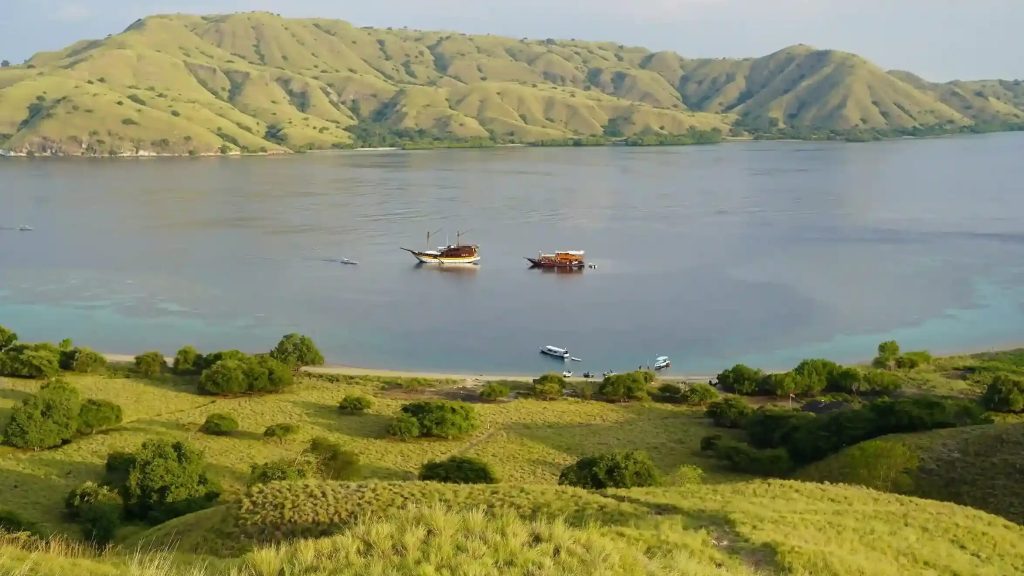
Gili Lawa is two islands, not one: Gili Lawa Darat (“land”) and Gili Lawa Laut (“sea”), sitting off the northern tip of Komodo Island at the top of the park. Darat is the one people photograph — a short, steep grass hill above a horseshoe bay where liveaboards anchor overnight. Laut is the smaller neighbour, better known underwater than above it, because the channels around it hold several of the park’s strongest current dives. Neither is a day-trip destination from Labuan Bajo in any comfortable sense; both belong to overnight and multi-day routes.
Why Gili Lawa is an overnight stop, not a day stop
The distance is the whole story. Gili Lawa sits at the far northern end of the park, well past Komodo Island itself, and a single-day round trip from the harbour would spend almost all of its daylight on the water rather than at the site. Boats that include it are almost always sleeping inside the park the night before, which is why the anchorage fills with liveaboards at dusk and empties again by mid-morning.
That timing shapes what you actually get. The hill is walked at sunrise or in the last hour before sunset, when the light rakes across the ridges and the temperature is survivable; in the middle of the day the slope is exposed grass with no shade at all. If your itinerary is a day trip rather than a liveaboard, Gili Lawa is simply out of range, and an operator promising it inside one day is quietly planning to skip something else.
The Gili Lawa Darat hike
The walk is short and steep rather than long: a climb of a few hundred metres up a grass ridge from the beach, with the first viewpoint reached well inside half an hour by most people and higher points continuing along the spine of the island. The footing is loose dirt and dry grass, which is slick going down more than going up, so shoes with some grip matter more here than on the boardwalks elsewhere in the park.
There is no railing, no shelter and no water on the hill. Guides typically ask groups to stay on the worn path rather than cutting the slope, both because the grass erodes quickly and because a savanna fire in August 2018 burned a substantial area of Gili Lawa Darat and left the vegetation slow to recover. Fire risk is the reason smoking is discouraged anywhere on these islands during the dry months.
What the diving around Gili Lawa Laut is like
The water between and around the two islands carries some of the fastest flow in Komodo. The famous sites in this corner — Castle Rock, Crystal Rock and the channel divers call The Cauldron or Shotgun — are all within a short tender ride, and all of them are current dives rather than reef pottering. Expect negative entries, drift, and a briefing that is genuinely about safety rather than formality.
Operators generally want an advanced certification and a meaningful number of logged dives before putting anyone into the north, and reputable ones ask to see a logbook. If that is not you, the park has plenty of gentler water: our page on where the dive and snorkel sites actually sit sets out which zone suits which experience level, and the advanced-site page covers the north in more depth.
How Gili Lawa fits into a route
On a three-day, two-night sailing the northern sites usually land on the second day, after Padar and the dragon trek are done and before the boat turns back toward Labuan Bajo. On four days and longer, Gili Lawa often becomes the second night’s anchorage, which is what buys you the sunrise walk rather than a rushed afternoon one. If you are still choosing a length, the 3D2N itinerary ideas and the 4D3N and longer pages compare the two directly.
One practical note on permits: the advance e-ticket requirement introduced in April 2026 applies to landings on Komodo and Padar, while the park entrance ticket covers you throughout. A route that includes Gili Lawa alongside a Komodo landing still needs the reservation for the Komodo leg, so it is worth confirming that your operator has filed it rather than assuming the northern anchorage exempts you.
Entry to Komodo and Padar has required an advance reservation since 1 April 2026 and this is a park requirement rather than an operator preference, and the portal itself is siora.id.
When to go
The hill is at its most photogenic at the two ends of the dry season, which runs April to November: in April and May the grass still carries green from the wet months, and by September and October it has turned the gold that most photographs show. The wet season, December to March, brings rougher crossings to the north and softer light, though the anchorage itself is sheltered. Manta activity at the central cleaning stations peaks in roughly the same wet-season window, so a December route often trades the golden hill for better animal encounters.
Gili Lawa only appears on itineraries that sleep inside the park, so the boat matters more here than the stop does. Komodo Luxury runs the overnight and multi-night routes that reach the northern anchorage; their Komodo liveaboard lineup shows which vessels carry the range and which cabin classes are on each. To ask about a specific departure date, message the team on WhatsApp at +62 811-3810-8110 or email sales@komodoluxury.com.
More posts
Frequently asked questions
How long is the Gili Lawa Darat hike?
Most groups reach the main viewpoint in fifteen to thirty minutes of steady uphill walking, and the ridge continues beyond it for anyone who wants more height. It is short but genuinely steep, on loose grass and dirt with no steps and no handrail, so the descent takes longer than people expect. Allow an hour on the island in total if you want time to stop and photograph rather than climb straight up and down.
Can I visit Gili Lawa on a day trip from Labuan Bajo?
Not realistically. Gili Lawa sits at the northern end of the park, several hours out by speedboat, and a same-day return would leave almost no time ashore while cutting the dragon trek or Padar from the plan. It belongs on overnight and multi-day routes, where the boat sleeps at the anchorage and the hill is walked at first light.
What is the difference between Gili Lawa Darat and Gili Lawa Laut?
Darat is the larger of the two and the one with the hike and the sheltered overnight anchorage. Laut is smaller and matters mainly for what surrounds it: the current-swept pinnacles and channels that make up Komodo’s advanced diving. Most itineraries mean Darat when they simply write “Gili Lawa”.
Do I need to be a strong swimmer for the snorkelling here?
Snorkelling near the anchorage is manageable for anyone comfortable in open water with a vest, but the flow picks up quickly away from the sheltered side. Guides normally drop groups on a specific line and pick them up downstream rather than letting people swim freely, and that instruction is worth following literally in this part of the park.
Is there anything on the islands themselves?
No. There is no shop, no shade structure, no fresh water and no mobile coverage worth relying on. Everything you need for the walk comes off the boat with you, and that includes more water than a fifteen-minute climb suggests, because the humidity does more damage than the distance.
Start Planning Your Komodo Trip
Tell Komodo Luxury your travel dates, group size and priorities — trekking, diving, a private charter or a budget-friendly shared boat — and they will put together options with current pricing.