Liveaboard vs Day Trip to Komodo
A liveaboard sleeps you on board for one or more nights inside Komodo National Park, reaching sites such as Padar's sunrise viewpoint, Manta Point, and southern dive spots that a same-day return trip cannot cover, while a day trip returns to Labuan Bajo each evening and suits travelers with limited time or budget who want the core highlights, typically a dragon trek plus one or two snorkel stops, in a single outing.
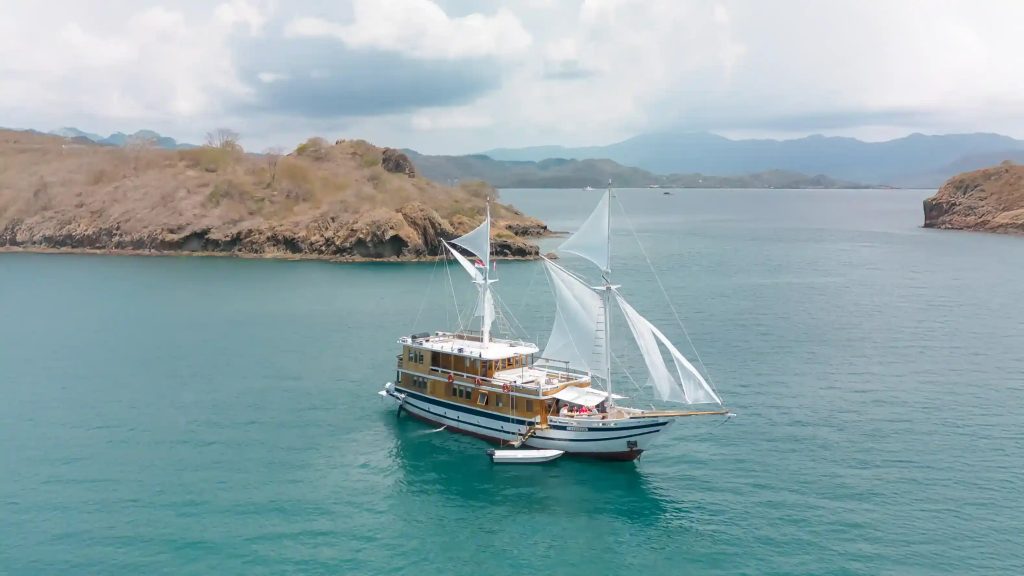
In practical terms, that trade-off maps onto Komodo Luxury’s own lineup: the liveaboard cruises for the multi-day, sleep-on-board option, and the speedboat day trips for the single-day option compared throughout this page.
What Is the Core Difference Between a Liveaboard and a Day Trip?
The difference is not really about comfort level, since both formats range from basic to premium; it is about how much of the park you can physically reach. A day trip departs Labuan Bajo in the morning and must return by evening, which limits it to two or three stops close to the harbor. A liveaboard removes that constraint by sailing overnight while you sleep, so the boat covers distance without using up daylight hours, reaching farther sites such as Padar, the southern dive zone, or Manta Alley that a day trip’s round-trip time simply does not allow.
How Many Stops Does Each Format Actually Cover?
A single day trip from Labuan Bajo typically covers two to three stops, commonly a Komodo dragon trek at Rinca plus one or two snorkeling or beach stops such as Kelor or Kanawa. A 2D1N or 3D2N liveaboard covers roughly six to ten stops across the same trip, adding Padar’s viewpoint, Pink Beach, Manta Point, and often a sunset stop at Kalong Island to watch the flying-fox exodus. For a full stop-by-stop comparison of what different trip lengths cover, see our Komodo National Park itinerary guide.
Which Format Costs Less?
Day trips are the lower-cost format in absolute terms, since you are paying for a single day’s fuel, crew time, and a shared boat rather than multiple nights of accommodation, meals, and a larger vessel. There is no fixed published price for either format, since cost depends on boat class, group size, and whether the trip is shared or private, so request a current quote from an operator rather than relying on a number quoted elsewhere. What is fixed is the park’s own entrance and ranger fee, currently USD 40 (USD 50 at weekends and on public holidays) for foreign visitors, detailed on our entrance fee page — the PNBP ticket is charged per entry into the park and the ranger fee on each trekking day, regardless of which format you choose.
The official charge behind any Komodo quote is the entrance rate of USD 40 on a regular day and USD 50 at weekends and on public holidays, and the statutory basis is published at the regulation text on peraturan.go.id.
Which Format Is Better for Diving?
A liveaboard is generally the better choice for serious diving, since it can position you at northern current-heavy pinnacles like Castle Rock in the morning and reach the cooler southern sites, such as Manta Alley, later in the same trip, none of which a single-day return from Labuan Bajo realistically covers. Day trips can still include diving at closer central sites, but the site selection is narrower. Our dive and snorkel sites guide breaks down which sites fall into each category by distance and difficulty.
Which Format Suits Families and First-Time Visitors?
Day trips work well for families with young children or first-time visitors who are unsure how they will handle multiple nights at sea, since you return to a stable hotel each evening. Liveaboards suit travelers who want to see more of the park in one trip and are comfortable with cabin accommodation and open-water crossings, including overnight sailing between anchorages. A shorter liveaboard format, such as the format covered on our 2D1N Komodo National Park overnight boat trip page, is a common middle ground for families wanting more than a day trip without committing to a longer multi-night charter.
Does Seasickness Risk Differ Between the Two Formats?
A day trip generally means less total time on open water and a return to solid ground each evening, which some seasickness-prone travelers find easier to manage psychologically even if the crossings themselves are similar in intensity. A liveaboard means more total hours on the water, including overnight repositioning, though nights are typically spent at anchor in sheltered bays rather than underway. Our guide to seasickness on Komodo boats covers positioning, timing, and season-specific advice that applies to both formats.
How Do You Decide Which Format Fits Your Trip?
The decision comes down to three questions: how many days do you have, what do you most want to see, and how do you feel about multiple nights on a boat. If you have only one spare day, a day trip covering a dragon trek and a snorkel stop delivers the essential Komodo experience efficiently, as detailed on our full day speedboat tour page. If you have two or more days and want to reach Padar, Manta Point, or the park’s southern zone, a liveaboard is the format built for that reach.
Can You Combine Both Formats in One Trip?
Some travelers do exactly this: a day trip on arrival or departure day in Labuan Bajo, bookending a multi-night liveaboard in the middle of the stay. This works well if you land in the afternoon and want an easy first day, or if you have a free morning after your liveaboard returns before an evening flight. It is not necessary to choose one format exclusively; the two are complementary rather than competing once your total number of days in Labuan Bajo is fixed.
Compare Liveaboard and Day Trip Options with Komodo Luxury
Tell Komodo Luxury how many days you have and what you most want to see, and they will recommend the format that fits. Message the Komodo Luxury desk on WhatsApp at +62 811 3810 8110 or email sales@komodoluxury.com.
Related reading: our island transfers guide, our boat trip options overview, and our shared open trip guide.
Whether you’re considering a VIP boat charter for an extended stay or exploring the full fleet for more time on the water, Komodo Luxury offers options to suit every traveler’s needs. For those interested in a more intimate experience, a traditional sailing trip provides private-group comfort, while Komodo Luxury’s boat tour lineup allows you to compare various options before making your decision.
Ready to turn this into a real Komodo National Park trip?
More posts
Frequently asked questions
Is a liveaboard or a day trip better for Komodo National Park?
It depends on your time and priorities. A day trip suits travelers with one spare day wanting the core highlights, while a liveaboard covers significantly more of the park, including Padar and Manta Point, for those with two or more days available.
How many stops does a Komodo day trip cover compared to a liveaboard?
A day trip typically covers two to three stops close to Labuan Bajo, while a 2D1N or 3D2N liveaboard covers roughly six to ten stops across the same trip length in days.
Is a liveaboard more expensive than a day trip?
Generally yes, since it includes multiple nights of accommodation, meals, and a larger vessel rather than a single day’s boat time. Exact costs vary by boat class and should be quoted directly by an operator for your dates.
Can you see Komodo dragons on both a day trip and a liveaboard?
Yes, a ranger-guided Komodo dragon trek at Rinca or Komodo Island is a standard stop on both formats, typically scheduled for the morning when dragons are most active.
Which format is better for seeing Padar Island’s viewpoint?
A liveaboard is generally better for Padar, since sleeping at a nearby anchorage lets you reach the viewpoint at sunrise before day-tour boats arrive. Some day trips include Padar, but typically at a later, busier hour.
Is Komodo National Park expensive for backpackers?
Komodo National Park can be budget-friendly for backpackers, especially if opting for a day trip. The park entrance fee for foreign visitors is USD 40 (USD 50 at weekends and on public holidays). Day trips are generally cheaper than liveaboards, as they involve less time and fewer resources, making them a cost-effective choice.
How does a day trip in Komodo compare to a liveaboard experience?
A day trip in Komodo offers a concise experience, typically covering two to three stops, such as a Komodo dragon trek and snorkeling. In contrast, a liveaboard allows for overnight travel, reaching more remote sites like Padar and Manta Point, and can include up to ten stops, offering a more comprehensive exploration of the park.
Is a liveaboard or day trip better for exploring Komodo National Park if you only have one overnight in Labuan Bajo?
A day trip is usually the better choice for a one-night stay in Labuan Bajo because it keeps the logistics simple and uses your limited time efficiently. A liveaboard only makes more sense if you want to sleep on the boat and spend your entire visit on the water. For most short stays, the day trip delivers the main highlights without committing to an extra night away from town.
What are the advantages of a liveaboard trip in Komodo National Park?
The advantages of a liveaboard trip in Komodo National Park include access to more remote sites, such as Padar’s viewpoint and southern dive spots, and the ability to cover more stops without using daylight hours. It offers a more comprehensive exploration, with opportunities for sunrise and sunset experiences that day trips cannot provide.
Do liveaboard boats in Komodo have private bathrooms?
Liveaboard boats in Komodo vary in amenities, with some offering private bathrooms, especially in higher-end options. The comfort level ranges from basic to premium, so it’s essential to check with the operator when booking to ensure your accommodation preferences, such as private bathrooms, are met.
Start Planning Your Komodo Trip
Tell Komodo Luxury your travel dates, group size and priorities — trekking, diving, a private charter or a budget-friendly shared boat — and they will put together options with current pricing.