
Night Diving and Advanced Dive Sites in Komodo
Night diving in Komodo National Park reveals a different reef entirely: nocturnal hunters emerge, coral polyps extend to feed, and creatures invisible by day, such as octopus, crustaceans and sleeping reef fish tucked into crevices, become visible.
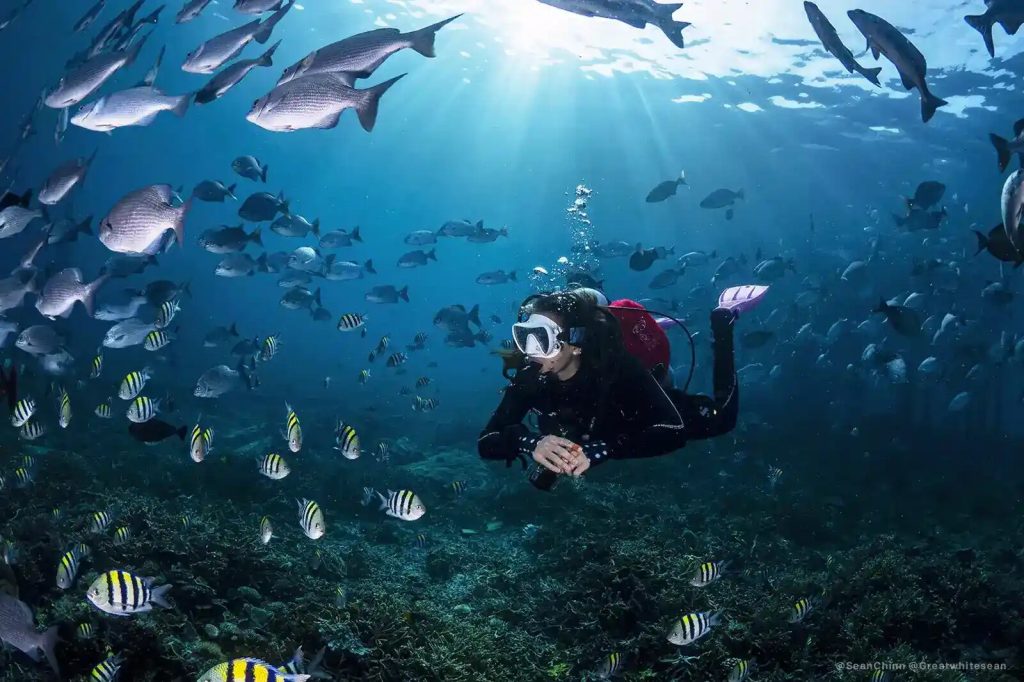
What Makes Komodo Night Diving Different?
Komodo’s daytime reefs are already known for big-animal encounters like manta rays and reef sharks, but after dark the same reefs shift toward smaller, more intricate activity. Coral polyps that stay retracted during daylight extend to feed on drifting plankton, giving reefs a visibly different texture. Nocturnal hunters such as certain reef octopus species become active, and many daytime fish species tuck into coral crevices to sleep, occasionally letting divers approach closer than would be possible with an alert, swimming fish during the day.
Which Sites Are Suited to Night Diving?
Sheltered, moderate-current sites are strongly preferred for night dives, since navigation and buddy contact are harder in darkness and a strong current compounds both risks. Operators typically select calmer bays and reef slopes close to the overnight anchorage rather than the park’s strongest current sites, which are reserved for daytime drift diving with better visibility for managing the conditions. Exact site selection depends on the specific liveaboard’s anchorage each night and prevailing conditions, so ask your dive guide which site is planned before committing to a night dive on a given evening.
Certification and Experience Requirements
Most operators require Advanced Open Water certification, or an Open Water certification combined with a specific night diving specialty course or logged night-diving experience, before joining a Komodo night dive. This is a safety standard, not a formality: night diving demands comfort with reduced visibility, dive light management, and non-visual buddy communication that an Open Water course alone does not typically cover in depth. First-time night divers should say so during the pre-dive briefing so the guide can adjust pairing and depth accordingly.
Safety Briefing and Buddy Protocols
A proper night dive briefing covers light signals for common communication (stop, look, ok, problem), a clear buddy-contact procedure if divers become separated, a maximum planned depth and time, and the exact entry and exit points for the dive. Every diver carries a primary dive light plus a backup, and briefings typically emphasize staying within visual range of a dive buddy at all times, since the usual daytime cues for tracking a buddy’s position are unavailable in the dark. Skipping any part of this briefing, or diving with unfamiliar or untested lights, is a real risk factor operators take seriously.
Equipment Specific to Night Diving
Beyond standard dive gear, a primary dive light and a backup light are non-negotiable for a Komodo night dive, since a failed primary light with no backup effectively ends the dive for that diver. A tank marker light or glow stick clipped to your gear helps your buddy and the dive guide track your position from a distance, and a whistle or other surface signaling device remains standard safety equipment for the boat return afterward. Operators typically supply lights as part of the dive package, but confirm this in advance and inspect your assigned light during the pre-dive check rather than assuming it works.
What Will You Actually See?
- Reef octopus and other nocturnal cephalopods actively hunting across the reef
- Coral polyps extended and feeding, changing the reef’s texture and color under dive lights
- Sleeping parrotfish, often encased in a mucus cocoon, and other reef fish tucked into crevices
- Crustaceans such as shrimp and crabs that are far more active after dark than during the day
- Bioluminescent plankton, visible when lights are switched off briefly in the right conditions
Sightings vary by site and season, and no operator can guarantee a specific species on a given dive; the appeal of night diving is the shift in overall reef activity rather than any single guaranteed encounter.
Timing: When Do Night Dives Happen?
Night dives are typically scheduled shortly after sunset, once light has faded enough for the nocturnal reef activity to begin but while surface conditions and boat logistics are still straightforward. Some operators offer a “dusk dive” that starts in fading natural light and transitions into full darkness during the dive, which can ease the adjustment for divers newer to night diving compared with entering the water in complete darkness from the start.
Is Night Diving Worth Adding to Your Trip?
For certified divers already comfortable with Komodo’s daytime conditions, a night dive adds meaningfully different content to a multi-day liveaboard rather than repeating what a day dive already shows. It is not the right addition for divers still building basic comfort and buoyancy control, since darkness adds a layer of difficulty better tackled after those fundamentals are solid. Multi-day liveaboards are the natural format for including a night dive, since it typically happens from the same anchorage used for the day’s other dives rather than as a standalone excursion.
For help planning night and advanced dives around slack water and good visibility, see our guide on seasonal conditions for calm seas and clear water in Komodo.
Plan a Diving-Focused Komodo Trip with Komodo Luxury
Multi-day liveaboards that can include a night dive alongside daytime sites are listed on Komodo liveaboard, and our diving and snorkeling photo package page covers daytime site selection in detail. Message Komodo Luxury on WhatsApp at +62 811-3810-8110 or email sales@komodoluxury.com to check current night-diving availability for your dates.
Last updated: 29 August 2026.
Our diving adventures overview has the complete rundown.
For those eager to explore the depths of Komodo’s night diving and advanced sites, consider booking a VIP boat charter for a personalized experience, or explore the full fleet to find a vessel that suits your needs. Alternatively, enjoy the charm of a traditional sailing trip, or browse Komodo Luxury’s boat tour lineup to discover all available options.
Ready to turn this into a real Komodo National Park trip?
More posts
Frequently asked questions
Do I need special certification for night diving in Komodo?
Most operators require Advanced Open Water certification or equivalent logged night-diving experience. If you hold Open Water only, ask your operator whether a night-diving specialty course can be completed locally before your dive, or plan on a daytime-only itinerary for this trip.
Is night diving in Komodo more dangerous than day diving?
It carries different risks, primarily related to reduced visibility and buddy separation, which is why certification requirements and briefing protocols are stricter. With proper certification, equipment and a disciplined buddy system, it is a standard and well-established activity at suitable sites, not an inherently reckless one.
Can beginners join a night dive with a private guide?
Reputable operators generally will not offer night diving to divers without the required certification level, regardless of a private guide arrangement, since the safety requirement is tied to skill and experience rather than group size. Build night-diving readiness through a proper specialty course first.
What should I do if I lose sight of my buddy during a night dive?
Stop, stay calm, and follow the pre-briefed procedure: typically waiting in place for a short set period while shining your light in a slow arc, then surfacing if contact is not reestablished. This exact procedure is covered in every proper night-dive briefing, which is one more reason skipping the briefing is not a shortcut worth taking.
What are the top dive sites for advanced divers in Komodo?
Advanced divers in Komodo National Park often seek out sites like Batu Bolong and Castle Rock. These locations are known for their strong currents and diverse marine life, including reef sharks and large schools of fish. Due to challenging conditions, divers should have experience with drift diving and be comfortable in unpredictable currents.
What should I know about advanced diving in Komodo National Park?
Advanced diving in Komodo National Park requires comfort with strong currents and deep dives. Sites like Crystal Rock offer thrilling encounters with pelagic species but demand advanced skills. Divers should be prepared for dynamic conditions and ensure they have the appropriate certification and experience for these challenging environments.
How to identify dive sites suitable for beginners in Komodo?
Beginners in Komodo should look for sheltered sites with mild currents, such as Sebayur Kecil. These locations provide a safer environment for novice divers to explore vibrant coral reefs and marine life. It’s essential to consult with local dive operators to ensure the chosen sites match the diver’s skill level and experience.
What equipment is needed for black sand diving in Komodo?
Black sand diving in Komodo requires standard diving gear, including a wetsuit for thermal protection, as well as a dive light to enhance visibility and spot unique marine life. A dive computer is also recommended to monitor depth and time, especially in areas with varying topography and visibility.
What wildlife lives in Komodo National Park?
The park’s wildlife includes the iconic Komodo dragon, with an estimated population of 3,150-3,400 individuals across the park. The marine environment hosts diverse species such as manta rays, reef sharks, and vibrant coral reefs, making it a rich habitat for both terrestrial and aquatic wildlife.
Start Planning Your Komodo Trip
Tell Komodo Luxury your travel dates, group size and priorities — trekking, diving, a private charter or a budget-friendly shared boat — and they will put together options with current pricing.