
Seasickness on Komodo Boats: What Helps
Seasickness on Komodo boat trips is most likely on open-water crossings, particularly the exposed stretch toward Padar Island, and is more common during the wet season (roughly December to March) when westerly monsoon winds raise wave heights in the Flores Sea, per Indonesia's meteorological agency (BMKG).
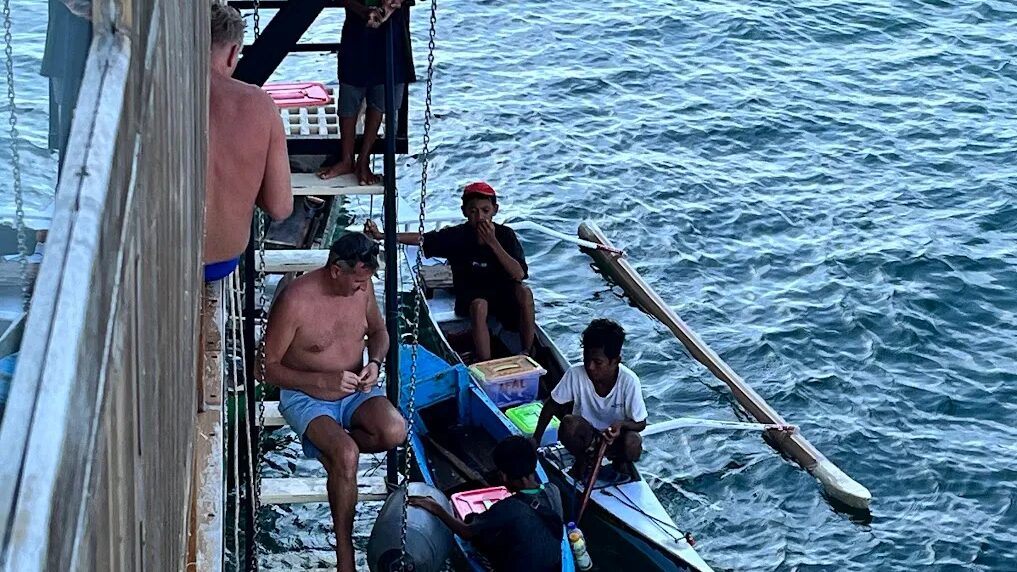
Boat choice makes a real difference here: a larger, more stable hull rides the open crossings more gently than a small speedboat. Komodo Luxury’s deluxe boat charters are built on the larger hulls this guide recommends for anyone prone to seasickness.
Why Do People Get Seasick on Komodo Boat Trips?
Seasickness happens when the motion your inner ear senses conflicts with what your eyes see, and it gets worse as a boat’s pitch, roll, and heave increase with rougher water. Komodo’s boat routes mix sheltered channels close to Labuan Bajo, Rinca, and Komodo Island with more open, wind-exposed crossings, particularly toward Padar Island, where boats have less natural shelter from swell and wind waves. Indonesia’s harbor authority for Labuan Bajo (KSOP) requires operators to monitor weather and wave conditions at least six hours before departure and report them when requesting a sailing permit, which reflects how variable conditions on these routes can be even within the same day.
Which Route Segments Are Roughest?
There is no single published wave-height figure specific to the Padar crossing, but the geography is instructive: the route toward Padar involves more open exposure to the Flores Sea than the more sheltered inner channels near Rinca or Komodo’s northern bays, meaning wind and swell have a longer uninterrupted stretch to build before reaching your boat. This is a reasonable inference from general maritime geography rather than a specific named study, so treat it as a planning consideration rather than a guarantee that every Padar crossing will be rough. Smaller wooden boats generally show more pronounced motion than larger liveaboards or catamarans, which matters if you know you are prone to seasickness and are choosing between boat types for a private charter.
Does the Season Matter for Seasickness Risk?
Yes, based on Indonesia’s monsoon pattern. BMKG’s climatology shows the wet season, roughly December through March, dominated by westerly monsoon winds that blow across long stretches of the Indian Ocean and Flores Sea, which tends to raise wave heights on exposed crossings. The dry season, roughly April through November, generally brings calmer, more settled conditions, though local day-to-day variation still applies and should be checked against BMKG’s maritime forecast close to your travel dates rather than assumed from the season alone. Travelers who know they are highly susceptible to seasickness and have flexible dates may prefer to plan a Komodo trip within the dry season window for this reason.
April to November is the dry half of the year in this part of Nusa Tenggara and December to March the wet half, with rainfall peaking around January and February, and the underlying climate reference is bmkg.go.id.
What Actually Helps With Seasickness on a Boat?
A combination of positioning, medication timing, and simple habits makes the biggest practical difference:
- Stay on deck and watch the horizon. Being below deck, especially in an enclosed cabin without a window, removes the visual horizon reference that helps your brain reconcile motion; open-air deck seating facing forward is consistently the more comfortable position.
- Choose a cabin or seat near the boat’s center. Motion is most exaggerated at the bow and stern; the center of a vessel, closer to its point of rotation, moves the least.
- Take motion-sickness medication before symptoms start, not after. Most over-the-counter options work by preventing nausea rather than reversing it, so timing matters more than the specific brand.
- Eat something light before departure rather than traveling on an empty stomach, and avoid heavy, greasy food the morning of a rough crossing.
- Keep hydrated and avoid alcohol the night before an early departure, since dehydration and hangovers both worsen motion sensitivity.
Should You Choose a Day Trip or a Liveaboard if You Get Seasick Easily?
A day trip returns you to a stable hotel bed each night, which some travelers prefer if they are uncertain how they will handle multiple nights of boat motion, while a liveaboard means every night is spent on the water, including any rougher overnight repositioning between islands. If seasickness is a significant concern, consider a shorter overnight format first, such as the one covered on our one-night Komodo boat itinerary page, before committing to a longer multi-night liveaboard. A private catamaran charter is also worth considering specifically for this reason: the twin-hull design measurably reduces rolling motion compared to a single-hull phinisi, which is covered in more detail on our Komodo catamaran charter page.
Do Boat Crews Expect Seasickness and Plan Around It?
Experienced Komodo crews are used to managing seasick guests and typically carry basic remedies on board, but the responsibility for medication and preparation sits with the traveler, since crews are not medical staff. Tell your crew in advance if you know you are prone to seasickness; many will adjust seating arrangements or suggest the calmest available spot on the specific boat you are on, since boat layouts vary enough that general advice does not always match every vessel exactly.
What Safety Standards Apply to the Boats Themselves?
Separate from seasickness, it is worth knowing that Labuan Bajo tourist boats operate under Indonesia’s Shipping Law (UU No. 17/2008) and a local safety guidance document from KSOP Labuan Bajo, which requires seaworthiness checks, a passenger manifest matching ticketed numbers, life jackets sufficient for every passenger, and a weather check before each departure’s sailing permit is issued. This regulatory layer does not prevent seasickness, but it does mean the vessel you are on has passed basic safety checks before it leaves the harbor, which is a reasonable baseline of reassurance if rougher-than-expected conditions do appear on your crossing.
Plan a Comfortable Komodo Boat Trip with Komodo Luxury
Tell Komodo Luxury if seasickness is a concern, and they will suggest boat types and itinerary lengths that reduce open-water exposure. Message the Komodo Luxury desk on WhatsApp at +62 811 3810 8110 or email sales@komodoluxury.com.
If you’re concerned about seasickness but eager to explore Komodo National Park, consider checking out Komodo Luxury’s boat tour lineup for itineraries that might suit your needs. You can also explore the full fleet to find the right vessel for your comfort, review Komodo Luxury’s trip FAQ for tips on managing seasickness, and browse the sailing tour package list to see all available options.
Ready to turn this into a real Komodo National Park trip?
More posts
Frequently asked questions
What is the best position on a boat to avoid seasickness?
Open-air deck seating near the center of the boat, facing forward toward the horizon, is generally the most comfortable position, since it combines the least motion with a stable visual reference point.
Is the crossing to Padar Island rougher than other Komodo routes?
It is more exposed to open water than sheltered inner channels near Rinca or Komodo’s northern bays, which can mean more wind-driven wave motion, though this is a geographic inference rather than a specific measured statistic for that route alone.
What season has the roughest seas for Komodo boat trips?
The wet season, roughly December through March, is climatologically more likely to bring rougher seas due to stronger westerly monsoon winds, per BMKG’s monsoon pattern data. The dry season, April through November, generally offers calmer conditions.
Should I take seasickness medication before or after I feel sick?
Before. Most over-the-counter motion-sickness medications work by preventing nausea from starting rather than reversing it once it has begun, so timing your dose ahead of departure is more effective than waiting for symptoms.
Are catamarans better than phinisi boats for seasickness?
Generally yes. A catamaran’s twin-hull design reduces the rolling motion that causes most seasickness at anchor and in moderate swell, compared to a single-hull phinisi, making it a practical choice for seasickness-prone travelers or families.
How do you avoid seasickness on a Komodo boat trip?
Start with the boat. A larger, more stable vessel — a liveaboard, or a twin-hulled catamaran — moves far less than a small hull, and the open crossings are where that difference is felt, particularly the run out to Padar Island. On board, sit mid-ship or in the centre of the deck where the motion is smallest, stay in the open air, and keep your eyes on the horizon rather than on a phone; that steady visual reference is what settles the inner ear. Take motion-sickness medication before departure rather than after symptoms start, since most of it works by prevention, and seasickness bands are a drug-free addition some travellers find useful. Stay hydrated, skip heavy or greasy meals and alcohol before sailing, and check the forecast: the December to March wet season brings the westerly monsoon winds that raise wave heights on exposed water.
Start Planning Your Komodo Trip
Tell Komodo Luxury your travel dates, group size and priorities — trekking, diving, a private charter or a budget-friendly shared boat — and they will put together options with current pricing.