
What to Wear in Komodo National Park
What should you wear in Komodo National Park? Closed, sturdy shoes for trekking (not sandals), lightweight long sleeves and trousers or a hat for sun protection on shade-free trails, swimwear under trek clothes for spontaneous snorkel stops, and modest cover-ups for any village visits en route — reef-safe sunscreen matters more here than almost anywhere else given how much of the trip happens in or near coral reef water.
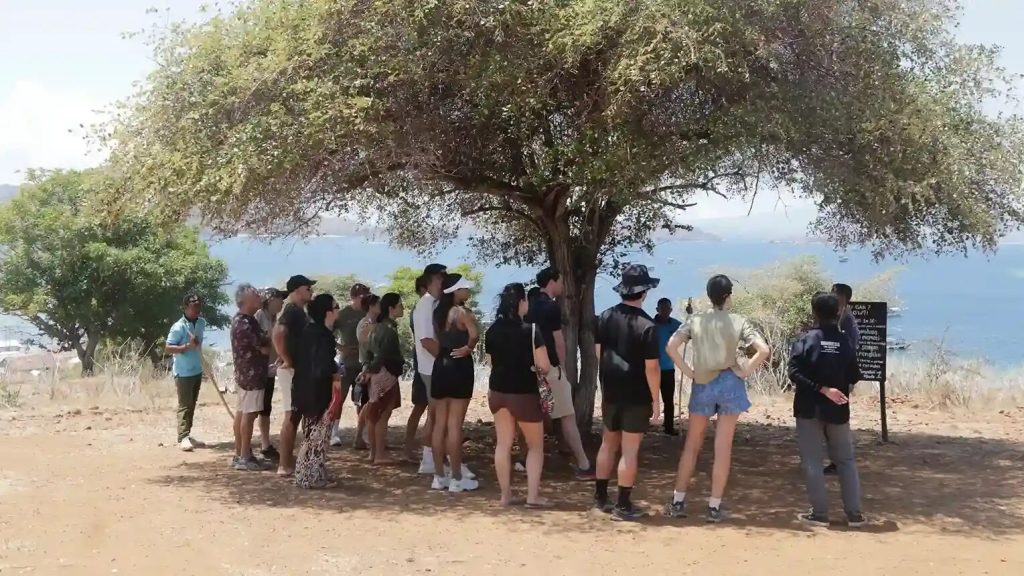
What you wear on a Komodo trip is dictated by three things happening in the same day: a hot, shade-free trek, time in and around the water, and — depending on your route — brief stops in local fishing communities. This page covers the practical clothing choices for each, and the etiquette that matters specifically in the villages some itineraries pass through, without repeating our broader packing-list coverage elsewhere on the site.
Whatever you pack, it should suit a full day moving between boat deck, dry-landing dinghies and dusty ranger trails. Komodo Luxury’s Komodo boat tour crews can advise on-trip if conditions change.
What should you wear for trekking on Komodo or Rinca Island?
Closed-toe shoes with real grip are the single most important item — sandals and flip-flops are a poor choice on the loose gravel, dry-season dust, and occasional uneven stone steps found on the ranger trails, and they offer no protection if you brush against low vegetation. Beyond footwear, the terrain is savanna with essentially no shade for most of the walk, so sun-protective clothing does real work here: a lightweight long-sleeve shirt and trousers (in breathable fabric, not heavy cotton) will often keep you cooler than bare skin under direct tropical sun, alongside a wide-brimmed hat and sunglasses. A neck gaiter or bandana is a small addition that helps with both sun and the dust some trails kick up in the driest months. Whatever you wear, it should be something you don’t mind getting dusty — this isn’t resort-wear terrain.
What should you wear for boat time and snorkeling?
Wearing swimwear under your trek clothes is standard practice here, since many itineraries combine a dragon trek with a snorkel or beach stop the same day, and changing on a small boat isn’t always convenient. A rash guard or light long-sleeve swim shirt is worth considering even for snorkelers who don’t own one specifically for this trip — it cuts sunburn risk during long surface intervals without needing repeated sunscreen reapplication, which matters over a full day on the water. For actual swimwear style, there’s no park-wide dress requirement beyond ordinary modesty; the practical consideration is sun and reef safety, not a formal dress code.
Why does sunscreen choice matter more here than usual?
Komodo National Park’s value is largely built on its reefs — over 250 recorded coral species and the marine life that depends on them — and conventional sunscreen containing oxybenzone and octinoxate has been linked in research to coral bleaching and damage to coral reproduction, which is why reef-safe (mineral-based, typically zinc oxide or titanium dioxide) sunscreen is increasingly the standard recommendation, and sometimes an explicit requirement, at reef destinations worldwide. Applying it well before you get in the water, rather than at the water’s edge, gives it time to properly absorb rather than washing straight into the reef. This single choice is one of the more meaningful, low-effort ways an individual visitor can reduce their impact on the same reef system they’ve traveled here to see.
What’s appropriate to wear if your route passes through a local village?
Some itineraries — particularly longer liveaboard routes or trips combining the park with wider Flores travel — pass through or stop briefly in local fishing villages along the coast. Modest dress is the respectful default in these settings: covering shoulders and knees, rather than beachwear, when you’re walking through a community rather than swimming or sunbathing on a boat. This is a general courtesy applicable across small coastal communities in this part of Indonesia, not a park regulation, but it’s the kind of small consideration that makes a real difference to how a visit is received locally. Asking before photographing people directly, rather than assuming it’s fine, follows the same principle.
What about ranger station etiquette specifically?
At Loh Liang and Loh Buaya, the ranger stations themselves aren’t formal in a dress-code sense, but the same trekking-appropriate clothing (closed shoes, sun coverage) doubles as the right etiquette here — arriving in beachwear or bare feet for a dragon trek isn’t practical given the terrain and isn’t how the rangers themselves are equipped, so matching that baseline is both sensible and respectful of the working environment you’re stepping into. Beyond clothing, following ranger instructions immediately and without argument is the more important form of etiquette at the stations — this is covered in depth on our Komodo dragons facts page.
What about jewelry, watches, and valuables?
Leaving expensive jewelry and watches at your hotel rather than bringing them on the boat is a simple, practical habit here — not because of any specific theft concern, but because a day involving sand, saltwater spray, trekking dust, and getting in and out of small boats is genuinely hard on anything delicate, and there’s no convenient way to secure valuables mid-trip if you’re moving between a trek, a snorkel stop, and a boat cabin in the same few hours. A basic waterproof pouch or dry bag for your phone, passport copy, and cash is a more useful thing to pack than anything valuable you’d worry about losing.
A simple packing summary for what to wear
For the trek: closed shoes with grip, breathable long sleeves and trousers or a hat, sunglasses. For the water: swimwear (worn under trek clothes for convenience), a rash guard if you burn easily, reef-safe sunscreen applied well before entering the water. For any village stop: a modest cover-up kept handy separate from swimwear. None of this requires specialized gear — it’s ordinary warm-climate hiking and beach clothing, chosen with this park’s specific combination of sun, dust, reef, and occasional village stops in mind.
Before you pack, see our boat food and drinking water guide for what is typically provided onboard, so you can plan snacks, refillable bottles, and expectations for day trips.
More posts
Sources and review
Last updated: August 2026. Clothing and etiquette guidance reflects general tropical-trekking and reef-conservation best practice combined with practical conditions specific to Komodo National Park’s terrain and marine environment.
Frequently asked questions
Do you need special shoes for Komodo National Park?
Closed-toe shoes with good grip are strongly recommended for trekking on Komodo and Rinca Island; sandals and flip-flops are a poor fit for the loose gravel and uneven trail sections.
Is reef-safe sunscreen required in the park?
It isn’t universally mandated everywhere in the park, but it’s strongly recommended given the reef’s ecological importance, and it’s increasingly the standard expectation at reef destinations generally — mineral-based sunscreen without oxybenzone or octinoxate is the safer choice.
What should you wear for a village visit near the park?
Modest clothing covering shoulders and knees is the respectful default when visiting a local fishing village along the route, rather than beachwear or swimwear.
Can you wear sandals for a dragon trek on Rinca Island?
It’s not recommended — closed-toe shoes with grip are the practical and safer choice given the loose gravel and uneven terrain on the ranger trails.
How to protect valuables while traveling in the park?
To protect valuables in Komodo National Park, use a waterproof, lockable bag for electronics and important items. Keep it with you during treks and boat rides. Avoid bringing unnecessary valuables, and store essential items in a secure, hidden compartment in your daypack. Always keep your belongings within sight, especially during village visits and snorkelling stops.
What are the fishing regulations in the park?
Fishing in Komodo National Park is strictly regulated to protect marine biodiversity. Only local communities with traditional fishing rights may fish in designated areas. Tourists are not permitted to fish within park boundaries. The regulations aim to conserve the park’s rich marine life, including coral reefs and endangered species like manta rays.
How to visit the traditional villages near the park?
To visit traditional villages near Komodo National Park, arrange a guided tour through a reputable operator like Komodo Luxury. Tours typically include cultural insights and etiquette guidance. Respect local customs by dressing modestly and asking permission before taking photos. Be aware that some villages may have restricted access due to conservation efforts or cultural considerations.
Can tourists go fishing around Komodo Island?
Tourists cannot fish around Komodo Island, as fishing is prohibited within the park to protect marine ecosystems. The park’s regulations are designed to preserve its unique biodiversity, including coral reefs and the habitats of various marine species. Visitors can enjoy snorkelling and diving as alternative activities to experience the rich underwater life.
What are the differences in local culture between Komodo and Sabah?
Komodo’s local culture is influenced by the indigenous Manggarai and Bajo communities, focusing on fishing and traditional crafts. In contrast, Sabah, Malaysia, features diverse ethnic groups like the Kadazan-Dusun, with distinct traditions such as rice cultivation and the harvest festival Kaamatan. Both regions value community and cultural heritage but differ in language, customs, and traditional practices.
Is Komodo Island closed after the recent earthquake?
As of the latest update, Komodo Island remains open to visitors despite recent seismic activity. However, conditions can change rapidly, so it’s essential to check current travel advisories and the official SiOra e-ticket system for updates. Safety measures and park access may be adjusted to ensure visitor safety and conservation efforts.
SiOra replaced walk-up ticketing entirely, so arriving without a reservation is not a queue problem but a refusal, and the booking system is siora.id.
How do Komodo dragons adapt to their environment?
Komodo dragons adapt to their environment through their keen sense of smell, allowing them to detect prey from several kilometres away. Their rugged skin provides camouflage in the savanna and forest habitats. They are opportunistic hunters, capable of taking down prey much larger than themselves, and can survive on limited water sources by obtaining moisture from their food.
Start Planning Your Komodo Trip
Tell Komodo Luxury your travel dates, group size and priorities — trekking, diving, a private charter or a budget-friendly shared boat — and they will put together options with current pricing.