Best Time to Visit Komodo National Park in 2027 for Peak Manta Ray Sightings (December–March)
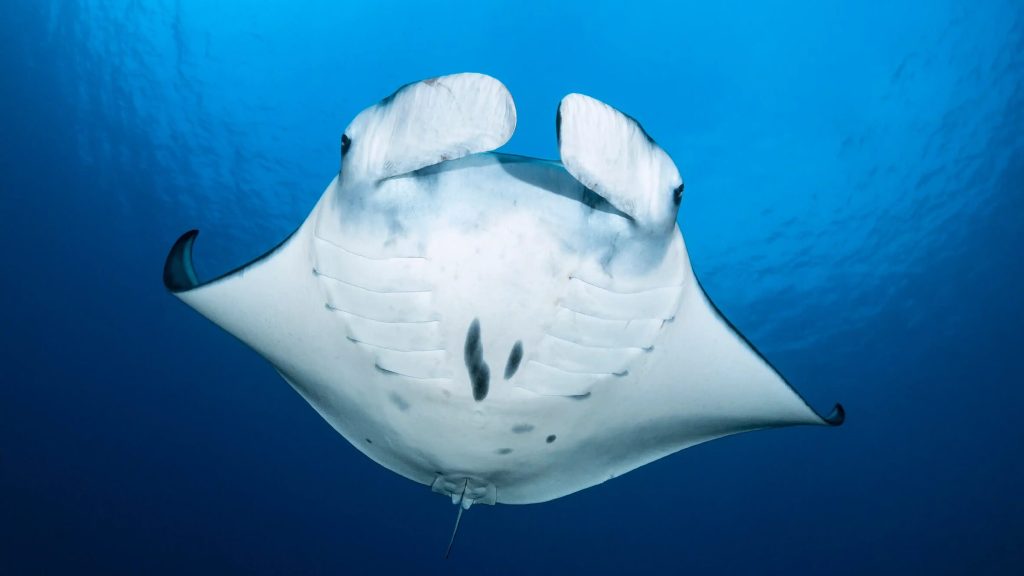
Manta rays are seen year-round in Komodo National Park, but sightings at the main cleaning station, Karang Makassar (Manta Point), are at their most reliable in the wet season, from December to March, when nutrient-rich currents drive the plankton blooms that draw large numbers of reef mantas in to feed and be cleaned.
Why Do Mantas Concentrate at Karang Makassar?
Karang Makassar sits in a channel where nutrient-rich currents from the surrounding seas converge, creating dense plankton blooms that reef manta rays feed on directly by swimming with their mouths open through the water column. The same site doubles as a cleaning station, where mantas hover over specific coral outcrops while small cleaner fish remove parasites from their skin and gills — a behavior that keeps individual mantas returning to the same shallow patch repeatedly, which is exactly what makes the site so reliable for sightings compared with open-water encounters elsewhere.
This page answers one question only: when the mantas are at Karang Makassar and what that means for booking. The broader question of when to visit the park at all — weather, crowding, prices and trekking conditions across the year — is answered on the month-by-month best-time page, and the narrower question of sea state and underwater visibility on the calm-seas page.
Water depth at the main cleaning station is shallow, often in the range of three to ten meters, which is why Karang Makassar works for snorkelers as well as certified divers — you do not need a scuba qualification to see mantas here, only reasonable swimming comfort in moving water.
Seasonal Pattern: What December to March Actually Means
Manta behavior in Komodo follows current and plankton patterns more than a fixed calendar, so “December to March” describes a reliability window rather than a guarantee tied to specific dates. Mantas are at Karang Makassar in every month of the year; what changes is how many, and how often they stay to feed. Across the year, several patterns are commonly reported by operators and by researchers working the area:
- December to March: The peak. The largest reported aggregations, coinciding with the wet season’s nutrient runoff and plankton activity, though rougher seas and rain are more likely during these months and the water is greener.
- April to June: Activity easing off the peak, balanced by calmer, more settled diving and snorkeling conditions and clearing water.
- July to September: The thinnest stretch at Karang Makassar and the other northern and central cleaning stations, with sightings at their lowest around August and September. The same months run the other way in the south of the park, where upwelling brings Manta Alley to its best.
- October and November: Numbers building again as the wet season approaches, on seas that are still generally calm.
Because year-to-year variation is real, treat any specific month as a strong probability rather than a certainty, and ask your operator about recent sightings in the days immediately before your trip if manta encounters are the main reason for your visit.
Snorkeling or Diving for Manta Encounters?
Snorkeling at Karang Makassar puts you at the surface directly above the cleaning station, which works well precisely because the site is shallow — you are often closer to the action than a diver working at depth nearby. Diving adds the ability to hold position near the cleaning rocks at eye level with the mantas and to follow individuals as they move off station, at the cost of needing at least an Open Water certification and comfort with the site’s currents. Neither approach guarantees an encounter on any single visit, since mantas are wild animals following their own feeding patterns, not staged for tourism. Most day-trip and liveaboard itineraries that include Manta Point schedule the stop for a specific window in the day based on tide, so ask your operator when the boat plans to be on site rather than assuming any time of day works equally well.
Manta Etiquette: What Not to Do
Reef manta rays are sensitive to disturbance at cleaning stations, and responsible operators enforce simple rules: maintain a horizontal position and reasonable distance rather than swimming directly at a manta, never touch or chase an animal, avoid flash photography, and keep noise and sudden movements to a minimum near the cleaning rocks. Mantas that feel harassed will simply leave the station, which reduces sightings for everyone on the water that day — good etiquette is self-interested as well as conservation-minded.
Month-by-Month Snapshot
| Period | Manta activity | Sea conditions |
|---|---|---|
| December–March | The peak: largest reported aggregations | Wetter, occasional rain and rougher seas, greener water |
| April–June | Easing off the peak, still good activity | Calming as the park moves toward its driest months |
| July–September | Thinnest at Karang Makassar, lowest around August and September; southern sites at their best | Dry, but stronger currents at some spots |
| October–November | Numbers building again toward the peak | Generally calm, good visibility |
This table reflects commonly reported seasonal patterns rather than a guaranteed schedule — ocean conditions vary year to year, and no operator can promise a sighting on a specific date. Use it to weigh season against your own tolerance for currents and rougher water, not as a booking guarantee.
What Else Lives at Komodo’s Dive and Snorkel Sites?
Beyond mantas, the park’s reefs support dense coral cover, resident reef sharks, sea turtles, and a wide range of reef fish, with several sites known for macro subjects such as pygmy seahorses and nudibranchs alongside the big-animal encounters. Current-driven sites like Batu Bolong and Castle Rock offer a different style of dive from the calm, shallow manta cleaning stations, rewarding divers who want schooling fish and drift-dive conditions rather than a single stationary subject.
Photography Tips for Manta Encounters
A wide-angle lens or a wide-conversion setup on a compact camera is the standard choice at Karang Makassar, since mantas are large and often close at this shallow site — a zoom lens or macro setup will frustrate more than help. Position yourself low and let the manta approach on its own feeding or cleaning pass rather than swimming toward it, both for better composition and to avoid disturbing the animal. Midday light generally penetrates the shallow water best for clear images; overcast conditions or early-morning light can leave underwater shots flat at this depth, so if your schedule allows any flexibility, request a midday slot at Karang Makassar specifically for photography rather than sunrise or sunset timing that serves the island viewpoints better.
Plan a Manta-Focused Komodo Trip with Komodo Luxury
The diving and snorkeling photography package covered in our guide is built around exactly this kind of site-specific, tide-timed schedule, and multi-day routes that guarantee dedicated time at Karang Makassar are listed on Komodo liveaboard. Message Komodo Luxury on WhatsApp at +62 811-3810-8110 or email sales@komodoluxury.com to build a trip around manta viewing.
Last updated: 29 August 2026.
For planning purposes, check our sea conditions page.
To experience peak manta season in Komodo, start by exploring Komodo Luxury’s curated boat tour lineup. Depending on your travel dates and group size, you might also find the full fleet options and trip FAQ helpful. For those comparing different experiences, check out the sailing tour package list.
Ready to turn this into a real Komodo National Park trip?
More posts
Frequently asked questions
Is December to March really the best time, or just one good option?
It is the strongest window for Karang Makassar specifically, based on current and plankton patterns, but mantas are present in Komodo’s waters across the year at varying frequency. Divers and snorkelers visiting outside this window still see mantas regularly; the window simply reflects when large aggregations are most consistently reported.
Do I need to be a certified diver to see manta rays in Komodo?
No. Karang Makassar’s shallow depth means snorkelers regularly see mantas without any diving certification. Certification opens up additional dive sites and lets you hold position closer to the cleaning rocks, but it is not a requirement for a manta encounter at the main site.
How can I improve my chances of seeing mantas on a short trip?
Book a trip that includes at least one dedicated stop at Karang Makassar rather than treating it as an optional add-on, and ask your operator about conditions in the days immediately before departure, since local current and visibility reports are the most reliable short-term indicator available.
When is peak manta ray season in Komodo National Park?
Peak manta ray season in Komodo National Park runs from December to March. During this wet-season window, nutrient-rich currents attract the largest numbers of reef mantas to Karang Makassar, the main cleaning station. Sightings are most reliable when plankton blooms are abundant, making this window the best time for manta encounters.
What are the best manta ray spots in Komodo?
Karang Makassar, also known as Manta Point, is the premier spot for manta ray sightings in Komodo National Park. Its nutrient-rich waters and cleaning station attract manta rays year-round. Other notable sites include Batu Bolong and Makassar Reef, where mantas are often seen feeding and being cleaned by smaller fish.
Which dive sites in Komodo are best for spotting manta rays?
Karang Makassar is the top dive site for manta ray encounters in Komodo National Park. Its shallow waters and cleaning station make it ideal for both snorkelers and divers. Batu Bolong and Makassar Reef are also excellent sites where divers can frequently spot mantas feeding and interacting with cleaner fish.
Is August a good time for wildlife photography in Komodo National Park?
August can be a good time for wildlife photography in Komodo National Park, though not for mantas: it sits outside the December-to-March peak, and August and September are the thinnest weeks of the year at the northern and central cleaning stations. What August does offer is dry-season light, clear water and calm seas for reef and landscape work, plus firm trails for the iconic Komodo dragons. Photographers working the current-driven sites should still be prepared for challenging drift conditions.
When is the peak tourist season in Komodo National Park for planning around permits and crowds?
The busiest period falls inside the dry season, which runs April to November, and peaks in July and August, when calmer seas and more reliable weather draw the largest crowds. If you are traveling then, book Komodo and Padar early through SiOra because access is now quota-controlled and advance reservations are required. Expect higher demand for boats, guides, and entry slots, especially on popular dates.
What is the largest animal in the park?
The largest animal in Komodo National Park is the Komodo dragon. These formidable reptiles can grow up to three metres in length and weigh over 70 kilograms. As the park’s most famous inhabitants, they are a major draw for visitors and play a crucial role in the park’s ecosystem.
What are the best months to dive Komodo?
For diving conditions alone, April to June and September to November are the sweet spots: calm seas, clear water and comfortable surface intervals. They are not the manta peak, which falls in the wet season from December to March, so the honest trade-off is visibility against manta numbers. Marine life and pelagics are rewarding in both windows, and mantas are present at Karang Makassar year-round.
What are the best Komodo sites for pelagics?
Karang Makassar is renowned for manta rays, while Batu Bolong and Castle Rock are excellent sites for spotting other pelagics like sharks and large schools of fish. These sites offer nutrient-rich currents that attract a variety of pelagic species, making them popular choices for divers seeking diverse marine life encounters.
Start Planning Your Komodo Trip
Tell Komodo Luxury your travel dates, group size and priorities — trekking, diving, a private charter or a budget-friendly shared boat — and they will put together options with current pricing.