
Labuan Bajo Liveaboard Routes Worth Sailing in 2026
Labuan Bajo's main liveaboard routes cover four recurring stops: the Komodo dragon treks on Rinca or Komodo Island, the Padar viewpoint hike, Kalong Island's sunset bat flight, and reef snorkeling at Kanawa or similar shallow-water islands.
Why Sail From Labuan Bajo?
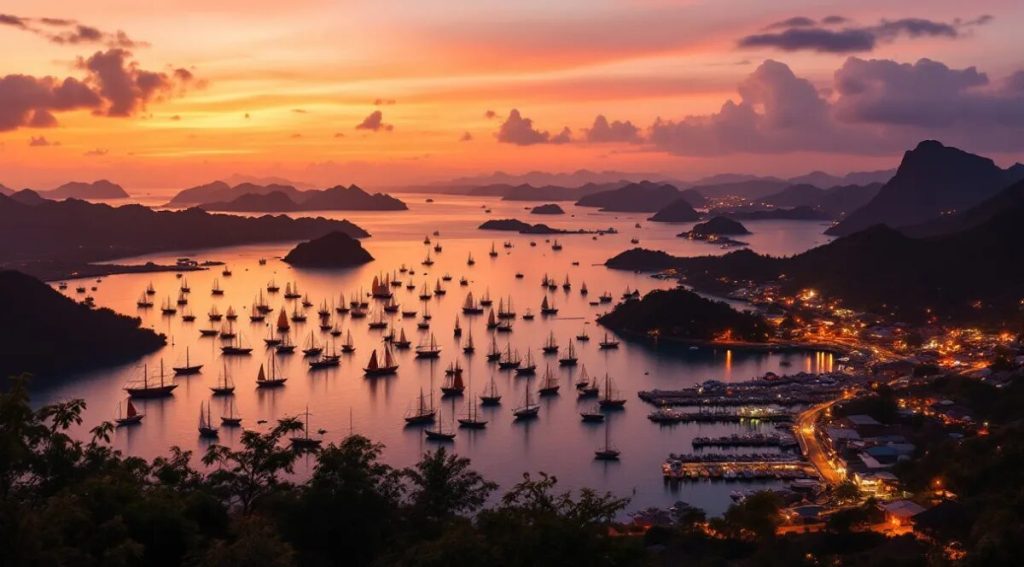
Labuan Bajo is the embarkation point for Komodo National Park and the wider Flores Sea, and its harbor sees everything from single-day speedboats to multi-night liveaboards departing daily. A liveaboard route lets you sleep inside or near the park rather than commuting back to town each evening, which is what makes early sites like Padar’s sunrise viewpoint realistic without a pre-dawn transfer from the mainland.
Komodo National Park Fees and Regulations
Komodo National Park caps visitor numbers at 1,000 per day park-wide, split into three scheduled sessions rather than a separate quota per island. Since April 2026, every visitor must book Komodo and Padar entry in advance through the official SiOra online reservation system, which issues a QR-code e-ticket linked to your passport. The official PNBP entrance fee (PP No. 36/2024) is USD 40 (USD 50 at weekends and on public holidays) per international visitor per visit, covering basic trekking, wildlife viewing and snorkeling shared among 1 – 5 visitors. The ticket, the guide fee and the conservation and dock charges are all inside one published rate, so the total park-side cost is USD 40 per person, or USD 50 at a weekend or on a public holiday. Rates shown here are current as of August 2026 — verify the latest schedule on the official Komodo National Park authority fee page before you travel. Full breakdown on our entrance and ticket cost breakdown page.
When to Sail
The dry season, roughly April to November, brings the calmest seas and most reliable conditions for sailing, diving and hiking the park’s viewpoints. July and August are the busiest booking months; the shoulder months of April to June and September to November combine good weather with lighter demand. December through March brings more rain and rougher seas at times, though liveaboards continue to operate with more flexible routing during this period.
Top Liveaboard Route Stops
- Rinca and Komodo Island: Ranger-guided treks to see wild Komodo dragons, the anchor stop on almost every liveaboard itinerary regardless of length.
- Padar Island: A moderate 30-to-40-minute climb rewarding hikers with a view over three differently colored bays, best done at sunrise.
- Kalong Island: Known for large fruit bat colonies that take flight at dusk, a sunset stop included on many multi-day routes as boats reposition for the evening.
- Kanawa Island: A quieter reef with shallow water suited to snorkelers of all levels, often used as a relaxed add-on day.
- Karang Makassar (Manta Point): A shallow manta ray cleaning station reachable on longer routes, snorkel-friendly as well as diveable.
Sample 4-Night Route Structure
| Night | Typical stops |
|---|---|
| Night 1 | Depart Labuan Bajo, evening at Kalong Island for the bat flight, anchor nearby |
| Night 2 | Padar sunrise hike, Pink Beach, Komodo dragon trek at Loh Liang |
| Night 3 | Rinca Island dragon trek at Loh Buaya, snorkeling at Kanawa or a similar reef |
| Night 4 | Karang Makassar (Manta Point) snorkeling or diving, return sail to Labuan Bajo |
This is a representative structure, not a fixed schedule — the exact order and stops on any given departure shift with weather, tides and which boat you book. Shorter 2- or 3-night routes typically compress this into the dragon trek, Padar and one snorkeling stop, dropping Manta Point or Kalong Island depending on the operator’s standard circuit.
Shared Cabin or Private Charter?
Shared liveaboards sell individual cabins on fixed departure dates with a set group and route, the more budget-friendly way to sail a multi-night boat. Private charters take the whole vessel for your group alone, letting you set the exact route, pace and departure time at a higher total cost. Current pricing for both formats depends heavily on vessel class, cabin type, season and trip length, so rather than quote a single figure here, current departures and rates for both formats are listed on our operating partner’s Komodo liveaboard page, where you can compare shared and private options directly.
Booking Timeline
Shared cabins on popular routes are worth booking three to six weeks ahead in the dry season, and earlier still for July, August and year-end holidays. Private charters reward even earlier confirmation since each vessel serves one group at a time. Deposit structures and balance-due timing vary by operator and vessel, so confirm the specific payment schedule in writing when you book rather than assuming a standard policy applies across every boat.
Extending to Raja Ampat
Divers and snorkelers with more time sometimes extend a Labuan Bajo trip toward Raja Ampat in West Papua, renowned for exceptional coral reef biodiversity. Raja Ampat runs on its own permit system, season (roughly October to April for the calmest conditions) and departure point (Sorong, not Labuan Bajo), so it is generally planned as a separate leg rather than a single continuous route. Current Raja Ampat charter listings are on our partner’s Raja Ampat yacht charter page.
What to Pack for a Multi-Night Liveaboard
Beyond standard warm-weather clothing, pack reef-safe sunscreen, a hat, and closed walking shoes for the Padar and dragon-trekking trails. A dry bag protects electronics during tender transfers between boat and shore, and motion-sickness remedies are worth carrying even for confident sailors, since open-water legs between islands can be rougher than sheltered anchorages. Cabins on smaller boats often have limited storage, so a soft duffel packs more practically than a rigid suitcase.
Book Your Labuan Bajo Liveaboard with Komodo Luxury
Compare current multi-night departures, shared and private, on Komodo liveaboard, or message Komodo Luxury directly with your dates and preferred route. WhatsApp Komodo Luxury at +62 811-3823-875 or email sales@komodoluxury.com.
Last updated: 29 August 2026.
This is covered in more depth in our guide to yacht rental options in Labuan Bajo.
Ready to explore the stunning waters around Labuan Bajo? Consider a VIP boat charter for a premium experience, or browse the full fleet for more time on the water. For those seeking private-group comfort, a traditional sailing trip might be ideal. To compare all your options, check out Komodo Luxury’s boat tour lineup.
Ready to turn this into a real Komodo National Park trip?
More posts
Frequently asked questions
How many nights should a Labuan Bajo liveaboard be?
Two nights (3D2N) is the most common format and comfortably covers the dragon trek, Padar, and one or two snorkeling stops. Four nights or longer adds Manta Point and the park’s quieter northern and southern zones for travelers who want a fuller route rather than the core highlights.
Is a shared cabin liveaboard comfortable enough for a multi-night trip?
Standards vary widely by vessel and price tier, from simple fan-cooled bunks to air-conditioned ensuite cabins, so “shared cabin” alone tells you little about comfort. Ask for cabin photos and the guest count at full occupancy before booking, regardless of which route you choose.
What’s included in the liveaboard price versus charged separately?
Most liveaboards include the boat, crew, meals and basic snorkeling gear in the quoted price, while national park entrance and ranger fees are typically listed as a separate line since they are set by the park authority, not the boat operator. Confirm exactly what your specific quote includes before paying a deposit, including whether drinking water, soft drinks and any alcohol are covered or billed separately at the end of the trip.
How do the landscapes of Komodo National Park compare to Sabah?
Komodo National Park’s landscapes are characterised by rugged hills, savannahs, and unique volcanic formations, offering dramatic coastal views. In contrast, Sabah features lush rainforests, mountainous terrain, and the iconic Mount Kinabalu. While Komodo’s dry, arid environment contrasts with Sabah’s tropical climate, both regions boast rich biodiversity and stunning natural beauty.
For choosing a liveaboard destination, how does the biodiversity in Komodo National Park compare to Sabah for typical itineraries?
Komodo itineraries give you a tighter mix of dragons, savannah hills, and reef life, with high chances of manta encounters in season and compact sailing between sites. Sabah’s biodiversity is broader but spread across inland rainforests, river systems, and offshore islands, so you usually need separate trips for orangutans, pygmy elephants, and Sipadan-level diving. For a single marine-focused liveaboard, Komodo is more logistically efficient.
How does Komodo National Park contribute to biodiversity?
Komodo National Park contributes to biodiversity by protecting the Komodo dragon, numerous bird species, and a rich marine ecosystem. Its conservation efforts help maintain the ecological balance of its islands and surrounding waters, ensuring the survival of endemic species and diverse marine life, which are vital to the park’s ecological health.
How does the biodiversity in Komodo compare to the Maldives?
Komodo National Park’s biodiversity includes terrestrial species like the Komodo dragon and a rich marine ecosystem with coral reefs and manta rays. The Maldives, primarily known for its marine biodiversity, features vibrant coral reefs and diverse fish species. While both are marine biodiversity hotspots, Komodo also offers significant terrestrial diversity.
Start Planning Your Komodo Trip
Tell Komodo Luxury your travel dates, group size and priorities — trekking, diving, a private charter or a budget-friendly shared boat — and they will put together options with current pricing.