Birdwatching and Marine Life in Komodo National Park
Komodo National Park's wildlife extends well beyond the dragons: its dry-forest and coastal habitats support the yellow-crested cockatoo and other dry-adapted bird species, large fruit-bat (flying fox) colonies visible at dusk, and marine life typical of the Coral Triangle — manta rays, sea turtles, reef sharks and exceptionally rich coral reef fish communities.
The park’s dual land-and-sea UNESCO listing reflects this: it protects the dragon’s terrestrial habitat and the marine ecosystem surrounding it as one connected system.
Birdlife across Komodo, Rinca and Padar
The park’s dry monsoon forest and savanna habitat support a distinct set of bird species adapted to seasonal water scarcity and open terrain rather than dense rainforest. Notable species recorded in and around the park include the yellow-crested cockatoo (Cacatua sulphurea), a critically endangered species for which the park is an important remaining stronghold; the orange-footed scrubfowl (Megapodius reinwardt), a ground-nesting bird known for building large incubation mounds; and various raptors including the white-bellied sea eagle, commonly spotted soaring along the coastline. Coastal and mangrove areas add species typical of Indonesian wetland habitat, including waders and the occasional migratory visitor. As of August 2026, no official recent island-by-island population census for these species has been published by the park authority that this site can point to — where a specific count matters to your research, verify directly with Balai Taman Nasional Komodo or an independent conservation body rather than relying on an unsourced figure repeated online.
The Kalong Island fruit-bat colony
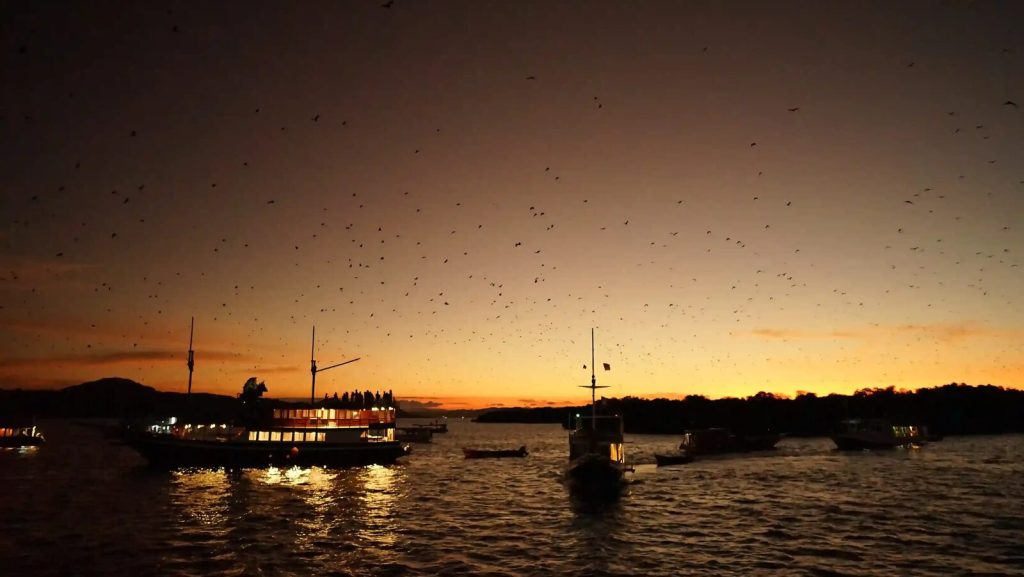
One of the park’s most visually striking wildlife spectacles is the nightly emergence of fruit bats (flying foxes) from mangrove roosts on Kalong Island — the island’s name literally translates to “flying fox” in Indonesian. At dusk, thousands of bats stream out in a continuous silhouette against the sunset sky, heading to feeding grounds on nearby islands, before returning to roost by dawn. This is typically viewed from a boat anchored offshore as a late-afternoon stop on a multi-day itinerary rather than a standalone excursion — see our photography guide for tips on capturing the silhouette shot.
Marine life: what the Coral Triangle waters actually hold
Komodo National Park sits within the Coral Triangle, a region recognized globally for exceptional marine biodiversity. The park’s waters host manta rays at cleaning stations such as Manta Point (Karang Makassar) and Manta Alley, green and hawksbill sea turtles, reef sharks, and an extensive range of reef fish supported by generally healthy coral cover across many of the park’s dive and snorkel sites. Less commonly, dive operators report occasional sightings of dugongs and passing whale sharks, though neither should be treated as a reliable, expected encounter on a standard trip. Full detail on the park’s flagship snorkeling sites is in our Manta Point and Pink Beach guide.
| Habitat | Notable species |
|---|---|
| Dry savanna and monsoon forest | Komodo dragon, Timor deer, wild boar, long-tailed macaque (Rinca) |
| Coastal and mangrove | Fruit bats (Kalong Island), various wading and coastal bird species |
| Open sky / raptors | White-bellied sea eagle, other raptors |
| Forest canopy | Yellow-crested cockatoo, orange-footed scrubfowl |
| Marine — reef and open water | Manta rays, sea turtles, reef sharks, extensive coral reef fish; occasional dugong and whale shark sightings |
Why this matters for how you plan a visit
Because the park’s wildlife value spans both land and sea, a well-rounded itinerary generally pairs a dragon trek with at least one snorkeling or diving stop rather than treating the trek as the entire trip — the marine side of the park is genuinely comparable in significance to the dragons themselves from a conservation standpoint, even though it gets less attention in casual trip planning. If wildlife diversity beyond the dragons is a priority, building in time for Manta Point and, ideally, the Kalong Island bat colony rounds out a trip considerably compared to a dragon-only day.
Conservation status and why it matters
Komodo National Park’s protected status covers this entire mix of species, not the dragon alone, which is part of why activities like snorkeling and diving inside the park come with the same rule-following expectations as trekking: no touching coral, no removing marine life, and following ranger and guide instructions around wildlife on land. The yellow-crested cockatoo’s critically endangered status in particular makes the park an internationally significant conservation site independent of its dragon-driven tourism reputation.
Seeing this wildlife on your trip
Komodo Luxury’s Komodo boat tour and multi-day liveaboard itineraries typically combine a dragon-trekking island, a Manta Point or Manta Alley stop, and — on longer itineraries — a Kalong Island sunset stop, giving a genuine cross-section of the park’s wildlife rather than the dragons alone. Message the Komodo Luxury team on WhatsApp at +62 811-3810-8110 to build wildlife variety into your itinerary.
More posts
Sources and review
Last updated: August 2026. Species information reflects generally documented wildlife of Komodo National Park; population figures are not cited where no dated, sourced official count could be verified.
Frequently asked questions
What birds can you see in Komodo National Park?
Notable species include the critically endangered yellow-crested cockatoo, the orange-footed scrubfowl, and coastal raptors such as the white-bellied sea eagle, adapted to the park’s dry savanna and coastal habitats.
What marine life is in Komodo National Park?
Manta rays, sea turtles, reef sharks and rich coral reef fish communities are the most reliably seen; dugongs and whale sharks are occasionally reported but not a guaranteed sighting.
Where can you see fruit bats in the park?
Kalong Island is known for its dusk fruit-bat colony, visible as bats stream from mangrove roosts at sunset, typically viewed from an anchored boat.
Is Komodo National Park only about the dragons?
No — its UNESCO listing and conservation significance cover both the terrestrial dragon habitat and the surrounding Coral Triangle marine ecosystem as one connected protected area.
Last updated: August 2026. Species information reflects generally documented wildlife of Komodo National Park; population figures are not cited where no dated, sourced official count could be verified.
Are there unique reef fish species only found in Komodo?
Komodo National Park is part of the Coral Triangle, known for its exceptional marine biodiversity. While many reef fish species are widespread across the region, some species exhibit unique colour morphs or behaviours specific to the park’s diverse habitats. For precise identification, consult local marine biologists or dive guides familiar with the area’s underwater life.
What bird species are found in the park?
Komodo National Park hosts a variety of bird species, including the critically endangered yellow-crested cockatoo, the orange-footed scrubfowl, and the white-bellied sea eagle. The park’s diverse habitats, from dry forests to coastal areas, support these and other species adapted to the unique environmental conditions found here.
Do I need a special tour or permit to see what marine life is unique to the park?
You do not need a special marine-life permit beyond the standard Komodo National Park entrance ticket and ranger-guided requirements, but you must visit by licensed boat and follow zoning rules for diving and snorkeling. Join reputable operators who know protected manta and shark sites, seasonal closures, and currents. They provide briefings on safe wildlife distances and marine park etiquette so you can enjoy signature species without disturbing them.
Are there whale watching tours in Komodo National Park Indonesia?
Whale watching tours are not a primary focus in Komodo National Park, as the area is more renowned for its rich coral reefs and marine biodiversity. However, sightings of whales, including pilot and sperm whales, can occur, particularly during migration periods. Check with local tour operators for any available excursions.
Can I see whale sharks near Komodo National Park sustainably?
Whale sharks are occasionally spotted in the waters around Komodo National Park, particularly during plankton blooms. Sustainable viewing practices are essential, including maintaining a respectful distance and avoiding any actions that could disturb these gentle giants. Engage with responsible tour operators who adhere to conservation guidelines.
How do Komodo dragons impact their ecosystem?
Komodo dragons are apex predators in their ecosystem, playing a crucial role in controlling prey populations such as deer and wild boar. Their presence helps maintain a balanced ecosystem, influencing the distribution and behaviour of other species within the park’s terrestrial habitats.
What types of sharks are in the park?
Komodo National Park is home to various shark species, including reef sharks such as the blacktip, whitetip, and grey reef sharks. These species are commonly seen by divers exploring the park’s rich coral reefs and contribute to the area’s marine biodiversity.
What conservation rules apply to manta rays in Komodo?
Manta rays in Komodo National Park are protected under Indonesian law, which prohibits fishing and harassment. Conservation rules include maintaining a safe distance, avoiding touching or chasing the rays, and following guidelines set by local authorities and tour operators to ensure sustainable interactions.
Where to photograph seabirds and raptors in the park?
Seabirds and raptors can be photographed along the coastlines and in the dry monsoon forests of Komodo, Rinca, and Padar islands. The white-bellied sea eagle is often seen soaring along the coast, while other species may be observed in the park’s diverse habitats. Early morning or late afternoon offers the best lighting conditions.
How much does a birdwatching expedition in Komodo National Park cost?
A birdwatching expedition in Komodo National Park involves costs such as the park entry fee (USD 40 (USD 50 at weekends and on public holidays) for foreign visitors), ranger fees, and potential additional costs for guided tours. Prices vary by operator and the specific services included, so it is advisable to contact local tour providers for detailed pricing information.
How to identify birds in the park?
Identifying birds in Komodo National Park requires familiarity with the species present, such as the yellow-crested cockatoo and orange-footed scrubfowl. Birdwatchers should use field guides or apps specific to Indonesian birds and consider hiring a knowledgeable local guide to enhance the experience and accuracy of identification.
What are the most common birds in the park?
Common birds in Komodo National Park include the yellow-crested cockatoo, orange-footed scrubfowl, and various raptors like the white-bellied sea eagle. These species thrive in the park’s dry monsoon forests and coastal areas, making them frequently observed by visitors exploring the islands’ diverse habitats.
Start Planning Your Komodo Trip
Tell Komodo Luxury your travel dates, group size and priorities — trekking, diving, a private charter or a budget-friendly shared boat — and they will put together options with current pricing.