Where to Snorkel in Komodo: Manta Point & Pink Beach 2027
The two most famous snorkeling stops in Komodo National Park are Manta Point, a drift site at Karang Makassar where reef manta rays gather over shallow cleaning stations, and Pink Beach, whose rose-tinted sand comes from fragments of red coral and pigmented foraminifera mixed into the white grains.
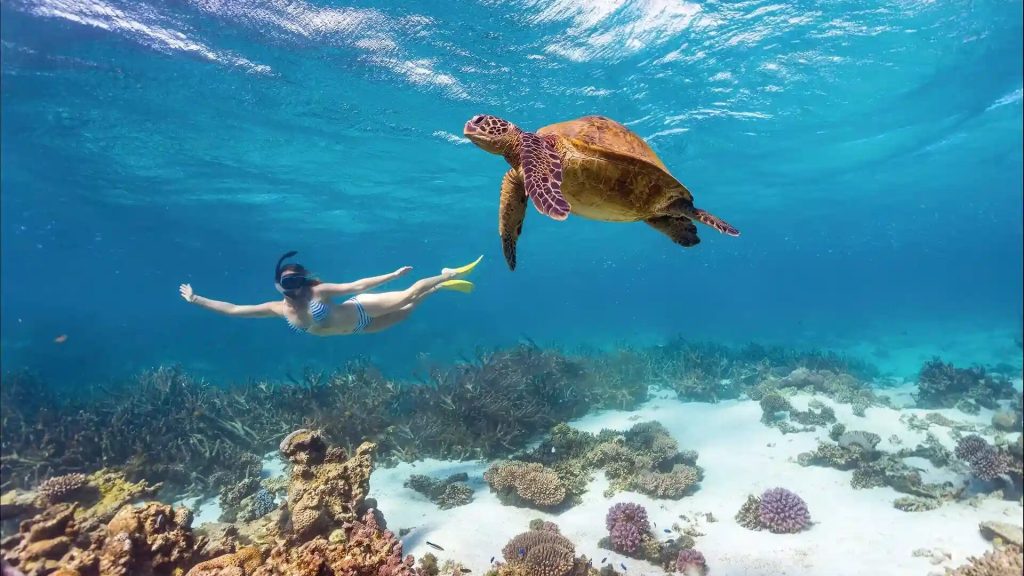
Both sit on the standard boat routes from Labuan Bajo, both work for complete beginners with a guide, and together they anchor almost every snorkeling itinerary in the park. This 2027 guide covers what makes each site special, which supporting spots deserve a place on your route, and how conditions shift month by month so you can time your trip well.
This is a site-selection guide: which stop suits which swimmer, and how each behaves through the year. Once you have chosen your stops, the Komodo snorkeling trip page covers what a guided day at Manta Point and Pink Beach includes and how to reserve one.
Both sites sit on standard multi-stop routes out of Labuan Bajo. Komodo Luxury’s catamaran charters commonly include Manta Point and Pink Beach on the same one-day itinerary.
What Makes Manta Point Special?
Karang Makassar is a long stretch of coral rubble and low reef where the water is often only three to ten meters deep, which means snorkelers on the surface are genuinely close to the mantas rather than watching silhouettes far below. Reef manta rays visit the site’s cleaning stations, patches of reef where small wrasses pick parasites from their skin, and the standard technique is a gentle drift: the boat drops you up-current, you float with the flow past the stations, and the tender collects you down-current. Mantas here can span three to four meters across, and encounters range from a single cruising animal to trains of several following each other along the rubble. The site is snorkel-first by nature, since the action happens in the top few meters.
What Can You Expect at Pink Beach?
Pink Beach, on Komodo Island’s coastline, pairs its unusual sand with one of the park’s easiest reef entries: a coral garden starting within swimming distance of the shore in calm, clear water. The pink tint is strongest at the waterline where waves concentrate the coral fragments, and it photographs best in late morning to early afternoon light. In the water, expect dense hard-coral formations from two to ten meters, anthias clouds, parrotfish, angelfish, and regular turtle sightings along the deeper edge. Because entry is from a beach rather than a drift, this is the stop where families settle in, weaker swimmers gain confidence, and photographers work split shots of sand and reef in one frame.
Which Other Snorkel Spots Deserve a Place on Your 2027 Route?
A good boat itinerary surrounds the two headliners with supporting sites that add variety without long crossings. The strongest candidates:
| Site | Why Go | Difficulty |
|---|---|---|
| Taka Makassar | Ring-shaped sandbar with shallow turquoise flats beside coral edges | Very easy |
| Siaba Besar | Seagrass bay with frequent green turtles and gentle conditions | Easy |
| Kanawa Island | House reef straight off the beach, rich shallows near Labuan Bajo | Easy |
| Kelor Island | Clear-water beach reef paired with a short viewpoint hike | Easy |
| Menjaga Baru | Sloping coral garden popular on half-day and sunset routes | Easy to moderate |
Full-day routes usually fit Manta Point, Pink Beach, and one or two of these; multi-day boats cover them all at a calmer pace.
How Do Conditions Change Month by Month?
Komodo’s snorkeling calendar follows the monsoon rhythm, and the headline pattern for 2027 planning is simple: the dry season from April to November delivers the most reliable clarity, while the wet season that runs December to March delivers the most mantas, right across that window. In more detail:
Monsoon timing, not tourism seasonality, sets the April-to-November dry window and the December-to-March wet one, and Indonesia’s meteorological agency publishes the pattern at bmkg.go.id.
- April to June: calm seas, strong visibility, green hills, the most versatile window
- July and August: sunny and busy, with wind chop possible on exposed crossings
- September to November: settled seas return, water stays clear, crowds thin after August
- December to February: the wettest stretch of the year, with plankton-rich water, softer visibility and afternoon showers likely
- March: the rains taper, boats are quieter and clarity improves; it is also the last month of the December-to-March manta peak at Karang Makassar
Water temperature holds around 24 to 28 degrees Celsius across the central sites, so a rash guard or thin wetsuit is enough for most people year-round.
How Do You Snorkel Safely in Komodo’s Currents?
The same tidal flow that feeds the reefs creates real currents, and every good operator manages them with a fixed routine: snorkel sessions are timed to the tide tables, a guide enters first to read the flow, and the tender shadows the group throughout the drift. Your part is equally simple. Stay with your guide and the group line, float rather than fight when the current runs, and raise a hand rather than swimming against flow if you drift wide, the boat comes to you. Wear fins even if you swim well, keep reef distance to protect both coral and skin, and use reef-safe sunscreen or, better, a long-sleeved rash guard. Mantas are protected in the park: no touching, no chasing, and no blocking their path over the cleaning stations.
How Do You Book the Right Snorkeling Trip for 2027?
Match the format to your time and priorities. A dedicated Komodo snorkeling trip covers both headline sites plus a supporting stop in a single day from Labuan Bajo, with equipment and guiding included. Travelers carrying cameras who want repeat manta drifts, guide positioning, and time built around light should step up to a Komodo diving photography package, which runs the same sites on a schedule written for image-making. Multi-day boats fold all of these spots into liveaboard routes if you would rather sleep on the water and snorkel the quiet early hours.
Last updated: August 2026.
Book Your Komodo Snorkeling Days with Komodo Luxury
Tell Komodo Luxury your dates and whether you want a single-day Manta Point and Pink Beach run or a multi-day route with repeat drifts, and they will confirm the right boat and timing for the season. Message the Komodo Luxury desk on WhatsApp at +62 811 3823 875 or email sales@komodoluxury.com to reserve your spot.
For an unforgettable snorkeling adventure at Manta Point and Pink Beach, consider a multi-day liveaboard with Komodo Luxury, or explore the waters with a VIP boat charter. Depending on your group size and schedule, you might also opt for the full fleet or enjoy a traditional sailing trip to fully experience the park’s stunning marine life.
Ready to turn this into a real Komodo National Park trip?
More posts
Frequently asked questions
Can beginners snorkel at Manta Point?
Yes, with a guided boat. The site is a drift over rubble flats often just three to ten meters deep, so beginners float with the current while the tender follows the group. No certification is needed, fins and a mask are provided, and guides pair nervous swimmers with flotation aids. Calm-season months from April to June are the easiest introduction.
Why is the sand at Pink Beach pink?
The color comes from fragments of red coral and red-pigmented foraminifera, tiny shelled organisms, mixed into the white calcium sand. Wave action concentrates the red particles along the waterline, which is why the tint looks strongest where the sea meets the beach and softens higher up the shore. Midday light shows the effect most clearly.
What are the odds of seeing manta rays on a snorkeling trip?
Karang Makassar is one of the most consistent manta sites in Indonesia because its cleaning stations give the animals a reason to return daily, and sightings occur across the whole year. Odds peak from December to March, when plankton concentrations rise. Boats often make two passes, and multi-day itineraries can revisit on a second morning.
Do I need a wetsuit to snorkel in Komodo?
Central-site water temperatures sit around 24 to 28 degrees Celsius, so most snorkelers are comfortable in a swimsuit with a long-sleeved rash guard, which also handles sun protection. A thin 3 millimeter wetsuit helps if you feel cold easily or plan long sessions. Southern park waters run cooler, but standard snorkel routes rarely visit them.
Can you swim and snorkel safely at Komodo Pink Beach with kids?
Yes, you can swim and snorkel safely at Komodo’s Pink Beach with kids, as its gentle waters and shallow areas make it suitable for families. However, always supervise children closely and consider hiring a guide to ensure safety, as currents can vary with tides and weather conditions.
Where to snorkel with manta rays in Komodo?
Manta Point at Karang Makassar is the prime spot to snorkel with manta rays in Komodo National Park. The site features shallow cleaning stations where mantas gather, allowing snorkelers to observe these majestic creatures up close in their natural habitat.
Can beginners snorkel at Manjarite in Komodo National Park?
Yes, beginners can snorkel at Manjarite in Komodo National Park. The site offers calm waters and vibrant coral gardens, making it an accessible and rewarding spot for novice snorkelers. Hiring a guide is recommended to enhance the experience and ensure safety.
Can you snorkel at Pink Beach?
Yes, you can snorkel at Pink Beach, located on Komodo Island’s coastline. The area is known for its unique pink sand and vibrant marine life, offering an excellent snorkeling experience. The clear waters and abundant coral make it suitable for snorkelers of all levels.
Can you snorkel independently at Manta Point?
No, you cannot snorkel independently at Manta Point Komodo. A mandatory ranger or guide must accompany all visitors, as independent trekking or snorkeling is not permitted. This ensures safety and enhances the experience by providing insights into the local marine life.
What are the best Komodo snorkeling spots for families?
The best Komodo snorkeling spots for families include Pink Beach and Manjarite. Both offer calm waters and vibrant marine life, making them ideal for family outings. Manta Point is also a highlight, but consider the currents and ensure children are closely supervised.
Can you swim with manta rays near Komodo Island in June?
Yes, you can swim with manta rays near Komodo Island in June, as Manta Point remains active during this time. While manta sightings are not guaranteed, mantas are present at the site all year; June sits outside the December-to-March peak but still offers a fair chance, with clearer water than the wet-season months.
What makes Pink Beach in Komodo unique?
Pink Beach in Komodo is unique due to its rose-tinted sand, created by fragments of red coral and pigmented foraminifera mixed with white sand grains. This distinctive feature, combined with its vibrant coral reefs and clear waters, makes it a standout snorkeling destination.
Where is Pink Beach in Komodo?
Pink Beach is located on the coastline of Komodo Island, within Komodo National Park. It is a popular stop on standard boat routes from Labuan Bajo, offering visitors a chance to explore its unique pink sand and rich marine life.
What makes black sand diving unique in Komodo?
Black sand diving in Komodo is unique due to the volcanic sand’s contrast with the colourful marine life, offering a distinct underwater landscape. This environment attracts diverse species, including rare macro life, making it a fascinating dive experience for enthusiasts.
Pre-wedding and portrait shoots on the water
The backdrops people come for are Padar’s three-bay ridge, the pink sand at Pantai Merah and the open deck of a phinisi at anchor. All three are workable, but they are governed by light and by other boats rather than by the shoot: Padar is worth doing at first light and effectively unusable in the middle of the day, both for the haze and for the queue.
Practicalities are worth settling early. A private charter rather than a shared departure is what buys the time to set up, drone use in the park is restricted and needs to be cleared rather than assumed, and the SiOra session you hold determines the hour you are allowed on the island at all.
What the park exists to protect
The park was gazetted in 1980 for a single species. The Komodo dragon lives nowhere else on earth, and protecting the dry savannah valleys it depends on was the founding purpose.
The remit widened as the marine value became clear. The waters inside the boundary sit in the Coral Triangle and carry a reef system rich enough that UNESCO’s 1991 World Heritage listing rests on both the terrestrial and the marine case. That dual purpose is why the rules a visitor meets look the way they do — ranger-led trekking, fixed moorings, a daily visitor ceiling and timed entry sessions are all instruments for keeping tourism inside what the habitat tolerates.
Start Planning Your Komodo Trip
Tell Komodo Luxury your travel dates, group size and priorities — trekking, diving, a private charter or a budget-friendly shared boat — and they will put together options with current pricing.