Komodo National Park Photography Guide and Best Viewpoints
The single most photographed spot in Komodo National Park is the Padar Island viewpoint, reached by a 20-30 minute stair climb to a saddle overlooking three differently colored bays, best shot at sunrise.
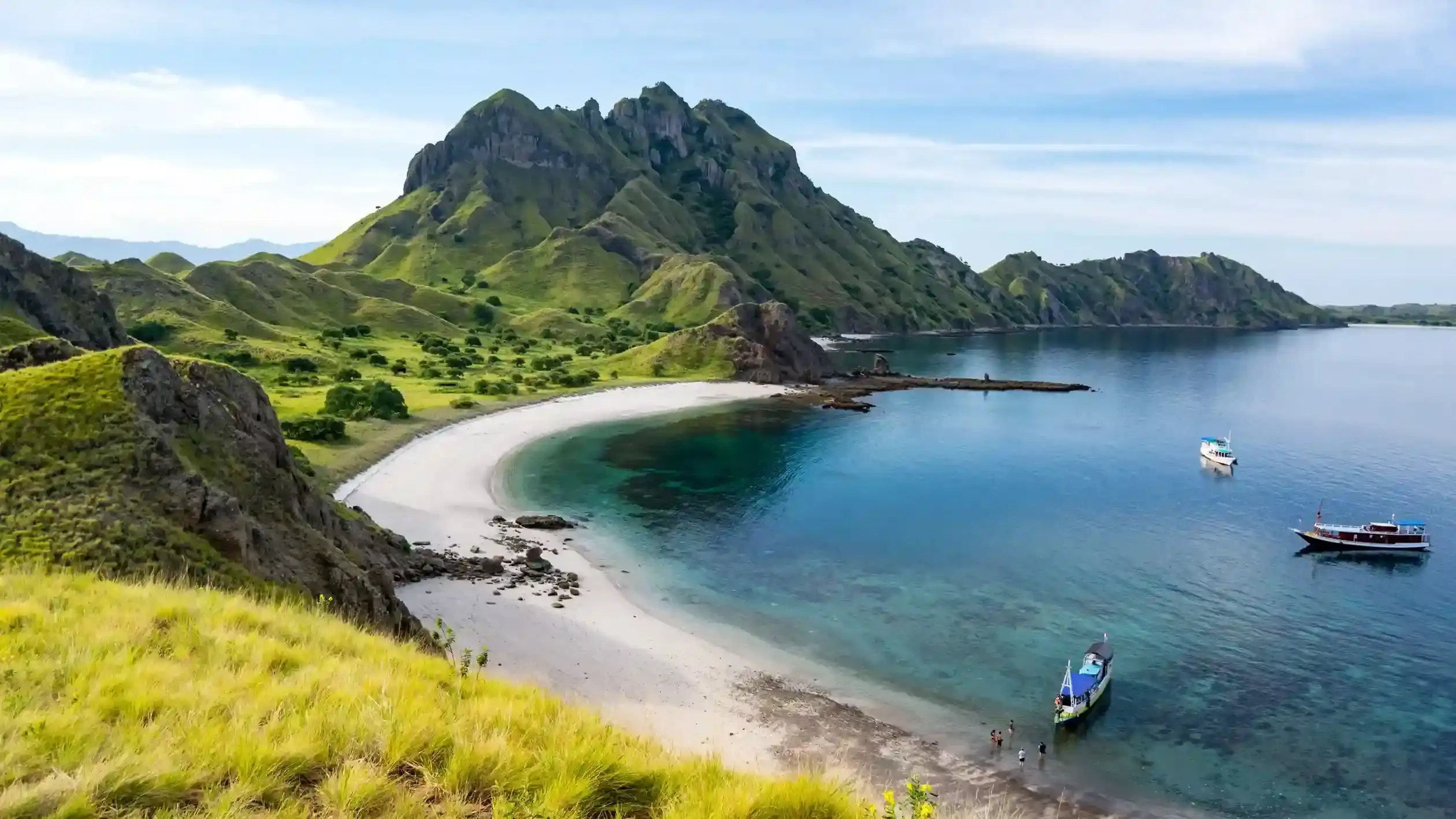
Beyond Padar, the strongest photo opportunities are Pink Beach’s rose-tinted sand and reef, close-up dragon portraits at Loh Liang or Loh Buaya ranger posts, and the Kalong Island bat colony silhouetted against sunset. Any AI-generated illustration used on this site is clearly labeled as such in its alt text and is never presented as a photograph of a real place.
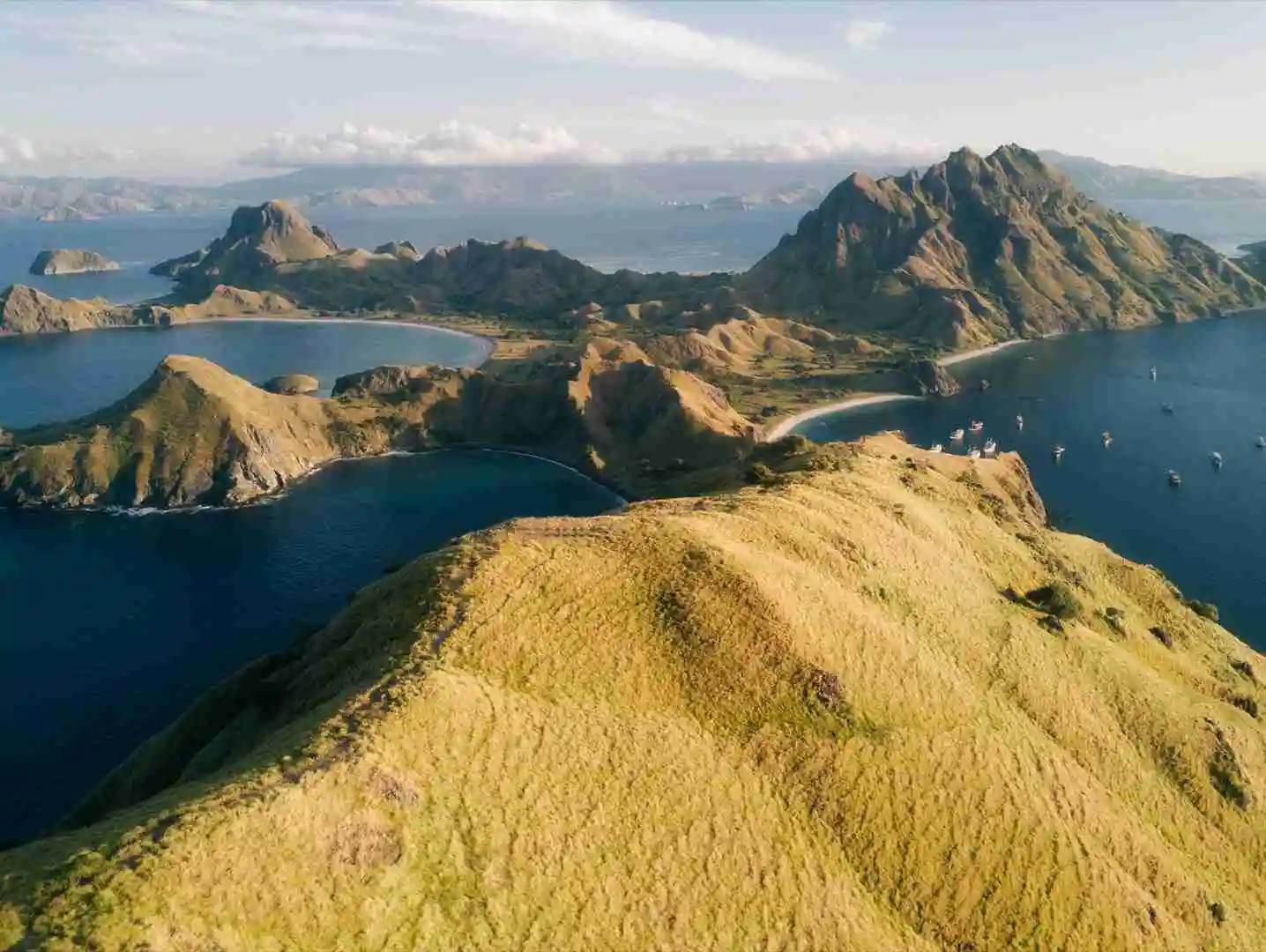
Padar Island viewpoint — the three-bay panorama
Padar’s viewpoint is the park’s signature shot: a hilltop saddle looking down over three bays, each with a visibly different sand tone (white, black and a pink-grey blend), fringed by the island’s dry, dragon-shaped hills. The trail is short but steep, unshaded, and gets hot quickly once the sun is up, which is the main reason operators schedule the climb for sunrise. Arriving in the pre-dawn dark means climbing partly by headlamp, but it rewards early arrivals with soft directional light across the bays and far fewer other visitors in the frame — later-morning boats crowd the same viewpoint once the light has flattened. A wide-angle lens captures the full three-bay sweep; a short telephoto isolates the color contrast between the bays for a tighter composition.
Pink Beach — color, texture and reef
Pink Beach’s namesake sand photographs most vividly in soft, low-angle light — early morning or late afternoon — when the pink tint (from red foraminifera fragments mixed into the coral sand) shows clearest against the turquoise shallows. A polarizing filter cuts glare off the water’s surface and deepens the color separation between sand, shallow reef and open sea in a single frame. Below the surface, the fringing reef offshore gives snorkelers a second photo opportunity entirely — a waterproof housing or action camera is the practical choice here rather than a DSLR, given the boat-to-beach wet landing most operators use.
Komodo dragons at Loh Liang and Loh Buaya
Ranger-post photography is the most reliable way to get a close, well-lit dragon portrait, since dragons are frequently seen resting near the kitchen areas of both Loh Liang (Komodo Island) and Loh Buaya (Rinca). A telephoto zoom (200mm equivalent or longer) lets you fill the frame without closing the safe distance your ranger sets — dragons are wild, genuinely dangerous animals, and no photograph is worth ignoring a ranger’s instruction to step back. Overcast light or the soft window right after sunrise avoids the harsh midday shadows that a dragon’s textured skin otherwise produces under a high tropical sun.
Kalong Island at sunset — the bat colony silhouette
The classic Kalong Island shot is a silhouette: thousands of fruit bats streaming from mangrove roosts against a colored dusk sky, boat anchored offshore. Because the subject is backlit and constantly moving, a faster shutter speed than you’d expect for a sunset shot (at least 1/500s if you want individual bats sharp rather than motion-blurred) combined with exposing for the sky rather than the bats produces the clean silhouette look most photographers are after. This is typically a late-afternoon add-on stop on multi-day itineraries rather than a standalone excursion.
Underwater: Manta Point and the reef at Pink Beach
Manta ray photography at Manta Point (Karang Makassar) and Manta Alley rewards patience over gear — mantas circle cleaning stations on their own schedule, and a wide-angle underwater lens or GoPro-style action camera captures the animal’s full wingspan better than a zoom, since getting close in open water isn’t always possible or advisable. Visibility and current vary significantly by tide and season, which is one reason operators check conditions on the day rather than promising a guaranteed encounter — see our Manta Point and Pink Beach guide for what to expect underwater on a typical trip.
Sunrise vs sunset: which matters more for your itinerary?
If you can only build your schedule around one golden-hour window, sunrise generally wins for Komodo National Park photography — it is when the Padar climb is scheduled (avoiding both crowds and heat), when boardwalk light at the ranger posts is softest for dragon portraits, and when the sea is typically calmest for the crossing between islands. Sunset has its own dedicated payoff at Kalong Island, but that is usually built into a multi-day itinerary’s evening schedule rather than a standalone photography trip. Our opening hours and sessions guide covers how the park’s daily visiting window interacts with sunrise-timed departures.
Camera gear that actually earns its weight on a boat trip
Space and dry storage are the real constraints on a Komodo boat trip, not lens choice. A practical kit for most visitors is one versatile zoom (roughly 24-105mm equivalent) for islands, boats and portraits, a longer telephoto (200mm or more) reserved for dragon close-ups at a safe ranger-set distance, and a rugged action camera or waterproof housing for Pink Beach and any snorkeling stop — salt spray on an open speedboat crossing is a bigger daily risk to gear than any single dramatic shot is worth. A dry bag or dry box is close to non-negotiable; open boats take spray even on calm days, and afternoon squalls are common enough in the shoulder months that an unprotected camera bag is a real risk. A polarizing filter is the single most useful accessory for both the Padar viewpoint (cutting haze and boosting color separation between the three bays) and Pink Beach (cutting glare off the shallows).
Instagram-favorite spots beyond Padar
Padar’s viewpoint dominates the park’s social-media presence, but a handful of other frames recur across visitor galleries: the pink-sand-meets-turquoise-water line at Pink Beach shot low and wide; a Komodo dragon framed against Loh Liang’s dry savanna backdrop rather than the boardwalk itself; the phinisi-style liveaboard silhouetted at anchor during golden hour, a shot best taken from a tender or dinghy rather than the boat’s own deck; and the Kalong Island bat silhouette described above. None of these require specialist gear — a smartphone with a clean lens and good light produces most of them convincingly, which is part of why Komodo’s photography reputation has grown as fast as its visitor numbers.
Drone photography rules in Komodo National Park
Drone use inside Indonesian national parks is generally restricted and typically requires a specific permit from the park authority (Balai Taman Nasional Komodo) obtained in advance — it is not something you can assume is allowed by simply bringing the drone along, and rules can be enforced strictly given the sensitivity of dragon habitat and the safety of other visitors on narrow trekking trails. If aerial footage matters to your trip, raise it with your operator well before departure so they can confirm the current permit process and any restricted zones, rather than attempting to fly without clearance.
This page’s image policy
This article is written and published as text-first guidance; no photographs are embedded on this page at the time of publication. Where a future update adds photography of Padar Island, Pink Beach or any other real, named location on this site, the image will be a genuine photograph credited to its photographer (for example, sourced from Unsplash under its free license) rather than an AI-generated illustration presented as a real scene. Any AI-generated graphic used elsewhere on this site for layout purposes is labeled as AI-generated in its alt text and is never used to depict a specific named place as if it were a photograph.
Planning your photography-focused visit
A photography-led itinerary generally means prioritizing sunrise departures, budgeting extra time at Padar rather than treating it as a quick stop, and choosing a boat and operator willing to adjust the schedule around light rather than a fixed tour-bus-style timetable. Komodo Luxury’s Komodo boat tour and multi-day liveaboard cruises both build in sunrise arrivals at Padar as standard; mention that photography is a priority when you book so the crew plans anchor timing accordingly. Message the Komodo Luxury team on WhatsApp at +62 811-3810-8110.
Frequently asked questions
In practical terms, what do Camera and drone rules in Komodo National Park mean for permits and on-the-day checks?
You usually enter with only your standard park ticket and assigned ranger, and regular cameras need no extra permit. Drones over 250 g typically require a SIMAKSI permit from Balai Taman Nasional Komodo plus national aviation clearance under Permenhub PM 37/2020. Apply well in advance, carry printed approvals, and expect staff or your boat crew to check permits before launch and restrict flying in clearly briefed no-fly zones.
What should I book or permit if I want to know where are the top spots for sunset photography in Komodo?
For Komodo and Padar, you should secure an official SiOra e-ticket in advance, because those islands now require pre-booking. The practical total for a foreign visitor usually ends up in the mid-range once the park ticket and ranger fee are included, so plan for that before choosing an itinerary. Kalong Island is the classic sunset stop, while Pink Beach can add warm evening colour to your shots.
For photographers wondering where are the best locations for sunrise photography in Komodo if they want to minimise crowds and handle new ticket rules, how should they choose spots and organise bookings?
Padar’s main ridge gives the classic sunrise shot, but it is also the most crowded and now requires a SiOra e-ticket slot plus a guided visit with a ranger. Rinca’s hills are quieter if you overnight on a liveaboard and arrive before day visitors. Arrange boat departure times, confirm ranger availability, pack a headlamp, and carry rain cover for camera gear.
For photographers wondering what are the best snorkeling spots in Komodo National Park for capturing both marine life and landscapes on a single itinerary, which locations and route should they prioritise?
Prioritise Siaba Besar for slow-moving turtles, Kanawa Island for bright, shallow coral and easy entries, and Pink Beach for reef scenes framed by its distinctive shoreline. Base yourself in Labuan Bajo and choose a day trip that links at least two of these, asking operators for morning visits and slack-tide timings to maximise underwater clarity and usable light.
Is drone photography allowed in Komodo National Park?
Drone use is generally restricted and typically requires advance permission from Balai Taman Nasional Komodo. Confirm the current permit process with your operator before your trip rather than assuming it is allowed.
Where should visitors focus on for responsible drone photography around the park?
Think in terms of where you are allowed to fly rather than chasing what are the best spots for drone photography in Komodo. With a SIMAKSI permit and aviation clearance for heavier drones, concentrate on offshore viewpoints from your boat, keeping well away from villages, ranger stations, nesting birds, Pulau Kalong’s bats, and Komodo Airport airspace. Always confirm current no-fly zones with your operator and the park office before launching.
Can I photograph Komodo dragons up close?
You can get close, well-lit shots at the ranger posts (Loh Liang and Loh Buaya) where dragons are frequently seen, but always at the distance your ranger sets — a telephoto lens lets you fill the frame safely rather than approaching further.
Do the images on this site show real Komodo dragons and real locations?
Any AI-generated illustration used on this site is labeled as such in its alt text and is never captioned as a photograph of a real, named place. Where this site publishes a photograph of a real location, it is a genuine image credited to its photographer.
Last updated: August 2026.
For those planning a photography adventure in Komodo National Park, explore the full fleet of Komodo Luxury vessels to find the best option for your journey. To ensure your trip aligns with your schedule, check out their trip FAQ for detailed information.
What are the best diving spots in Komodo National Park for a first-time visitor on a day trip?
Pick one or two high-impact sites that match your certification and the season. Many day trips combine gentle reefs like Siaba Besar or Pink Beach with a drift at Manta Point, while stronger current sites such as Batu Bolong are usually reserved for experienced divers. Ask operators which sites suit your level, how long surface intervals run, and whether you can mix diving with snorkeling or trekking.
For underwater photographers, what are the diving spots in Komodo National Park that give the best chances of mantas and vibrant reefs?
Manta Point and Makassar Reef are prime for reliable manta encounters in season, while Batu Bolong and Castle Rock offer dense reef life and schooling fish. Work with a licensed local operator who understands currents and can time sites to your experience level. For photography, request slower profiles, arrive outside peak crowds, and confirm whether your itinerary includes multiple manta-focused dives.
How should photographers plan their day around the best snorkeling spots in the park?
For photography-focused itineraries, group Pink Beach, Siaba Besar, and Kanawa Island into the same daylight window, as they combine clear water, shallow coral gardens, and frequent turtles and reef fish. Aim for mid-morning to early afternoon when sunlight penetrates best. Coordinate with your boat operator so surface intervals happen near scenic shorelines, and keep a dry bag ready to swap quickly between underwater camera gear and a telephoto lens.
What is the best time of day to photograph Padar Island?
Sunrise. The climb is scheduled early specifically to avoid the heat of the exposed trail and to catch the softest light over the three bays before other boats arrive.
What are the best photography spots in the park?
Top photography spots in Komodo National Park include the Padar Island viewpoint for its iconic three-bay panorama, Pink Beach for its unique sand and reef, and the ranger posts at Loh Liang and Loh Buaya for close-up shots of Komodo dragons. Kalong Island is ideal for capturing bats silhouetted against the sunset.
How to make the most of photography opportunities in Komodo?
To enhance your photography experience in Komodo, aim for sunrise or sunset at Padar Island and Pink Beach. Utilize a polarising filter to boost colours and cut glare. Secure a ranger-led tour for safe dragon encounters at Loh Liang or Loh Buaya. Advance booking via SiOra is essential for Komodo and Padar visits.
What is the best viewpoint in Komodo National Park?
The Padar Island viewpoint, overlooking three differently colored bays from a hilltop saddle, is the park’s most photographed and widely regarded best viewpoint.
Can you visit Komodo National Park without a guide?
No, visiting Komodo National Park without a guide is not allowed. All visitors must be accompanied by a ranger, with a mandatory fee applied per group. This ensures safety and compliance with conservation efforts within the park’s protected areas.
Is alcohol allowed on Komodo National Park tours?
Alcohol policies on tours within Komodo National Park vary by operator. While some may allow moderate consumption, it’s essential to respect local regulations and the natural environment. Always check with your tour provider for specific guidelines regarding alcohol on your trip.
Send Komodo Luxury your dates; they come back with options
Travel dates, group size and what matters most — trekking, diving, a private charter or a shared boat. Our booking partner replies with current pricing.