
Choosing a Komodo Diving Liveaboard Boat in 2027
The right Komodo diving liveaboard for 2027 comes down to four things: the boat style, the cabin standard, the dive schedule, and how experienced the crew is with Komodo's strong currents.
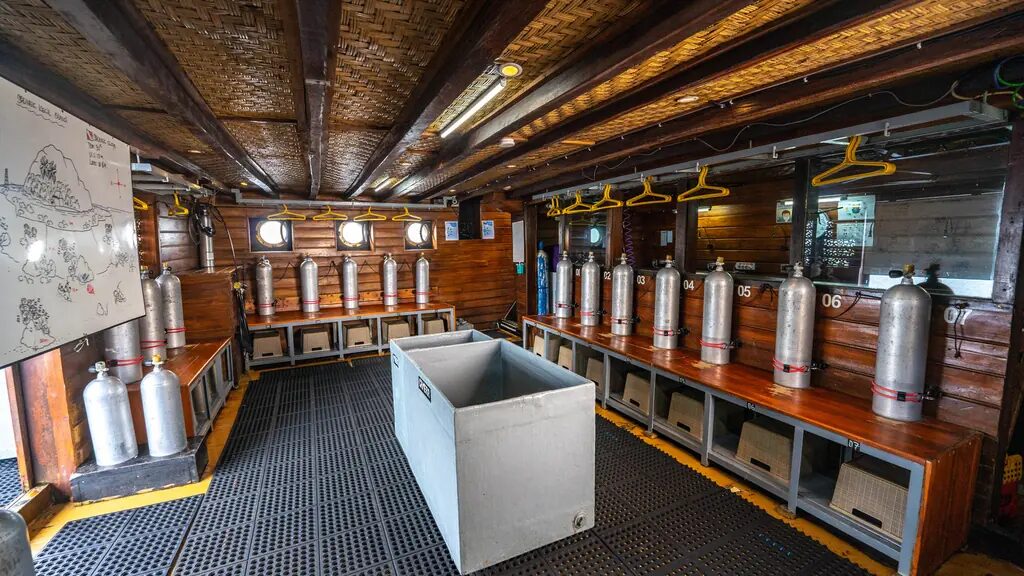
Get those four right and almost any itinerary will deliver mantas, reef sharks, and some of the healthiest coral in Indonesia. Get them wrong and you may spend three days on a boat that skips the sites you came for. This guide breaks down each factor so you can compare boats with confidence before you book.
Komodo Luxury publishes vessel-by-vessel specs for its diving liveaboards on the fleet page, which is a useful way to cross-check the boat features discussed below against a real, bookable vessel.
Why Does the Boat You Choose Matter So Much in Komodo?
Komodo National Park covers roughly 1,733 square kilometers of islands and sea, and its best dive sites are spread across distinct northern, central, and southern zones. A day boat from Labuan Bajo can only reach a fraction of them, which is why liveaboards exist here in the first place. The boat you pick decides which zones you actually dive.
Northern sites such as Castle Rock and Crystal Rock sit far from the southern manta aggregations, so a slow boat with a short itinerary will force a choice between them. Faster or longer-ranging boats let you combine both in a single trip, which is the main reason experienced divers pay more for a capable vessel.
What Boat Styles Operate in Komodo?
Three broad styles dominate the Komodo fleet: traditional wooden phinisi sailing boats, modern motor yachts, and simple budget wooden boats. Each style attracts a different type of diver, and the differences show up in stability, speed, and comfort at anchor.
| Boat style | Typical strengths | Best for |
|---|---|---|
| Traditional phinisi | Character, spacious decks, classic sailing profile | Divers who want atmosphere and photography-friendly decks |
| Modern motor yacht | Speed between zones, air-conditioned interiors, stable camera rooms | Divers maximizing dive count and comfort |
| Budget wooden boat | Low cost, social shared cabins | Backpackers happy with basic bunks and fewer dives |
None of these styles is automatically better. A well-run phinisi with a strong dive team will outperform a neglected motor yacht every time, so judge the operation, not just the hull.
How Should You Judge Cabin Standards?
Cabin categories in Komodo range from shared bunks with fan cooling to private ensuite staterooms with panoramic windows. The single most useful question to ask is whether your cabin has independent air conditioning, because night temperatures on deck can stay warm and humid for most of the year.
Beyond climate control, check bed configuration, whether the bathroom is ensuite or shared, and where the cabin sits on the boat. Lower-deck cabins near the engine room are noisier on overnight crossings, while upper-deck cabins get more movement in swell. If you are a light sleeper, ask for a mid-ship cabin away from the generator.
What Does a Good Komodo Dive Schedule Look Like?
A well-planned Komodo liveaboard runs three to four dives per day, timed around slack tide rather than a fixed clock. Sites like Batu Bolong and The Cauldron are current-driven, and diving them at the wrong tidal window is the difference between a calm, fish-packed dive and an unworkable washing machine.
Ask the operator how they set their daily schedule. Crews that reference tide tables and adjust departure times site by site are the ones that consistently deliver Castle Rock at slack and Manta Point when the mantas are feeding. A rigid schedule printed weeks in advance is a warning sign in this park.
How Experienced Should the Dive Crew Be?
Komodo’s currents are strong enough that several signature sites, including Shotgun and Batu Bolong, are normally briefed as advanced dives. The dive guides’ local site knowledge matters more here than in almost any other Indonesian destination, because entry points and escape routes change with the tide.
Before booking, ask how long the guides have worked in the park, what the guide-to-diver ratio is, and whether the boat carries surface marker buoys, oxygen, and a tender that shadows each dive group. A ratio of one guide to four divers or better is a reasonable benchmark for current-swept sites.
When Should You Book a 2027 Liveaboard?
The dry season from roughly April to November is the most popular window for Komodo liveaboards, and July and August departures on well-reviewed boats routinely fill months in advance. If your 2027 dates are fixed around school holidays, booking six to nine months ahead protects both your cabin choice and your preferred itinerary.
Shoulder months such as April, May, September, and October often combine good conditions with better availability. The wet season brings calmer, plankton-rich water to some southern sites, which certain divers deliberately target for manta activity, so an off-peak trip is not automatically a compromise.
When you are ready to compare specific boats, cabins, and 2027 departure dates, browse the current Komodo diving liveaboard options and shortlist two or three that match your budget and dive experience.
Which Liveaboard Setup Works Best for Photographers?
Underwater photographers have one extra requirement: a dedicated camera table with rinse tanks and charging stations, which smaller budget boats rarely provide. Housings, strobes, and ports need a protected workspace, and a crowded dive deck is where dome ports get scratched.
If you travel with a full rig, look at boats that advertise camera support and flexible dive plans, or choose a purpose-built Komodo diving photography package where the schedule is designed around light, subjects, and longer bottom times rather than a fixed site list.
Last updated: August 2026.
Ready to Compare 2027 Liveaboards with Komodo Luxury?
Tell Komodo Luxury your dates, certification level, and preferred cabin style, and they will shortlist boats that fit. Chat with the Komodo Luxury team on WhatsApp at +62 811-3823-875 or email sales@komodoluxury.com for current 2027 schedules and cabin availability.
Our catamaran charter page has the complete rundown.
Choosing the right diving liveaboard boat for your Komodo adventure in 2027 is crucial, and a multi-day liveaboard with Komodo Luxury offers a comprehensive experience. Alternatively, you might consider a VIP boat charter or a traditional sailing trip, depending on your schedule and group size. For those still weighing options, explore Komodo Luxury’s complete boat tour lineup to find the perfect fit.
Ready to turn this into a real Komodo National Park trip?
More posts
Frequently asked questions
How many days should a Komodo liveaboard trip be?
Three days and two nights is the practical minimum for combining northern dive sites with the central manta areas, and most divers find it enough for eight to ten dives. Trips of four to six nights add the remote southern zone and slower pacing. Day trips exist, but they cannot reach the full spread of sites that make Komodo famous.
Do I need advanced certification for Komodo diving?
Many operators accept Open Water divers but route them to gentler sites, while current-heavy dives such as Batu Bolong, Castle Rock, and Shotgun are typically reserved for divers with advanced certification or proven experience. If you have fewer than about 20 logged dives, tell the operator honestly so they can plan appropriate sites and pair you with the right guide.
What is the best month for a Komodo liveaboard in 2027?
April to November offers the most reliable sea conditions, with July and August being the busiest and best booked far ahead. Shoulder months like May, September, and October balance good visibility with lighter crowds. Some divers choose the wet season on purpose, because plankton-rich water around southern sites can increase manta activity despite reduced visibility.
What should I check before paying a liveaboard deposit?
Confirm the exact itinerary and dive count, the cabin category with air conditioning details, the guide-to-diver ratio, safety equipment including oxygen and surface marker buoys, and the cancellation policy in writing. Also verify what the price includes, since park fees, equipment rental, and nitrox are often billed separately from the headline package rate.
What is the best Komodo liveaboard for advanced divers?
The best Komodo liveaboard for advanced divers is one that offers access to challenging dive sites like Castle Rock and Crystal Rock, known for strong currents and rich marine life. Look for a modern motor yacht with experienced dive crews and itineraries that cover both northern and southern zones for a comprehensive experience.
How much is a liveaboard trip in Komodo National Park?
The cost of a liveaboard trip in Komodo National Park varies based on boat style and trip duration. Expect a range from budget options on simple wooden boats to premium experiences on modern motor yachts. Prices typically include park fees, ranger fees, and conservation components, but confirm specifics with your chosen operator.
Is April a good time for a Komodo liveaboard trip?
April is a good time for a Komodo liveaboard trip: mantas are at the cleaning stations year-round, and April sits right after the December-to-March peak, so the odds are still fair while the seas begin to settle. The weather is generally favourable, and the seas are calm, making it ideal for diving. However, ensure you book in advance due to the visitor quota.
How does the diving experience in Komodo compare to Sabah?
The diving experience in Komodo offers strong currents, diverse marine life, and vibrant coral reefs, similar to Sabah. However, Komodo is known for its manta rays and Komodo dragons, while Sabah offers unique sites like Sipadan. Both destinations provide rich biodiversity but differ in specific marine encounters and underwater landscapes.
Is smoking permitted on liveaboard decks in Komodo?
Smoking policies on liveaboard decks in Komodo vary by operator. Some boats may allow smoking in designated outdoor areas, while others enforce a strict no-smoking policy to ensure safety and comfort for all guests. It’s essential to check with your specific liveaboard operator before booking.
Start Planning Your Komodo Trip
Tell Komodo Luxury your travel dates, group size and priorities — trekking, diving, a private charter or a budget-friendly shared boat — and they will put together options with current pricing.