
Siaba Bay: Green Turtles, Seagrass and the Park’s Easiest Snorkel
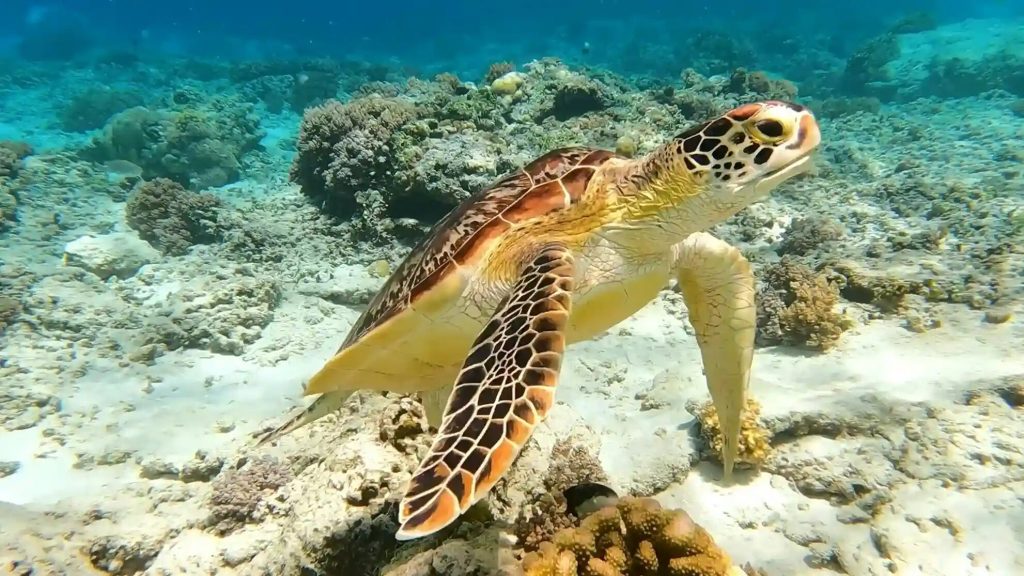
Siaba Bay is where Komodo itineraries put the turtles. It is a sheltered bay on Siaba Besar, in the central part of the park between Labuan Bajo and Komodo Island, and it is one of the few stops on a standard route where the water is genuinely calm, shallow and slow. Green turtles feed on the seagrass beds here regularly enough that operators schedule it as the easy snorkel, and it doubles as a common overnight anchorage for boats that want a quiet night.
Why the turtles are here
Seagrass. The bay’s shallow floor carries meadows of it, and green turtles are grazers — unlike most of the park’s headline animals, they have a reason to stay in one place rather than pass through. The bay is also protected from the tidal race that runs through the channels outside it, which keeps the sediment down and makes the grazing visible from the surface.
Sightings are common but not promised. A slow, quiet pass over the meadow with a guide who knows the current patches works far better than a group of twenty splashing across the middle, and turtles that are approached hard simply leave. The etiquette is the same one that applies at the manta cleaning stations: watch, do not chase, do not touch. Our page on what the park expects of visitors sets out why those rules exist rather than just listing them.
What the snorkelling is actually like
Easy. The entry is from the boat into water that stays shallow over a wide area, the flow is mild compared with almost anywhere else in the park, and there is no drift plan to follow. Beyond the seagrass there are coral patches with the usual reef community — parrotfish, angelfish, butterflyfish — at depths a snorkeller can see clearly without diving down.
That combination makes Siaba the stop operators use for nervous swimmers, for children, and for anyone who found the manta drift more exciting than they wanted. It is also the site where an underwater camera earns its keep for a beginner, because nothing is moving fast and the light reaches the bottom. For divers, the same bay offers a relaxed muck-and-macro dive rather than the current-driven spectacle of the north.
Siaba as an anchorage
Liveaboards use the bay for overnight stops because it is protected and close to the central sites. A boat that sleeps here can be at the manta cleaning station early, before the day boats arrive from Labuan Bajo, which is the single biggest advantage an overnight route has over a day trip. If you are weighing the two formats, the day-trip and liveaboard comparison works through what that early start is actually worth.
The bay also comes into its own in weather. When the exposed crossings get lumpy, a sheltered anchorage with a workable snorkel is what stops a rough day from becoming a wasted one, which is why Siaba appears more often on wet-season itineraries than on dry-season ones.
Where it sits in a route
On a three-day sailing, Siaba usually lands on the last morning, paired with Taka Makassar or Kanawa before the run back to port. On longer routes it can be either an anchorage or a filler stop between the bigger set pieces. It rarely appears on a one-day speedboat itinerary, where the daylight goes to Padar, a dragon trek and the mantas instead.
Park fees apply here as everywhere inside the boundary. The advance reservation introduced in April 2026 is tied to Komodo and Padar landings rather than to a snorkel stop, but nearly every route that includes Siaba also includes one of those islands.
Snorkelling a sheltered bay costs the same park entry as anything else inside the boundary: USD 40 (USD 50 at weekends and on public holidays) per foreign visitor per entry, USD 20 on a regular day and USD 25 at weekends and on public holidaysfor an Indonesian citizen, set by regulation rather than by the boat, and you can read the text at the regulation text on peraturan.go.id.
When to go
Siaba is one of the least season-dependent stops in the park, precisely because it is sheltered. The dry season, April to November, gives the clearest water over the grass; the wet season, December to March, brings more plankton and slightly softer visibility, which matters less here than at a wide-angle reef. Turtles graze year-round, so unlike the manta stations there is no window to plan around.
Siaba works best when your boat can sleep there, which is what turns it from a twenty-minute snorkel into an unhurried morning. Komodo Luxury’s sailing trip routes show which itineraries use the bay as an anchorage rather than a passing stop. To ask which departures do, contact WhatsApp +62 811-3810-8110 or sales@komodoluxury.com.
More posts
Frequently asked questions
Are turtles guaranteed at Siaba Bay?
No, but they are resident rather than migratory here, which makes the odds far better than at a passing reef. Quiet, unhurried snorkelling over the seagrass is what produces sightings; a fast crossing of the bay usually produces none.
Is Siaba Bay suitable for beginners?
It is the stop most operators choose for exactly that reason. Shallow water, mild current, a wide safe area and nothing that requires diving down. Anyone comfortable floating in a vest can snorkel it, and it is a sensible place to practise before the trip reaches the drift sites.
Can you dive at Siaba Besar?
Yes, and it is dived as a relaxed macro and sand-slope site rather than a current dive. It suits new divers, refresher dives and photographers hunting small subjects, which is the opposite of what the northern pinnacles offer.
How long do boats stop at Siaba?
Typically forty-five minutes to an hour and a half for a snorkel stop, and a full night when it is used as an anchorage. Because it is sheltered, it is also the stop that gets extended when weather shortens something else on the itinerary.
Should I touch or feed the turtles?
No. Touching a turtle stresses the animal and can transfer damage to its shell and skin, and feeding changes the behaviour that makes the bay worth visiting in the first place. Keep several metres of distance, stay horizontal at the surface, and let the animal decide how close the encounter gets.
Start Planning Your Komodo Trip
Tell Komodo Luxury your travel dates, group size and priorities — trekking, diving, a private charter or a budget-friendly shared boat — and they will put together options with current pricing.