Batu Bolong: Komodo’s Densest Reef and Its Current Problem
Batu Bolong is a dive site, not a beach stop. The name means “hollow rock” or “rock with a hole”, and what breaks the surface is a small pinnacle in the channel between Komodo Island and Tatawa. Underneath it, the rock drops away as a coral-covered tower that is regularly described as one of the densest reefs in Indonesia — and it is also one of the most current-exposed sites in the park, which is why it is dived on one narrow side and why beginners are usually pointed elsewhere.
Why divers rate it so highly
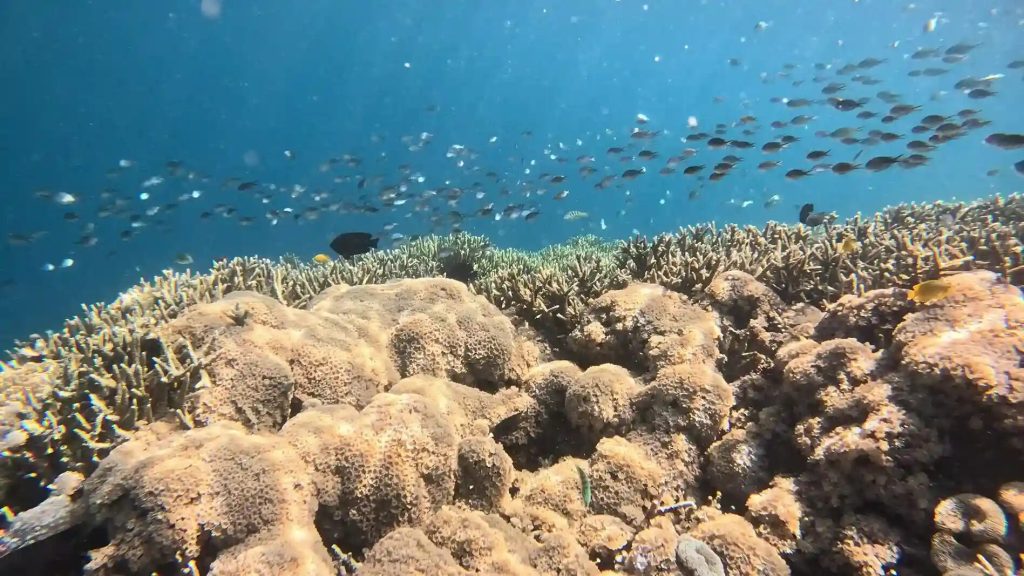
Two things converge here. The pinnacle sits in a channel where tidal flow accelerates, delivering a constant supply of plankton and nutrients; and the rock itself offers a sheltered face where that food arrives without the full force of the current. The result is coral coverage from just under the surface down past recreational depth, with almost no bare rock visible, and a fish population stacked in layers — anthias and fusiliers in the shallows, larger predators patrolling the edges, and the occasional reef shark or napoleon wrasse further down.
The visual density is the point. Where sites like Karang Makassar are about one animal doing one thing, Batu Bolong is about volume: you hang on the sheltered wall and the reef simply does not stop.
The current, honestly
The reason Batu Bolong is dived on a specific face at a specific time is that the flow splits around the pinnacle and can pull downward on the exposed sides. Guides plan the dive around slack and around which face is in the lee, and the standard instruction is to stay on that face rather than swim around the rock. Divers who ignore that instruction are the ones who end up in the down-current.
Most operators want an advanced certification and real experience in moving water before taking anyone here, and a good one will ask about your logged dives rather than only your card. This is not a site where a refresher belongs. If your certification or recency is limited, the calmer central and southern reefs are the sensible substitute, and our dive and snorkel site guide maps which zone suits which level.
Can you snorkel Batu Bolong?
Sometimes, on a slack tide, with a guide who is watching the water rather than the group. The top of the pinnacle is shallow enough that a snorkeller sees a great deal, but there is no beach, no shallow shelf to stand on and no easy exit if the flow builds — you are dropped from and recovered by the boat. Many day-trip operators will substitute a gentler reef rather than put snorkellers in here at all, and that substitution is a sign of competence rather than a sign of cutting corners.
Where it sits in a trip
Batu Bolong is in the central zone, close enough to Labuan Bajo that a dedicated diving day trip can reach it along with one or two other sites. On a liveaboard it usually appears on the way north or on the return leg, sandwiched between the manta stops and the harder northern pinnacles. If you are choosing between formats, the liveaboard-choice page compares what each buys you in dive count and site access.
Park fees apply the same way here as anywhere else inside the boundary, and the reservation system introduced in April 2026 attaches to landings on Komodo and Padar rather than to a dive on a pinnacle. In practice, most diving itineraries include at least one of those landings.
The park ticket quoted across this site is a statutory charge and does not vary between operators, boat classes or booking channels, and its legal text sits at the official copy of the regulation.
When conditions suit it best
The dry season, April to November, brings the calmest surface and the most predictable boat schedules, and the June-to-September core of it is when visibility is generally at its best in the central park. The wet season, December to March, pushes plankton into the water: better for the manta stations, less good for the clear-water photography that Batu Bolong rewards. Current strength here is driven by the tide rather than the calendar, so a rough month and a strong current are separate variables, not the same one.
Diving Batu Bolong properly depends on the boat being able to sit on the right face at the right state of tide, which is a crew decision more than a route decision. Komodo Luxury’s fleet listing shows which vessels carry dive operations and what each one is equipped for. If you want to check certification requirements before committing, message WhatsApp +62 811-3810-8110 or email sales@komodoluxury.com.
More posts
Frequently asked questions
What certification do I need for Batu Bolong?
Most operators ask for an advanced open water certification and comfort in current, and many want to see recent logged dives as well. The requirement is about drift and downward flow rather than depth: the dive itself can be kept shallow, but the water is doing something a novice has not usually practised handling.
Why is it called Batu Bolong?
The name translates as hollow rock, after the eroded opening in the small pinnacle that shows above the surface. What you see from the boat is a modest lump of rock; the site’s reputation is entirely about what hangs beneath it.
Is Batu Bolong good for photography?
Very, provided you can hold position. The coral density gives usable wide-angle almost anywhere on the sheltered face, and the fish come close enough that a compact camera works. The limitation is buoyancy and current, not gear — a photographer fighting the flow will damage coral and lose the shot at the same time.
Can I dive it on a day trip from Labuan Bajo?
Yes. It sits in the central zone within comfortable reach of the harbour, and dedicated diving day boats commonly pair it with a manta stop or a nearby reef. The northern pinnacles are the ones that need an overnight route.
Are there sharks at Batu Bolong?
White-tip and grey reef sharks are seen here, usually deeper and off the wall rather than in the shallows, and sightings are common rather than guaranteed. They are not the reason most divers come — the coral coverage and the fish volume are — but they are a regular part of the site.
Start Planning Your Komodo Trip
Tell Komodo Luxury your travel dates, group size and priorities — trekking, diving, a private charter or a budget-friendly shared boat — and they will put together options with current pricing.