
10 Safety Tips for Visiting Komodo Dragons in 2027
The single most important safety rule for visiting Komodo dragons is simple: never trek without a licensed park ranger, on Komodo or Rinca island, under any circumstances.
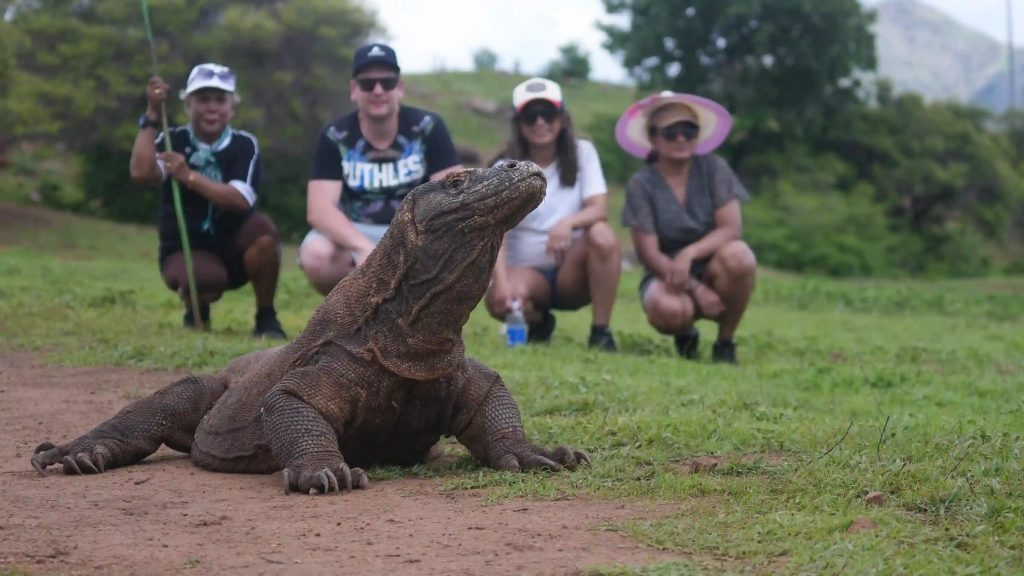
Beyond that, the ten practical rules below — drawn from official park protocol and how licensed rangers actually manage groups on the ground — cover what keeps a dragon encounter a safe, memorable experience rather than a genuine risk.
1. Always Trek With a Licensed Ranger
No visitor is permitted to walk trekking trails on Komodo or Rinca island without a licensed ranger present. Rangers carry a traditional forked staff used to redirect a dragon that approaches too closely, and they are trained to read behavioral cues that are not obvious to visitors. This rule has no exceptions regardless of how experienced or confident you feel — it is the foundation every other safety measure builds on.
2. Stay on Marked Trails
Rangers route groups along established, marked paths specifically chosen to avoid known denning areas, feeding zones, and terrain where dragons are more likely to be startled or defensive. Straying from the path, even briefly for a better photo angle, removes the predictability that keeps both you and the ranger’s risk assessment accurate.
3. Keep Your Group Together
Historical incident records consistently show that people caught alone or separated from a group face meaningfully higher risk than those moving as a supervised unit. Do not lag behind to take photos or wander ahead of the ranger’s pace, even for a few meters — staying within the group is one of the simplest and most effective safety behaviors on any trek.
4. Maintain the Ranger’s Instructed Distance
Rangers set and adjust safe viewing distances in real time based on an individual dragon’s behavior, typically several meters, and that distance is not a suggestion. The classic “walking with a dragon” photograph tourists see online is taken from a ranger-directed safe angle, not by approaching closely — resist the urge to move closer than instructed for a better shot.
5. Never Touch or Feed a Dragon
Touching, feeding, or otherwise attempting to interact physically with a dragon is strictly prohibited under park rules, for good reason: a dragon habituated to human food or contact becomes measurably more dangerous, not less, since it begins associating people with food rather than treating them as neutral or something to avoid. This rule protects future visitors as much as it protects you.
6. Avoid Strong Scents and Bright, Loose Clothing
Komodo dragons rely heavily on smell, capable of detecting carrion from long distances, so strong perfumes, scented sunscreens, or food odors on clothing can draw unwanted attention. Rangers also generally advise against loose, flapping clothing, which can be mistaken for movement worth investigating. Neutral colors, closed shoes, and unscented sun protection are the practical standard.
7. Trek in the Early Morning When Possible
Dragons are most active in the cooler morning hours and tend to rest in shade during the hottest part of the day, which is one reason morning treks both improve sighting quality and generally proceed more predictably from a safety standpoint. This also happens to align with the cooler, more comfortable hiking conditions visitors prefer regardless of wildlife activity.
8. Follow the Ranger’s Call to End an Encounter
If a ranger decides to end a sighting, reroute the group, or call off part of a trek, that instruction is final, not a starting point for negotiation. Rangers are trained to notice early behavioral warning signs — a shift in posture, tongue-flicking pattern, or movement toward a group — that visitors are not equipped to read, so trust the call even if the reason isn’t immediately obvious to you.
9. Carry Water and Watch Your Own Physical Condition
Heat and dehydration on the trekking trails are a more common visitor problem than dragon encounters themselves. Carry water, wear a hat, and tell your ranger if you feel unwell, since a visitor who becomes dizzy or disoriented mid-trek is harder for the group to manage safely than one who paces themselves and speaks up early.
10. Understand That Sightings — and Risk — Are Never Zero
Komodo dragons are wild apex predators, not habituated wildlife-park animals, and no responsible operator or ranger will claim an encounter carries zero risk. Documented incidents remain rare, and the pattern in the historical record points overwhelmingly to unsupervised individuals rather than ranger-escorted visitors as the group actually at risk — but respecting every rule above, every time, rather than assuming familiarity from a previous visit, is what keeps that safety record intact. See our full dragon safety and attack-record page for the documented incidents behind these rules.
Why These Rules Exist, in One Sentence
Every rule above traces directly back to the same pattern in the documented incident record: serious attacks on people in and around Komodo National Park have overwhelmingly involved individuals who were alone, unsupervised, or in unstructured settings, rather than visitors following ranger-guided protocol on a marked trail. The rules are not generic caution dressed up as policy — they are a direct, practical response to how actual documented incidents have happened, which is why rangers apply them consistently rather than relaxing them for confident-seeming visitors or repeat guests.
Before You Go: A Quick Pre-Trek Checklist
- Confirm your operator provides a licensed ranger for every trekking stop, not just the main station
- Pack closed shoes, a hat, water, and unscented sunscreen
- Leave strongly scented products and food out of your trekking bag
- Agree on a group meeting point in case anyone needs to turn back early
- Listen to the full safety briefing before departure, even if you have trekked before
Book a Ranger-Guided Trek with Komodo Luxury
Every trekking tour Komodo Luxury arranges includes a licensed park ranger as standard. Message Komodo Luxury on WhatsApp at +62 811 3810 8110 or email sales@komodoluxury.com to book your dragon trekking tour, or see our full dragon viewing and trekking tour page.
Checked August 2026.
We break this down further in our dragon facts and population guide.
For a seamless transition from planning your safe encounter with Komodo dragons to booking your adventure, check out Komodo Luxury’s trip FAQ for practical details. Explore the full fleet to find options that suit your travel style, consider a tour departing from Bali for private-group comfort, or browse the sailing tour package list to compare all available adventures.
Ready to turn this into a real Komodo National Park trip?
More posts
Frequently asked questions
Do I really need a ranger to see Komodo dragons?
Yes, without exception. Unsupervised trekking on Komodo or Rinca island is not permitted, and the historical safety record shows unsupervised individuals face meaningfully higher risk than ranger-escorted groups.
How close can I get to a Komodo dragon for a photo?
As close as your ranger directs and no closer. Safe viewing distances are typically several meters and are adjusted by the ranger based on the specific animal’s behavior at the time.
What should I wear on a Komodo dragon trek?
Neutral-colored, closed-toe shoes and clothing without strong perfume or scented products, since dragons rely heavily on smell and can be drawn to unusual odors. Loose, flapping garments are generally discouraged.
Are children allowed on Komodo dragon treks?
Yes, on the standard short trekking routes, with children kept in the middle of the group and under close parental supervision at all times, following the same ranger-guided rules as adults.
What happens if a dragon approaches the group?
The ranger positions themselves between the group and the animal, uses the forked staff to redirect it if necessary, and may reroute or end the encounter depending on the dragon’s behavior. Visitors should stay calm, remain with the group, and follow the ranger’s directions immediately.
See Komodo Luxury’s boat tour for a fully guided, ranger-included itinerary.
Can you feed Komodo dragons?
No, feeding Komodo dragons is strictly prohibited. Interacting with these wild animals by feeding them disrupts their natural hunting behaviours and can make them more aggressive towards humans. Visitors must adhere to park rules and never attempt to feed or touch the dragons during their visit.
Is smoking allowed on Komodo Island trekking trails?
Smoking is not allowed on Komodo Island trekking trails. The park enforces this rule to prevent fire hazards and protect the natural environment. Visitors are advised to respect these regulations to ensure the safety and preservation of the park’s unique ecosystem.
Is malaria a risk when visiting Komodo Island and Rinca?
Malaria is considered a risk in some parts of Indonesia, including areas around Komodo Island and Rinca. Visitors are advised to consult with a healthcare provider about preventive measures, such as antimalarial medication, and to use insect repellent and protective clothing to minimise mosquito bites during their visit.
What to do if you encounter a Komodo dragon?
If you encounter a Komodo dragon, remain calm and follow the ranger’s instructions. Maintain a safe distance as directed and avoid sudden movements. Do not attempt to approach or interact with the dragon. Rangers are trained to manage such encounters and will guide you to safety if necessary.
Is feeding Komodo dragons still allowed on tours?
No, feeding Komodo dragons is not allowed on tours. The park’s regulations prohibit feeding to ensure the animals maintain their natural behaviours and to prevent aggressive interactions with humans. Visitors must follow these rules to protect both themselves and the wildlife.
How do Komodo dragons use their sense of smell?
Komodo dragons use their sense of smell to locate prey by flicking their forked tongues to gather airborne particles. These particles are then analysed by the Jacobson’s organ in the roof of their mouth, helping them detect food sources from several kilometres away.
How do Komodo dragons maintain their social hierarchy?
Komodo dragons maintain their social hierarchy through displays of dominance and combat. Larger, stronger dragons often assert dominance over smaller ones, particularly during feeding or mating. These interactions establish a pecking order, with dominant individuals having priority access to resources.
How do Komodo dragons digest their food?
Komodo dragons digest their food with the help of strong stomach acids and enzymes that break down flesh and bone. Their slow metabolism allows them to consume large meals, which they can digest over several days. They can eat up to 80% of their body weight in one meal.
How do Komodo dragons camouflage themselves?
Komodo dragons camouflage themselves using their rough, earth-toned skin, which blends with the natural environment of rocks and vegetation. This camouflage helps them ambush prey by remaining undetected until they are close enough to strike with speed and precision.
For visitor safety, how do Komodo dragons defend themselves when they feel disturbed by a trekking group?
Komodo dragons usually rely on bluff displays first, lifting their bodies, hissing, and lashing their tails to warn people away. If they feel cornered, they can charge, bite, or swipe with the tail, so rangers will quickly increase distance and may reposition the group behind trees or rocks. Visitors should stop moving toward the dragon, follow the ranger’s instructions, and keep children close at all times.
Why does it matter where dragons go to find water?
Knowing that dragons follow scent and terrain cues to reach damp ravines, seasonal pools and muddy wallows helps you avoid their preferred routes and resting spots. Your ranger will steer you away from fresh tracks and wet patches where a dragon might be moving to drink or cool off. Use dry, open areas for rest stops, never sit alone near vegetation or depressions that hold moisture.
Start Planning Your Komodo Trip
Tell Komodo Luxury your travel dates, group size and priorities — trekking, diving, a private charter or a budget-friendly shared boat — and they will put together options with current pricing.