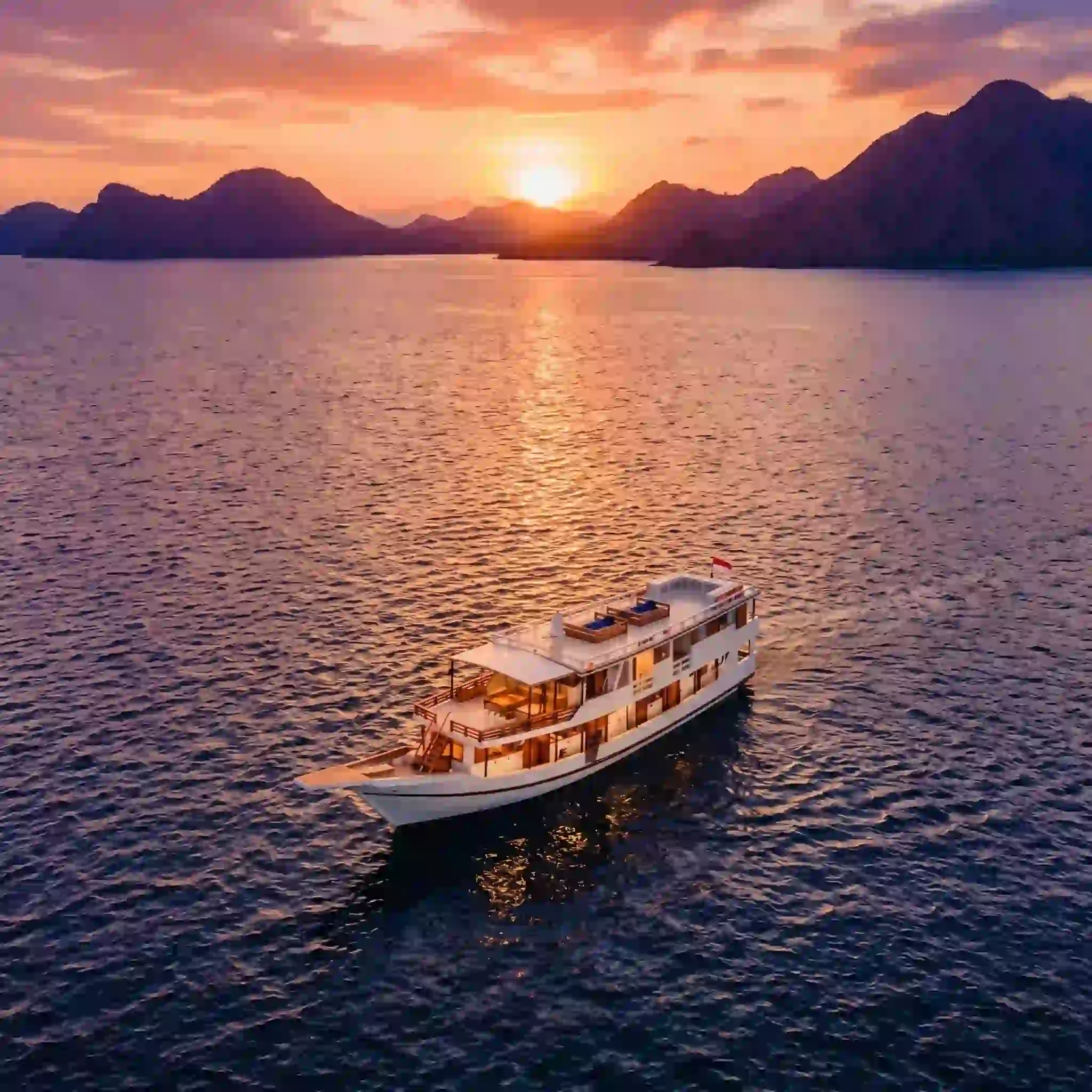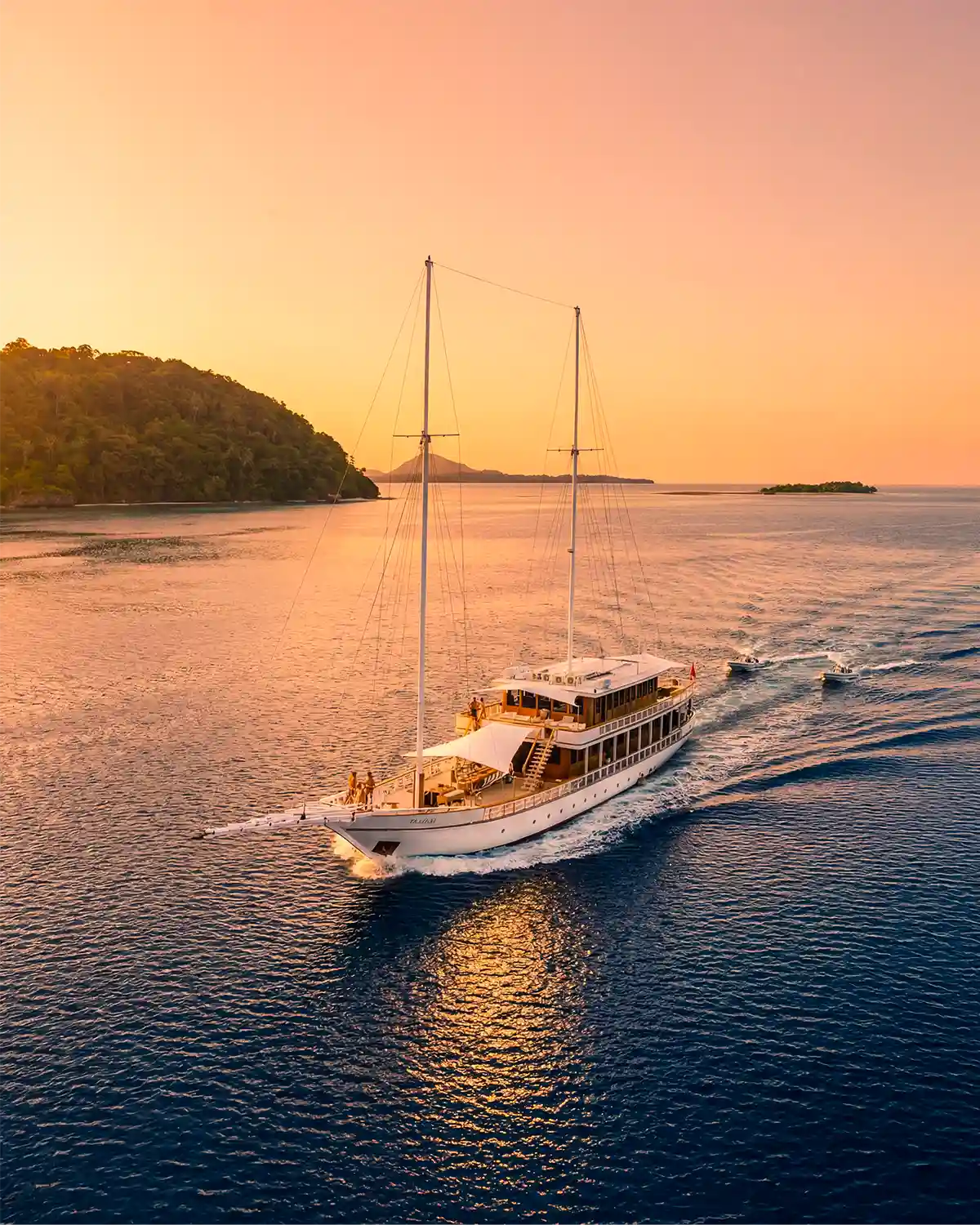
Komodo Sailing Trip: Traditional Phinisi Cruise
A Komodo traditional phinisi cruise is a sailing trip through Komodo National Park aboard a phinisi — the two-masted wooden schooner of South Sulawesi's boatbuilding tradition, which UNESCO inscribed as Intangible Cultural Heritage of Humanity in 2017 — refitted with cabins, a galley and modern safety equipment for multi-day island cruising.
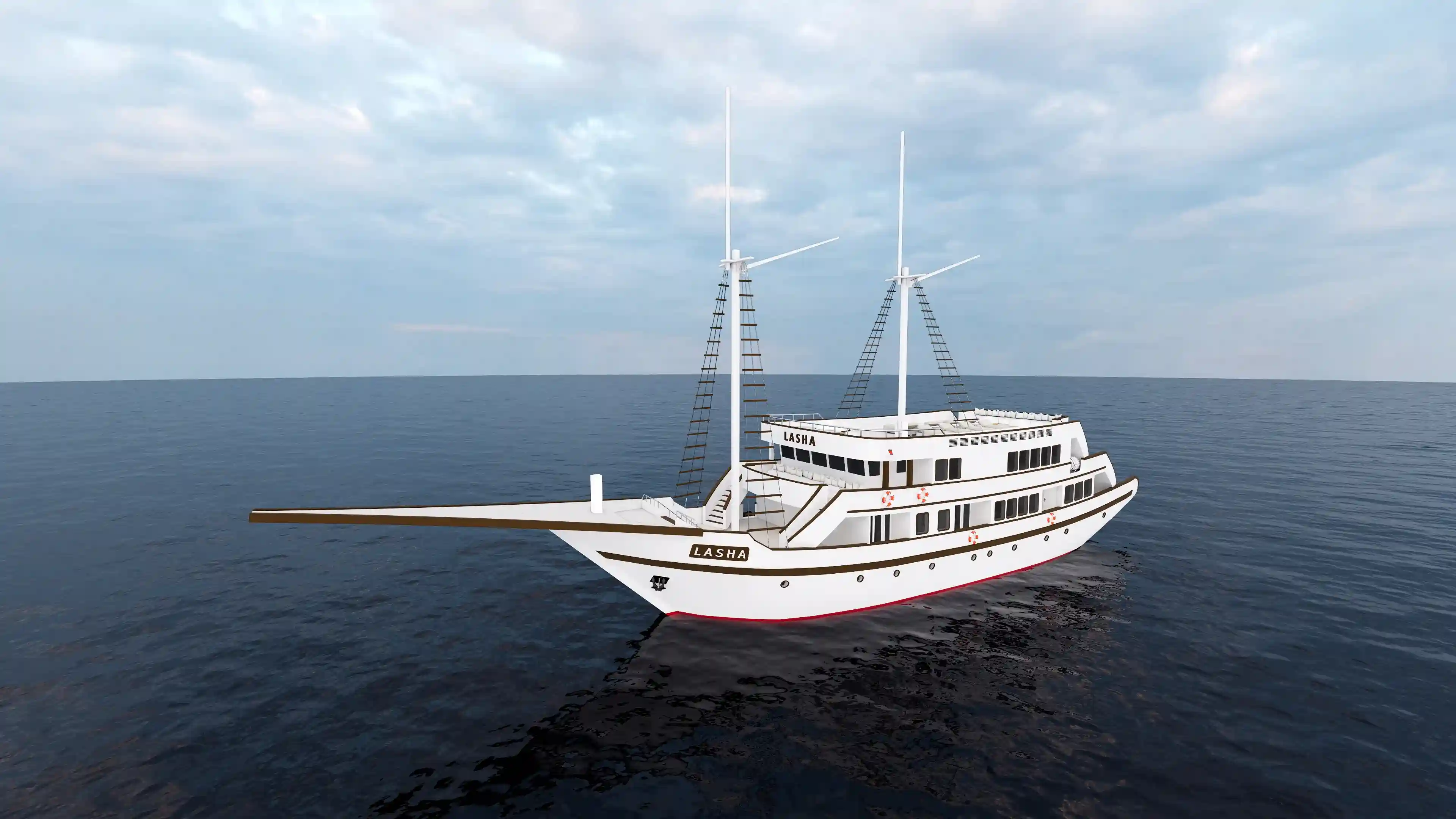
This page explains what a phinisi actually is, how the sailing routes run, the difference between shared and private formats, cabin standards to expect, and how to choose the right boat for your dates. It is written for travelers deciding between a phinisi, a modern motor cruiser and a day-boat itinerary.
What Exactly Is a Phinisi?
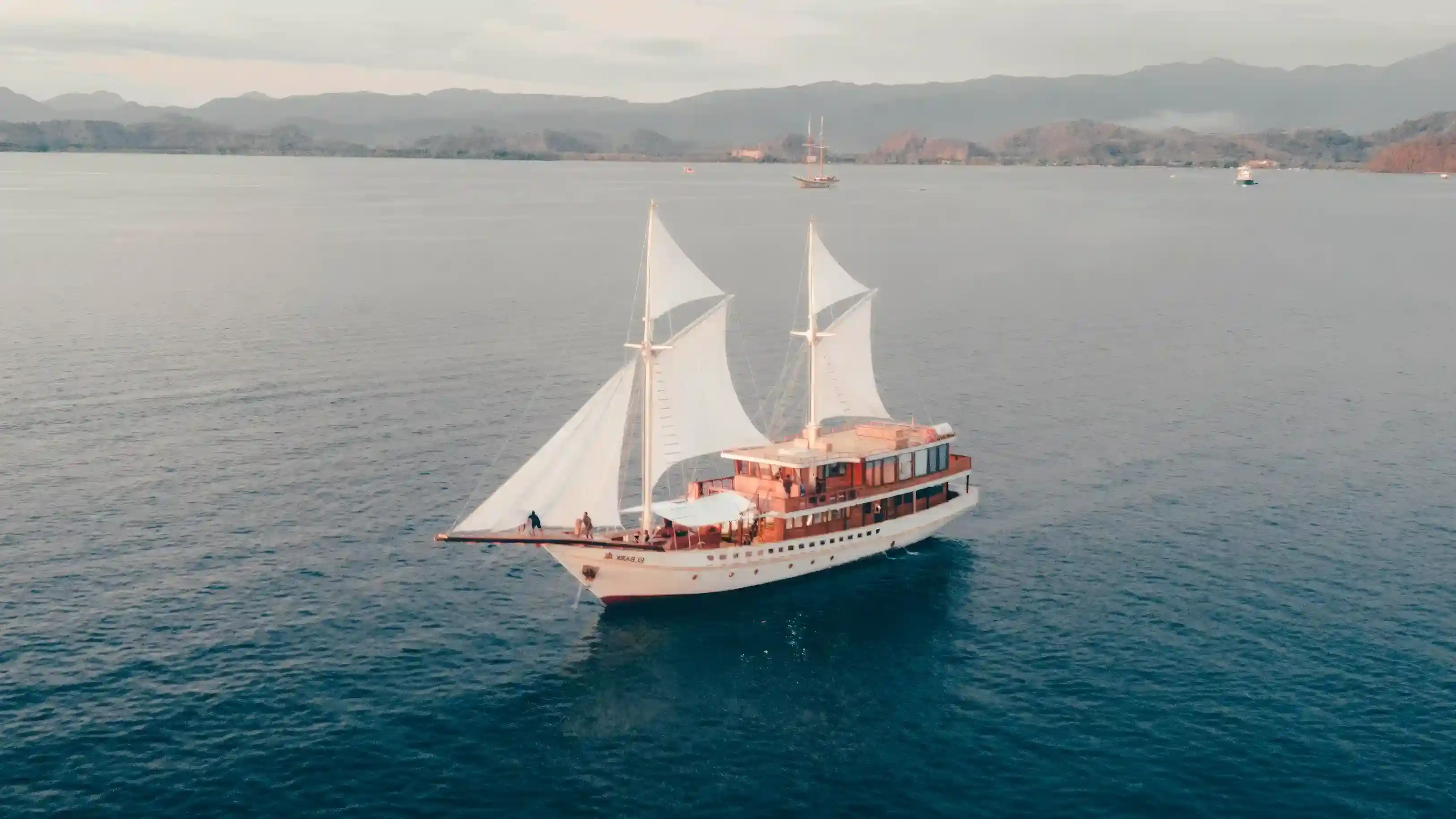
The phinisi is a wooden sailing vessel developed by the Bugis and Konjo boatbuilders of South Sulawesi, traditionally built plank-first on open beaches in villages such as those around Bulukumba, and rigged with two masts carrying multiple sails. The hull form once moved cargo across the archipelago; today the same silhouette carries cabins, sun decks and dive platforms.
Modern charter phinisi keep the timber hull and rig but add engines, navigation electronics, air-conditioned cabins and Western bathrooms, because within the national park most maneuvering is done under power and the sails serve on open stretches and for the unmistakable photographs. What you book is a heritage form with contemporary comfort inside it.
Where Does a Phinisi Sailing Route Go?
Phinisi itineraries cover the same headline sites as other Komodo cruises — the park spans about 1,733 square kilometers of islands and sea — but at a slower rhythm suited to a displacement hull.
| Length | Typical route | Character |
|---|---|---|
| 2D1N | Kelor or Kanawa, Padar sunrise, Pink Beach, dragon trek, Manta Point | The essentials with one night at anchor |
| 3D2N | The 2D1N circuit plus Rinca, extra snorkeling and a slow final morning | The most balanced phinisi format |
| 4D3N and longer | Adds outer sites and unhurried anchorages | For travelers prioritizing the boat as the holiday |
Because a phinisi cruises slower than a speedboat, the overnight formats are its natural territory; travelers with only one day are better served by a fast day boat, while the compact overnight structure is detailed on our overnight Komodo boat plan page.
Shared Cabin or Private Charter?
Shared phinisi departures sell individual cabins on fixed dates, placing perhaps eight to twenty guests aboard depending on the vessel, with a set route and communal meals — the sociable, economical way to sail a boat of this class. Solo travelers and couples on flexible budgets fill most shared manifests.
A private charter takes the whole vessel: your route, your departure time, your menu and your deck. Groups, families and celebrations dominate private bookings, and couples marking an occasion often charter a small phinisi outright — the romantic use of these boats is explored on our Komodo romantic getaway private couple cruise page.
What Are Cabins and Meals Like On Board?
Cabin standards on Komodo phinisi range from simple fan-cooled bunks on budget boats to air-conditioned ensuite staterooms with picture windows on premium vessels, so the phrase “phinisi cruise” alone tells you nothing about comfort — the specific boat does. Always ask for cabin photos, bathroom details and the guest count at full occupancy before paying.
Meals are cooked aboard by a dedicated crew cook, typically Indonesian dishes with grilled fish, vegetables and fruit, served family-style on deck; dietary needs are handled well when flagged at booking. Drinking water, tea and coffee are standard, and the better boats keep snorkeling gear, kayaks or paddleboards in the inventory. Travelers who want the top of the comfort range should compare the vessels on our high-end yacht cruise plan page, where several options are premium phinisi.
Why Choose Sail Over a Modern Motor Boat?
The phinisi’s advantage is atmosphere: timber decks, rigging overhead, the hull’s easy motion at anchor and a silhouette that belongs in these waters, photographed at sunset from the tender. It turns transit time into the holiday itself, where a speedboat treats the sea as distance to be deleted.
The trade-offs are honest ones — slower crossings, fewer sites per day, and sails that are used when wind and schedule allow rather than continuously. Choose the phinisi when the journey matters as much as the checklist; choose speed when your time in Flores is measured in hours.
When Is the Best Season for a Sailing Trip?
The dry season from April to November brings the settled seas and steady conditions that make deck life on a sailing boat pleasant, with July and August the busiest booking window for both shared cabins and charters. Shoulder months offer the same water with quieter anchorages.
From December to March, passing rain systems make itineraries more flexible by necessity; phinisi still sail, anchoring strategy matters more, and travelers should hold a buffer day before onward flights. Whatever the month, the captain’s judgment on routing overrides the printed plan — a discipline that keeps heritage boats and their guests safe.
How Do You Choose a Good Phinisi?
Four checks separate well-run boats from the rest: current safety equipment including life jackets, rafts and radio; a crew-to-guest ratio that allows real service on a sailing vessel; recent photographs of the actual cabins rather than sister ships; and written clarity on what the price includes — park fees, gear, meals and transfers. Ask when the boat last underwent maintenance out of the water; steady answers signal a steady operation.
Park fees deserve their own line in any phinisi quote, and our Komodo National Park entrance fee and ticket bundles page explains each component so you can read a quote like an operator rather than a first-time visitor.
Booking a Phinisi Through Komodo Luxury
Komodo Luxury’s phinisi departures are listed on the luxury phinisi Komodo page, with both shared-cabin dates and full private charters shown alongside cabin photos and current departure calendars. Travelers comparing a phinisi against a faster modern cruiser can see the full range of vessel classes on Komodo sailing trip, and multi-night liveaboard formats built around diving are detailed on Komodo liveaboard.
Last updated: 29 August 2026.
Frequently asked questions
Is a phinisi safe for overnight cruising?
Well-run phinisi are sound overnight boats: hulls are built from dense tropical hardwoods, boats anchor in sheltered bays at night, and reputable operators carry life jackets, rafts and radio equipment while following harbor authority sailing clearances. The variables are operator standards and season, so verify safety equipment in writing and favor the calmer April-to-November window.
Does a phinisi actually sail, or does it use engines?
Both. Modern charter phinisi carry engines and do most in-park maneuvering under power, raising sails on open stretches when wind and schedule permit and for the classic photographs. The rig is genuine and working, but travelers expecting a purely wind-driven passage should set expectations: within the national park, precise timing at trekking sites and anchorages calls for the engine.
Do phinisi cruises suit travelers prone to seasickness?
Often better than expected. A displacement wooden hull rolls more gently than a light fast boat, nights are spent at anchor in protected bays, and the slower pace means fewer rough open-water sprints. Sensitive travelers should still take precautions on the crossings near Labuan Bajo and ask the captain for the calmest routing available that day.
How far in advance should I book a phinisi?
For July, August and holiday weeks, book shared cabins three to six weeks ahead and private charters earlier still, since each vessel serves one group at a time and the best boats hold few open dates. Outside peak months, one to two weeks usually secures a shared cabin, while charters always reward the earliest possible confirmation.
Is November a good time for a family trip to Komodo National Park?
November is a favourable time for a family trip to Komodo National Park. The weather is generally warm and dry, and it falls within the manta season at Manta Point, offering excellent opportunities for snorkelling. Remember to book your visit in advance through the official SiOra e-ticket system, especially for Komodo and Padar islands.
Sail Komodo on a Traditional Phinisi with Komodo Luxury
Tell Komodo Luxury your dates, group size and whether you want a shared cabin or the whole boat, and they will match you with a phinisi that fits — with cabin photos, the full route and one clear price. Message Komodo Luxury on WhatsApp at +62 811-3823-875 or email sales@komodoluxury.com.
To embark on a traditional wooden cruise through Komodo National Park, explore Komodo Luxury’s boat tour lineup that aligns with this itinerary. You can also review the full fleet, check out Komodo Luxury’s trip FAQ for more details on different budgets and group sizes, or browse the sailing tour package list to see all available options before making your decision.
Ready to turn this into a real Komodo National Park trip?