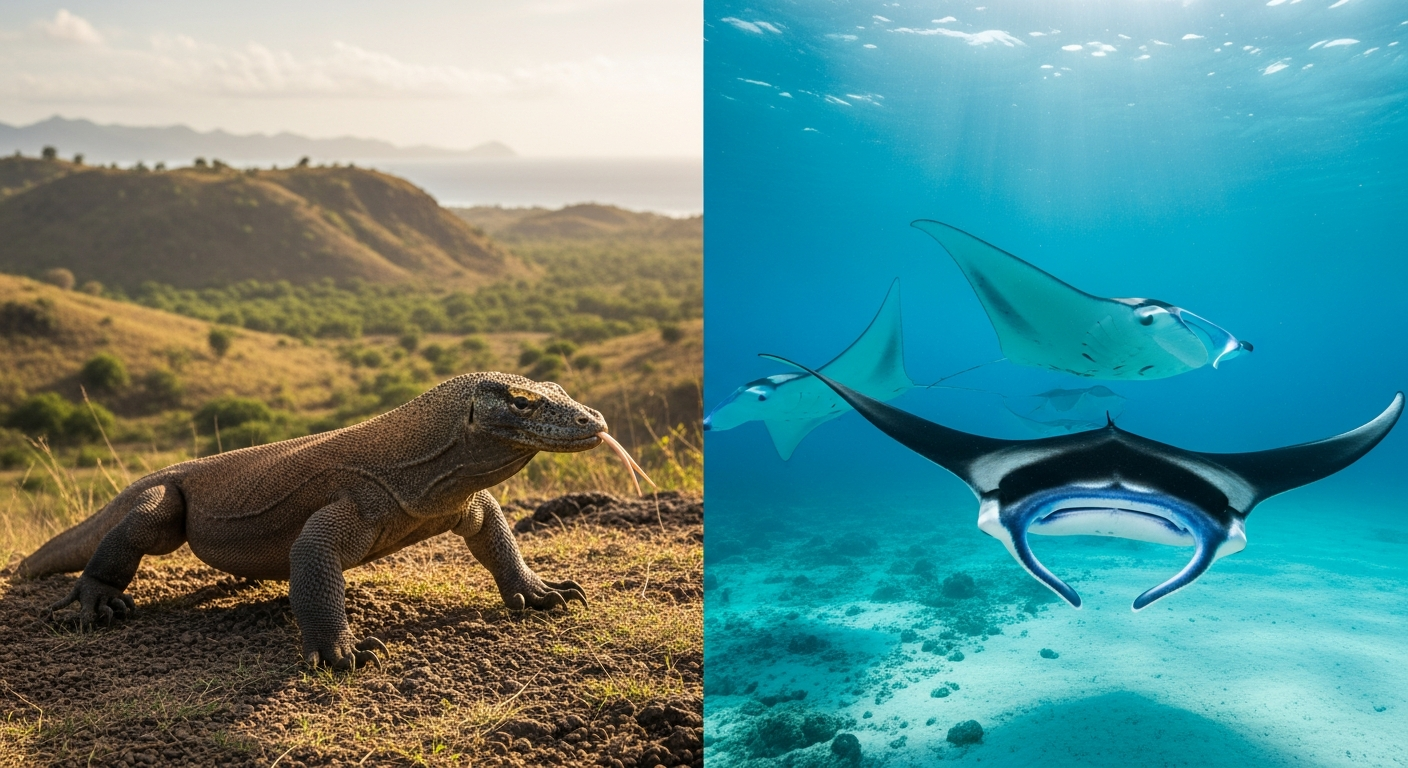
Key Takeaways
- Komodo National Park offers rich encounters with both Komodo dragons on land and manta rays underwater.
- The SY Adelaar diving safari boat provides year-round access to Komodo’s diverse marine life since 1994.
- /2027 SY Adelaar 11-day trips range from 5,090 € to 6,480 €, depending on accommodations.
- Choose between 7-day and 11-day trips to explore different wildlife and maximize expedition experiences.
When planning your 2027 expedition to Komodo National Park, focus on both the iconic Komodo Dragons and the graceful Manta Rays. Each offers unique experiences in their natural habitats, allowing for a diverse and enriching visit that spans land and sea adventures in this Indonesian archipelago.
The Habitat of Komodo Dragons
Komodo Dragons, the world’s largest lizards, inhabit the islands of Komodo, Rinca, Flores, Gili Motang, and Padar. These creatures can grow over three meters in length and weigh up to 70 kilograms. Komodo National Park, established in 1980, protects these endangered species. The arid, rugged landscapes of the park provide an ideal environment for these formidable predators. Visitors can observe them primarily on Komodo and Rinca islands where guided tours are available to ensure safety and maximize wildlife encounters.
The best time to visit Komodo National Park to see the dragons is during the dry season, from April to December. During these months, the dragons are more active and easier to spot as they roam the sunlit terrain. Rangers lead small groups on foot, offering insights into the dragons’ behavior, diet, and conservation efforts. The experience is both educational and thrilling, as these monitor lizards are known for their stealth and power.
Exploring the Underwater World with Manta Rays
Komodo National Park is not only about the terrestrial giants but also boasts a lively marine ecosystem. Manta Rays, known for their grace and size, are frequently seen gliding through the waters of the park. The Manta Point, located near the island of Komodo, is particularly famous for Manta Ray sightings and offers snorkelers and divers a chance to swim alongside these gentle giants. The nutrient-rich waters attract Manta Rays year-round, but the highest visibility is typically from November to February.
Divers and snorkelers should consider booking with established operators like SY Adelaar, which offer tailored diving safaris. These trips provide all necessary equipment and guidance to ensure a safe and rewarding underwater experience. The Manta Rays’ serene presence and the diverse marine life create a captivating spectacle that highlights the park’s commitment to preserving its natural wonders.
SY Adelaar Diving Safaris
The SY Adelaar, a high-end diving safari boat, has operated within Komodo National Park since 1994. It offers both 11-day and 7-day trips that include diving and snorkeling opportunities. These safaris are designed to showcase the striking biodiversity of the region, from lively coral reefs to rare marine species like the Manta Rays.
For the 2026/2027 season, prices for the 11-day Bali-Komodo trip vary depending on accommodation: 5,090 € for State Room 4, 5,680 € for State Room 2/3, and 6,480 € for the Master Suite. The 7-day trip costs 3,054 € for State Room 4, 3,408 € for State Room 2/3, and 3,889 € for the Master Suite. Additional costs include Nitrox at 180 € for a 10-night tour, harbor and national park fees ranging from 200–300 € per person, and a 250 € per person fuel supplement. These comprehensive packages provide an unparalleled opportunity to explore Komodo National Park’s marine diversity.
Planning Your Trip: Seasons and Logistics
Visitors should plan their Komodo National Park expedition with the seasons in mind. While the dry season (April to December) is ideal for land exploration, the wet season (January to March) can offer unique experiences with fewer crowds and lush landscapes. However, some remote areas may be less accessible during the wet months, so planning ahead and checking weather conditions is crucial.
Travelers can reach Komodo National Park by flying into Labuan Bajo from Bali or Jakarta, followed by a short boat ride to the park islands. Private boat charters, such as those provided by The Ocean Addict, offer flexible schedules and direct owner rates, allowing for a tailored and personalized adventure. These charters cater to families and groups, providing a comfortable way to explore the park at one’s own pace.
Conservation Efforts and Visitor Guidelines
As a UNESCO World Heritage site, Komodo National Park is deeply committed to conservation. Efforts to protect the Komodo Dragons and marine life are supported by visitor guidelines that encourage sustainable tourism practices. Visitors are urged to respect the natural habitats, avoid disturbing the wildlife, and adhere to park regulations at all times.
Conservation fees collected from park entry are reinvested into protecting the fragile ecosystems and supporting local communities. Visitors can contribute by choosing eco-friendly tours, reducing waste, and engaging in educational programs about the park’s biodiversity. These efforts ensure that Komodo National Park remains a haven for wildlife and future generations.
Making the Most of Your Expedition
To fully experience the wonders of Komodo National Park, consider a balanced itinerary that includes both land and sea activities. A typical expedition might start with trekking to see the Komodo Dragons, followed by snorkeling or diving to explore the lively marine life. Guided tours and safaris, such as those offered by SY Adelaar and The Ocean Addict, provide structured yet flexible options to suit different interests.
Photography enthusiasts will find ample opportunities to capture the park’s diverse landscapes and wildlife. Early morning and late afternoon are ideal times for photography, offering dramatic lighting and active wildlife. Whether your focus is on the fearsome Komodo Dragons or the elegant Manta Rays, Komodo National Park promises an adventure that is as enlightening as it is exhilarating.
FAQs
Q? When is the best time to visit Komodo National Park? A: The best time to visit Komodo National Park is during the dry season, from April to December, when the weather is favorable for both land and sea activities.
Q? How can I book a diving safari with SY Adelaar? A: You can book a diving safari with SY Adelaar through their official website or authorized travel agents. Prices and availability may vary, so early booking is recommended.
Q? Are there any special requirements for visiting Komodo National Park? A: Visitors should follow park guidelines, respect wildlife, and be prepared for physical activities. It’s important to bring appropriate clothing, gear, and sufficient water for excursions.
For wider arrangements, our partner labuanbajoluxury can coordinate end to end.
Planning something bigger across Indonesia? Plan wider itineraries with balifasttrackairport.
Explore all komodonationalparks.com options and plan your trip.
Leave a Reply