Komodo National Park Facts: Size, UNESCO Status, History
Komodo National Park is a 1,733 km² protected area in Indonesia's East Nusa Tenggara province, established in 1980 and inscribed as UNESCO World Heritage Site No. 609 in 1991.

Last updated: August 2026
It spans three main islands — Komodo, Rinca, and Padar — plus roughly 26 smaller islands, protecting the only wild population of the Komodo dragon (Varanus komodoensis) alongside one of the richest reef systems in the Coral Triangle.
Where is Komodo National Park?
The park sits in the Lesser Sunda Islands, in the strait between Sumbawa and Flores, within Indonesia’s East Nusa Tenggara (Nusa Tenggara Timur) province. Its extent runs roughly between 8°24′ and 8°50′ south latitude and 119°21′ and 119°49′ east longitude, with a central point near 8.59°S, 119.44°E. The nearest town and gateway for every visitor is Labuan Bajo, on the western tip of Flores, roughly 45–60 minutes by speedboat from Rinca’s Loh Buaya ranger post, the park’s closest visitor entry point, and served by direct flights from Bali (Denpasar) and Jakarta.
| Fact | Detail |
|---|---|
| Location | Between Sumbawa and Flores, East Nusa Tenggara, Indonesia |
| Coordinates | Approx. 8.59°S, 119.44°E (park extent 8°24′–8°50′S, 119°21′–119°49′E) |
| Nearest gateway town | Labuan Bajo, West Manggarai Regency, Flores |
| National park established | 1980, by the Government of Indonesia |
| UNESCO Man and the Biosphere Reserve | 1977 (Komodo Biosphere Reserve) |
| UNESCO World Heritage Site | Inscribed 1991 — Property No. 609, criteria (vii) and (x) |
| Total protected area | ≈ 1,733 km² (173,300 hectares) |
| Land area | 58,499 hectares (≈ 585 km²) |
| Marine area | 114,801 hectares (≈ 1,148 km²) |
| Main islands | Komodo, Rinca, Padar |
| Smaller islands | ≈ 26, including Gili Motang and Gili Dasami |
| Managing authority | Balai Taman Nasional Komodo (BTNK), under Indonesia’s Ministry of Environment and Forestry (KSDAE) |
Sources: the total, land and sea areas above are the figures published by the park authority, Balai Taman Nasional Komodo; the inscription details and the separate 219,322-hectare World Heritage property come from the UNESCO World Heritage Centre (Property 609) and the UNESCO Man and the Biosphere Programme’s Komodo Biosphere Reserve entry, cross-checked against the UNEP-WCMC World Heritage datasheet for Komodo National Park, with background context from the Wikipedia overview (Wikidata Q4520).
When was Komodo National Park established, and why is the founding history a little confusing?
Komodo National Park was created by the Indonesian government in 1980, primarily to protect the Komodo dragon and its habitat. UNESCO then inscribed the park on the World Heritage List in 1991, at the Committee’s 15th session, under natural criteria (vii) — superlative natural phenomena — and (x) — significant natural habitats for biodiversity conservation.
A separate, earlier designation sometimes confuses travelers researching the park: UNESCO’s Man and the Biosphere (MAB) Programme recognized the wider Komodo Biosphere Reserve in 1977, three years before the national park itself existed. Some older tourism material states 1986 for a combined “World Heritage and Biosphere” designation, but that date does not match UNESCO’s own current MAB and World Heritage records, and this guide follows UNESCO’s primary listings rather than the secondary 1986 figure.
How big is Komodo National Park?
The figure this guide uses is the one published by the park authority, Balai Taman Nasional Komodo: a total protected area of 173,300 hectares (about 1,733 square kilometers), made up of 58,499 hectares of land — roughly 585 km² — and 114,801 hectares of sea, roughly 1,148 km². That marine-to-land ratio is unusual for a “national park” in the everyday sense: about two-thirds of Komodo National Park is ocean, not island.
Readers who dig into UNESCO’s formal World Heritage documentation will find a second, related number: the World Heritage property itself is listed at 219,322 hectares, a boundary drawn for UNESCO purposes that takes in areas beyond the national park itself. Neither figure is wrong — they describe different boundaries. For everyday trip planning the park authority’s own breakdown — 173,300 hectares in total, 58,499 on land and 114,801 at sea — is the more useful one, since it describes the area you can actually sail and trek in.
What islands make up Komodo National Park?
Three islands anchor the park and give it its name-recognition:
- Komodo Island — the largest, home to Loh Liang ranger station and the majority of the wild dragon population.
- Rinca Island — smaller and closer to Labuan Bajo, with the Loh Buaya ranger station; a popular choice for shorter day trips.
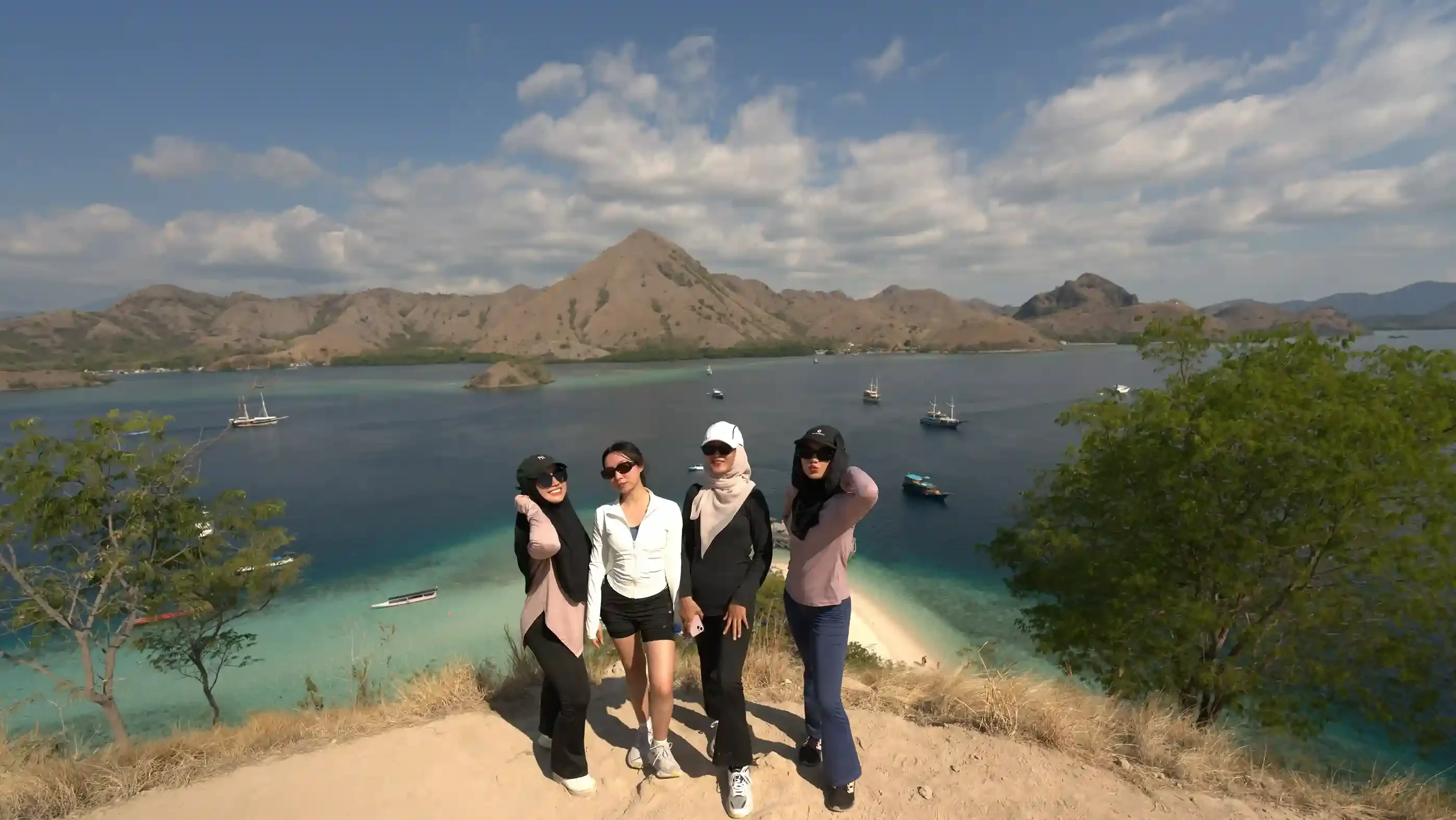
- Padar Island — no permanent dragon population, but the park’s most photographed hiking viewpoint, overlooking three colored bays.
Around these three sit roughly 26 smaller islands and islets, including Gili Motang and Gili Dasami (both with small dragon populations), plus dozens of uninhabited snorkeling and diving spots such as Kanawa, Kelor, Manjarite, and Taka Makassar. All islands in the park are volcanic in origin.
How many people live inside Komodo National Park?
Unlike many protected areas, Komodo National Park has resident human communities. Academic research on the park’s enclave villages has put the combined population of the settlement zones — principally Kampung Komodo on Komodo Island, plus villages on Rinca — at roughly 1,800 people in total, with Kampung Komodo itself around 1,340 residents at the time of that study. That figure is dated and this guide is not aware of a recent official census update, so treat it as an order-of-magnitude reference rather than a current count. Separately, UNESCO’s biosphere-reserve entry lists a much larger figure — nearly 98,000 people — but that number covers the entire Komodo Biosphere Reserve region, a far broader socio-ecological zone that extends onto Flores itself, not the population living inside the park’s island villages.
These communities have fished the surrounding waters for generations and increasingly work in park-related tourism — as guides, boat crew, and handicraft sellers — alongside their traditional livelihoods, which the park’s zoning system explicitly protects through designated traditional-use areas (see our Komodo National Park conservation guide for how zoning works).
How many Komodo dragons are left, and what is their conservation status?
The Komodo dragon is listed as Endangered on the IUCN Red List, having been uplisted from Vulnerable following an assessment completed in 2019 and published in 2021. That assessment estimated roughly 1,383 mature individuals remaining in the wild, distributed unevenly across the species’ island range:
| Island | Estimated mature individuals | Population trend |
|---|---|---|
| Komodo Island | ≈ 1,100 | Stable to slight decline |
| Rinca Island | ≈ 200 | Stable |
| Flores mainland (outside the park) | ≈ 100–200 | Declining, mainly from habitat loss |
These are estimates of mature adults specifically, not total individuals of every age class, so the true head-count including juveniles is higher. Komodo and Rinca — the park’s two largest islands — hold the great majority of the world’s wild dragons, which is one reason the park’s ranger and zoning system exists: it is, in effect, the last line of defense for a species found nowhere else on Earth outside this one park.
What marine life lives in Komodo National Park’s waters?
The park’s protected sea — 114,801 hectares, about 1,148 km² — sits inside the Coral Triangle, the global epicenter of marine biodiversity, and surveys back that up with real numbers rather than marketing language:
- Over 1,000 recorded reef fish species across more than 90 families.
- More than 260 species of reef-building coral, the count published by UNESCO for the Komodo Biosphere Reserve.
- Resident and migratory manta rays at cleaning stations and upwelling sites in both the north (Manta Point/Karang Makassar) and south (Manta Alley) of the park.
- Seasonal dolphins and whales passing through the Flores Sea and Sape Strait.
The park’s strong currents — driven by the Indonesian Throughflow funneling water between the Pacific and Indian Oceans — are exactly what feeds this richness: they pull cold, nutrient-dense water up from the deep, which is also why diving and snorkeling conditions here can shift quickly with the tide. For a full breakdown of when currents, visibility, and manta sightings line up best, see our best time to visit Komodo National Park guide.
What does the landscape and climate look like?
The park’s islands are volcanic in origin, and it shows: the terrain is dominated by dry savanna hills, scattered lontar palms, and pockets of monsoon forest in the wetter valleys, rather than the dense rainforest many first-time visitors expect from an Indonesian island. That dry, open landscape is not incidental — it is part of what makes Komodo dragon habitat viable, since the lizards rely on open sightlines to hunt and on savanna grass fires (both natural and, historically, human-set) to keep vegetation from closing in.
Climate follows Indonesia’s monsoon pattern: a long dry season from roughly April to November, and a shorter, showery wet season from December to March driven by the northwest (“Barat”) monsoon. Sea conditions vary just as much as the weather — the strait between Sumbawa and Flores channels strong tidal currents through the park, and the “best” months differ depending on whether you are prioritizing calm boat rides, dive visibility, or manta ray sightings. A full month-by-month breakdown is in our seasonal timing overview.
Where does the name “Komodo” come from?
The name predates the park by centuries and originally referred to the island and its small fishing community, not the lizard. Western science only formally described the Komodo dragon in 1912, after a Dutch colonial administrator investigated local reports of a “land crocodile” on the island — reports that turned out to be entirely accurate. The park, when it was established in 1980, was named after the island and the animal that had by then made both famous worldwide.
Each figure on this page is stated once, with the body that publishes it named alongside it. Where an outside source quotes a different number — the dragon count and the entrance tariff are the two that circulate most widely — the discrepancy and where it came from are set out in the Komodo National Park knowledge base. Readers who want these facts turned into a trip plan rather than a reference list should start from the complete Komodo National Park visitor guide.
Fast facts for planning a trip
Beyond the geography and biology above, a handful of practical facts define almost every itinerary:
- Every landing on Komodo, Rinca, or Padar requires a licensed park ranger — independent, unguided trekking is not how the park operates.
- Park entry runs on a fee structure set under national regulation PP 36/2024: USD 40 (USD 50 at weekends and on public holidays) for foreign visitors, USD 20 on a regular day and USD 25 at weekends and on public holidaysfor Indonesian citizens, plus a small per-group ranger fee. Full breakdown: ticket and levy breakdown.
- Since 1 April 2026, visitor numbers are capped at 1,000 people per day across the whole park (split into three time sessions), booked through the online SiOra system rather than as walk-in tickets.
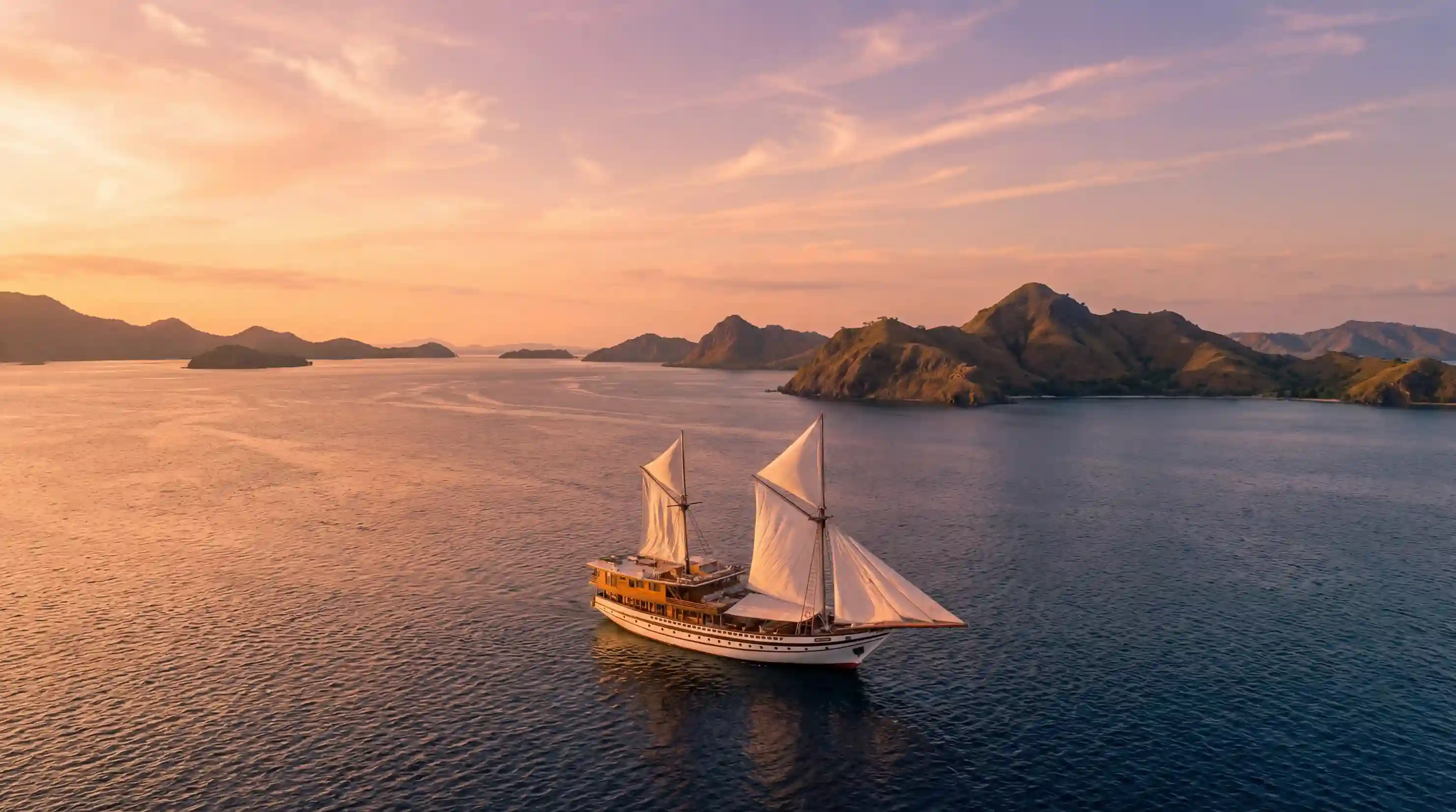
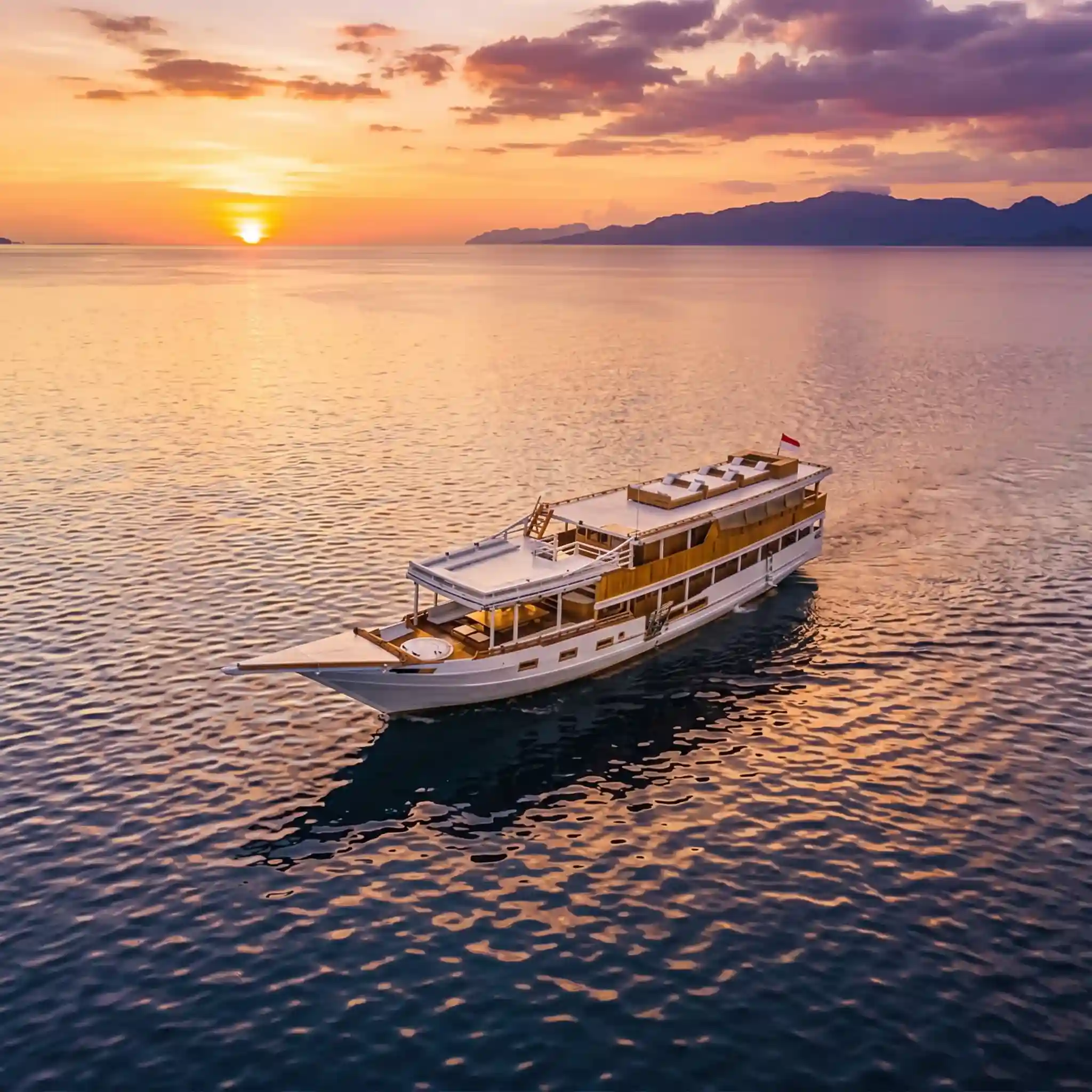
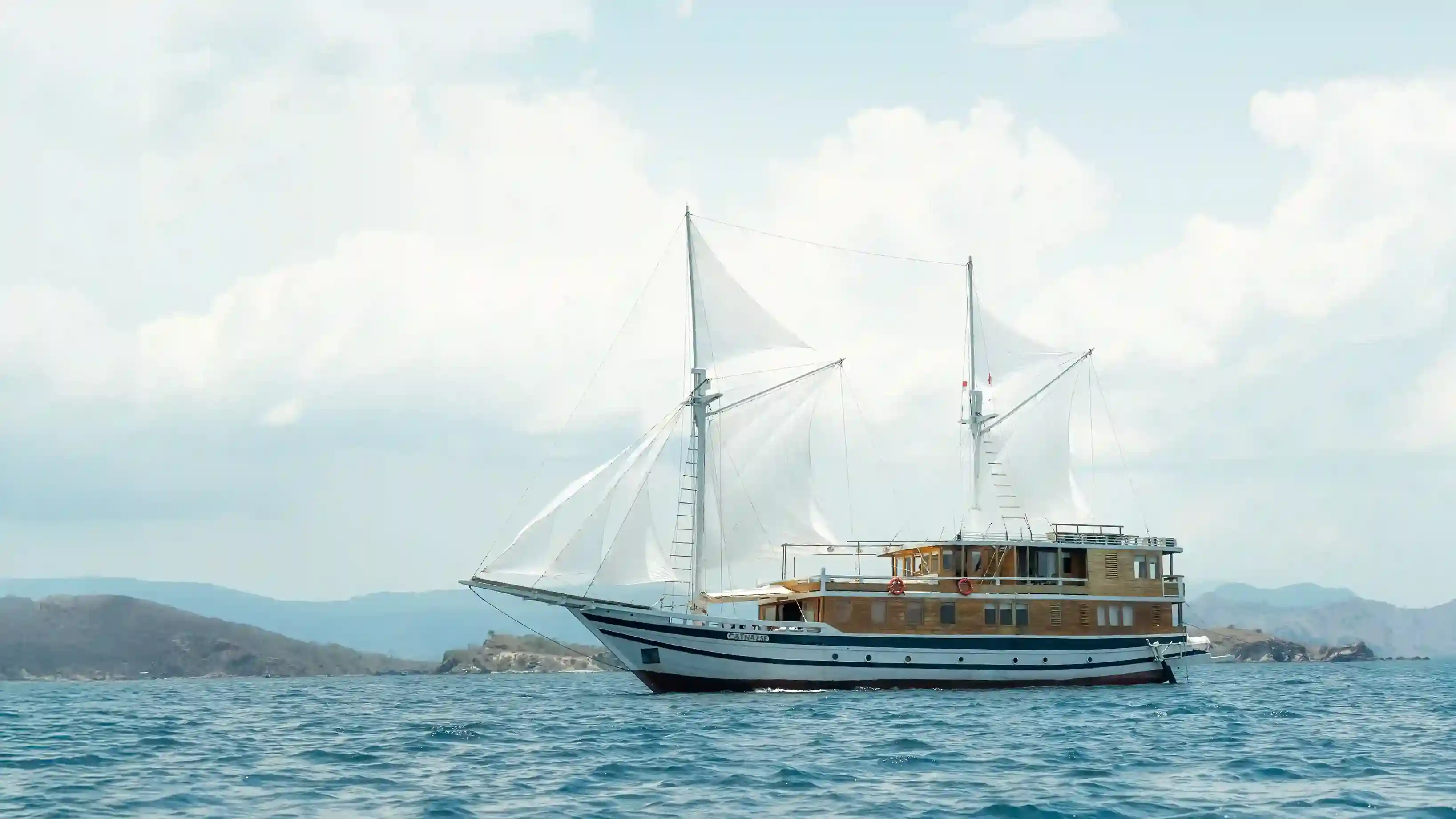
- Almost everyone reaches the park by boat from Labuan Bajo, ranging from shared day-trip speedboats to multi-day liveaboard cruises. Komodo Luxury’s Komodo boat tour lineup covers that full range from a single operator base.
Frequently asked questions
How many Komodo dragons live in the park today?
Komodo National Park itself holds an estimated 3,150-3,400 dragons of all ages, per Balai Taman Nasional Komodo’s annual counts (3,156 in 2022, 3,396 in 2023, roughly 3,270 in 2024). A different, frequently-cited figure — 1,383 — is the IUCN Red List’s 2021 estimate of mature breeding adults across the species’ entire wild range worldwide, not the park’s total headcount; of that narrower global figure, Komodo Island holds roughly 1,100 mature adults and Rinca Island around 200. Both numbers are correct for what they measure, they just answer different questions.
Ready to see these islands in person? Komodo Luxury’s Komodo boat tour and liveaboard cruise options both include ranger-guided landings on Komodo and Rinca, and can be booked directly via WhatsApp at +62 811-3810-8110.
For those interested in exploring the vast and historically rich Komodo National Park, consider browsing the full fleet offered by Komodo Luxury to find the best options for your journey. For more details on planning your visit, check out Komodo Luxury’s trip FAQ for guidance based on your travel dates.
How does Komodo National Park educate visitors about conservation?
Komodo National Park educates visitors about conservation through guided tours led by rangers, who provide insights into the park’s ecosystems and wildlife. Information centres and educational materials highlight the importance of preserving the Komodo dragon and its habitat. The park also engages in community outreach to promote sustainable practices among locals and tourists.
How many Komodo dragons live on Komodo Island?
Komodo Island is home to a significant portion of the park’s Komodo dragon population, with estimates of mature breeding adults included in the park-wide count of 3,270 individuals in 2024. The island provides a critical habitat for these dragons, contributing to their conservation and study.
How to see Komodo dragons in their natural habitat?
To see Komodo dragons in their natural habitat, visitors must book a guided tour within Komodo National Park. Rangers lead treks on Komodo and Rinca Islands, offering safe and informative encounters with the dragons. Advance reservations via the SiOra e-ticket system are required for visits to Komodo and Padar.
What are the differences in marine biodiversity between Komodo and the Maldives?
Komodo National Park and the Maldives both boast rich marine biodiversity, but differ in species composition. Komodo, part of the Coral Triangle, features diverse coral reefs and species like manta rays and turtles. The Maldives, in the Indian Ocean, is known for its coral atolls and abundant fish species, including reef sharks and whale sharks.
How do Komodo dragons impact tourism in Indonesia?
Komodo dragons significantly impact tourism in Indonesia by drawing international visitors to Komodo National Park. Their unique status as the world’s largest lizards makes them a major attraction, boosting local economies through tourism-related activities and raising awareness about conservation efforts for this iconic species.
How are Komodo dragons protected in the park?
Komodo dragons are protected in the park through strict conservation measures, including habitat preservation and regulated tourism. The park’s management enforces visitor quotas and requires guided tours to minimise human impact. Ongoing research and monitoring help maintain the dragon population and ensure their long-term survival.
Are there seasonal closures in Komodo National Park for conservation?
Komodo National Park does not have seasonal closures specifically for conservation, but visitor quotas and guided tours help manage human impact year-round. Conservation efforts focus on maintaining the park’s ecosystems and protecting wildlife, including the Komodo dragon, through sustainable tourism practices and habitat preservation.
What language is spoken near the park?
The primary language spoken near Komodo National Park is Indonesian (Bahasa Indonesia). In Labuan Bajo and surrounding areas, local languages such as Manggarai are also spoken. English is commonly used in tourist areas and by those working in the tourism industry, facilitating communication with international visitors.
Is Komodo National Park one island or many?
It is many islands. The park protects three main islands — Komodo, Rinca, and Padar — along with roughly 26 smaller islands and the marine area surrounding them, totaling about 1,733 km².
What country is Komodo National Park in?
Indonesia. It sits in East Nusa Tenggara province, between the islands of Sumbawa and Flores, and is reached almost exclusively via Labuan Bajo on Flores.
Is Komodo National Park bigger than Rinca or Padar alone?
Yes, considerably. Rinca and Padar are two of the three main islands inside the park, but the park as a whole — including its 114,801 hectares of protected marine habitat — is far larger than any single island within it.
Why is Komodo National Park a UNESCO World Heritage Site?
UNESCO inscribed it in 1991 under two natural criteria: it contains superlative natural phenomena (criterion vii) and it provides the most significant natural habitat for the in-situ conservation of a globally important species, the Komodo dragon (criterion x).
How does UNESCO World Heritage status benefit Komodo National Park?
UNESCO World Heritage status enhances global recognition and protection for Komodo National Park, promoting conservation efforts and sustainable tourism. It helps secure funding and international support, ensuring the preservation of its unique biodiversity and cultural heritage. The status also raises awareness about the park’s ecological significance, attracting responsible visitors interested in its natural wonders.
What is the biodiversity of the park?
Komodo National Park boasts rich biodiversity, including the iconic Komodo dragon and diverse marine life within its reef systems. The park’s terrestrial and marine environments support numerous species of mammals, birds, and reptiles, as well as vibrant coral reefs teeming with fish, making it a crucial part of the Coral Triangle.
How does the natural beauty of Komodo compare to the Galapagos Islands?
Komodo National Park and the Galapagos Islands both offer unique natural beauty and biodiversity. Komodo is renowned for its rugged landscapes and the Komodo dragon, while the Galapagos is famous for its unique species and volcanic scenery. Both are UNESCO World Heritage Sites, attracting visitors interested in pristine natural environments and wildlife.
In practical terms, how does UNESCO status affect Komodo National Park for visitors?
UNESCO recognition means stricter protection rules, more structured guiding, and closer monitoring of visitor impacts. You can expect mandatory ranger accompaniment on key trails, controlled daily quotas, and advance booking requirements for headline islands like Komodo and Padar through the official e-ticket system. It also encourages operators to follow low-impact practices, so tours increasingly focus on education, safety, and minimizing disturbance to dragons and marine life.
Can you see dolphins in the park?
Yes, visitors can see dolphins in Komodo National Park, particularly during boat trips in its surrounding waters. The park’s marine environment supports various dolphin species, offering opportunities for sightings alongside other marine life like manta rays and sea turtles, enhancing the park’s appeal to wildlife enthusiasts.
Send Komodo Luxury your dates; they come back with options
Travel dates, group size and what matters most — trekking, diving, a private charter or a shared boat. Our booking partner replies with current pricing.