History of Komodo National Park: 1980 to Today
Komodo National Park was formally established on 6 March 1980, when Indonesia's Minister of Agriculture announced the inauguration of the country's first national parks, covering roughly 75,000 hectares to safeguard the newly studied Komodo dragon. It reached its present size of about 173,300 hectares in February 1992, when Ministry of Forestry Decree No. 306/Kpts-II/92 brought the surrounding waters inside the boundary.
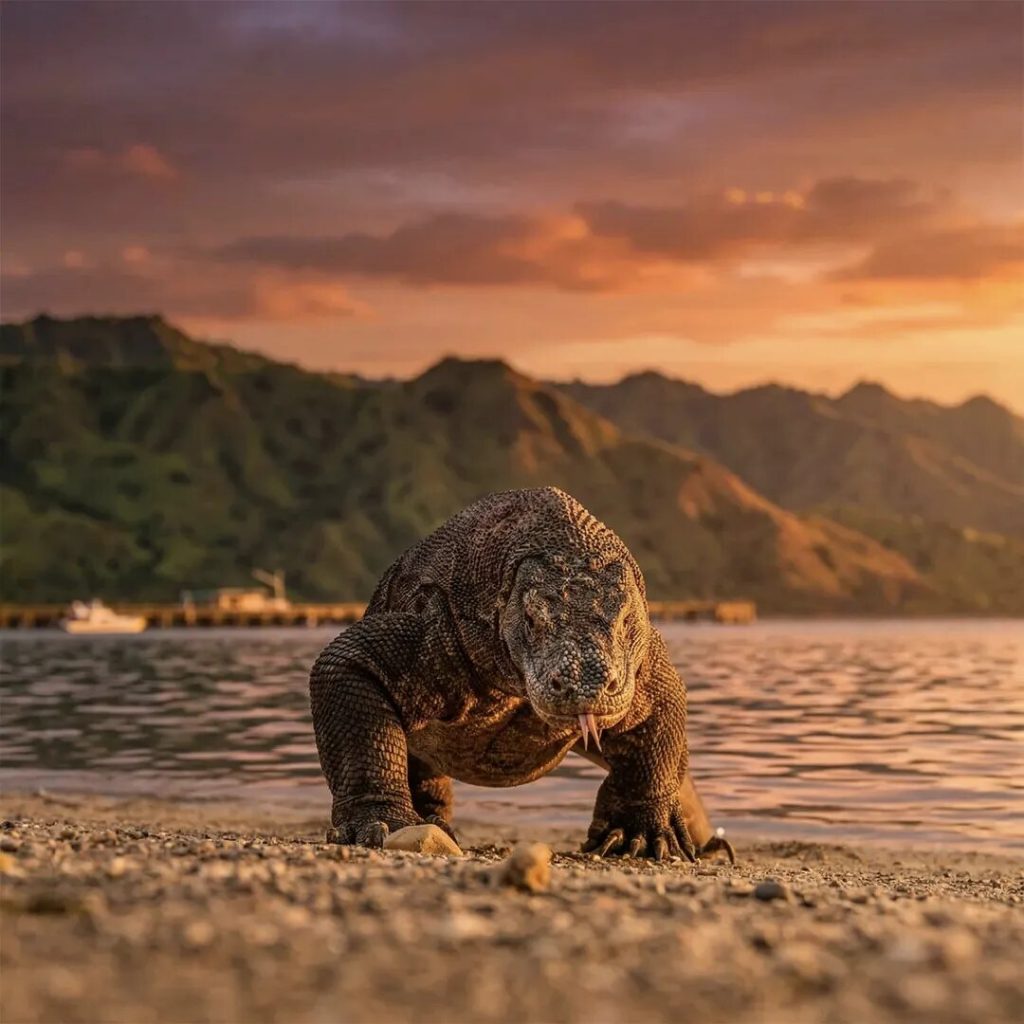
Two UNESCO designations bracket that founding: the wider region was recognized as a UNESCO Biosphere Reserve in 1977, before the park itself existed, and the park was inscribed as a UNESCO World Heritage Site in 1991 under property number 609. Between them sits a quieter administrative step: the December 1984 designation of the park’s working area. This page traces the whole timeline, from creation through the 1992 decree that fixed today’s land-and-sea boundary to the management system.
Why Was Komodo National Park Created in 1980?
The Komodo dragon was only formally described to Western science in the early 20th century, and by the mid-20th century its extremely limited range — confined to a handful of islands in what is now eastern Indonesia — made it clear that habitat protection was essential to the species’ survival. The Indonesian government’s 1980 designation established the park specifically around this concern, protecting Komodo, Rinca, Padar and surrounding waters as a dedicated conservation area rather than folding dragon habitat into a broader, less targeted protection scheme.
Key Dates in the Park’s History
| Year | Milestone |
|---|---|
| 1965 | Komodo Island designated a wildlife reserve (Suaka Margasatwa) under Decree No. 66/Dep.Keh/1965, ~31,000 hectares |
| 1977 | Wider Komodo region recognized under UNESCO’s Man and the Biosphere (MAB) program |
| 6 March 1980 | Komodo National Park formally established by the Minister of Agriculture’s announcement inaugurating Indonesia’s first national parks, ~75,000 hectares |
| 11 December 1984 | Park working area designated by Directorate General of Forest Protection and Nature Conservation Decree No. 46/Kpts/IV-Sek/84 |
| 1991 | Inscribed as a UNESCO World Heritage Site (Site ID 609) under natural criteria (vii) and (x) |
| 29 February 1992 | Ministry of Forestry Decree No. 306/Kpts-II/92 converted the Komodo, Rinca and Padar wildlife reserve and designated the surrounding waters, bringing the park to about 173,300 hectares (1,733 km²) in total |
| 2019 | Public debate over a proposed temporary closure of Komodo Island to protect the dragon population and habitat; a closure was ultimately not implemented in the form initially discussed |
| 2022 | A proposed premium/annual “membership” access scheme, sometimes cited around Rp 700,000 (about USD 45) or more, was floated but not implemented as a blanket daily fee |
| 2024 | Current official entrance tariff structure formalized under PP No. 36/2024 (PNBP) |
| 1 April 2026 | SiOra digital reservation and visitor-monitoring system becomes mandatory for park entry |
Where a date or figure above is uncertain in the public record — for example, exact attendance or revenue figures from any specific year — this page states the range or the regulation that governs the current system rather than presenting a guessed number as fact.
How Did the Park’s Boundaries Change Over Time?
The 1980 establishment covered a smaller core focused tightly on dragon habitat — roughly 75,000 hectares, essentially the islands themselves. The decisive change came in February 1992, when Ministry of Forestry Decree No. 306/Kpts-II/92 converted the older Komodo, Rinca and Padar wildlife reserve and designated the waters around it, bringing the park to its present size: about 173,300 hectares, or roughly 1,733 square kilometers. The park authority, Balai Taman Nasional Komodo, publishes that total as 58,499 hectares of land and 114,801 hectares of sea. The shift was as much conceptual as cartographic, turning a dragon sanctuary on a few islands into a protected reef ecosystem that happens to contain them. Readers comparing documents will also meet a larger number: the World Heritage property is listed at 219,322 hectares, a boundary drawn for UNESCO purposes that takes in buffer areas beyond the national park itself. Neither figure is wrong — they describe different boundaries, which is why official documents can appear to disagree on “the size of the park.” The designation history above follows the park authority’s own conservation-area record (KSDAE).
From National Park to World Heritage Site
UNESCO’s decision to inscribe Komodo National Park as a World Heritage Site in 1991 recognized both its terrestrial significance — the only place on Earth with a wild Komodo dragon population — and its marine biodiversity within the Coral Triangle. That inscription elevated the park’s international conservation profile well beyond its status as an Indonesian national park alone, and remains the credential most frequently cited by conservation organizations and researchers when describing the park’s global importance.
How Has Visitor Management Evolved?
For much of the park’s history, visitor access ran on a comparatively informal basis by today’s standards: pay the entrance ticket at the ranger station, join a guide, and trek. Rising visitor numbers through the 2010s brought growing tension between tourism revenue and conservation capacity, culminating in the widely reported 2019 debate over whether to temporarily close Komodo Island itself to visitors to protect the dragon population from disturbance and to curb reported wildlife-smuggling concerns. A full closure in that form was not carried out, but the episode marked a turning point toward more structured management, which arrived in stages: a clarified tariff structure under PP No. 36/2024, and the mandatory SiOra digital reservation and monitoring system from April 2026, both aimed at making visitor flow controllable and traceable rather than open-ended.
Why Does This History Matter for a 2027 Visitor?
Understanding the regulatory timeline is not just trivia — it explains why the current system looks the way it does. The 2019 closure debate is the direct ancestor of today’s more structured entry rules: once the possibility of losing access altogether was on the table, a middle path of managed, monitored access became the adopted approach instead of an outright ban. That is why a 2027 visitor now books through SiOra, enters within one of three timed sessions, and travels with a licensed ranger at all times on the trekking islands — each of those requirements traces back to conservation pressure that became impossible to ignore by the late 2010s. Visitors who understand this context tend to find the booking requirements less like bureaucratic friction and more like the direct, negotiated alternative to the park simply closing its most sensitive areas.
What Hasn’t Changed Since 1980?
Despite four decades of regulatory evolution, the core premise of the park has stayed constant: Komodo dragons may only be viewed under ranger escort, the islands’ ecosystems are managed as an integrated land-and-sea protected area rather than separate zones, and entry requires payment of an official government fee rather than being freely open. What has changed is the sophistication of the systems built around that premise — from a simple ticket booth to a quota-and-session structure backed by digital reservation — not the underlying conservation mandate itself.
See How the Park Works Today
For the current entrance fee structure, see our overall pricing summary, and for the visitor quota system, see our quota explained page. To plan a visit, message Komodo Luxury on WhatsApp at +62 811 3810 8110 or email sales@komodoluxury.com.
Sources: UNESCO World Heritage Centre, UNEP-WCMC datasheets, Indonesian ministerial decrees, official park authority. Checked August 2026.
This is covered in more depth in our park facts and UNESCO status.
To explore the wonders of Komodo National Park firsthand, consider booking with the full fleet of Komodo Luxury, which offers a range of options to suit your journey through this historic area. Before making your decision, check out Komodo Luxury’s trip FAQ for detailed insights into planning your visit.
As you explore the history of Komodo National Park, consider planning your visit with a practical resource like Komodo Luxury’s sailing tour packages, which offer a unique perspective on the park’s evolution and natural wonders.
Ready to turn this into a real Komodo National Park trip?
More posts
Frequently asked questions
When was Komodo National Park established?
6 March 1980, when Indonesia’s Minister of Agriculture announced the inauguration of the country’s first national parks, initially covering roughly 75,000 hectares. The park reached its present size in February 1992, when Ministry of Forestry Decree No. 306/Kpts-II/92 added the surrounding waters, bringing it to about 173,300 hectares in total — published by the park authority as 58,499 hectares of land and 114,801 hectares of sea.
When did Komodo National Park become a UNESCO World Heritage Site?
1991, under natural criteria (vii) and (x), listed as Site ID 609. The broader region had already been recognized under UNESCO’s Man and the Biosphere program in 1977, a separate designation from World Heritage status.
Was Komodo Island ever actually closed to tourists?
A temporary closure was publicly debated around 2019 as a conservation and anti-smuggling measure, but a full closure in the form initially discussed was not implemented. The park has instead moved toward structured visitor management through tariff reform and the SiOra reservation system.
Is the Rp700,000 fee from 2022 still in effect?
No. That figure traces to a 2022 premium-access proposal that was not implemented as a blanket daily fee. The current official tariff is set under PP No. 36/2024.
To see the park firsthand, browse Komodo Luxury’s boat tour options.
What are the key conservation challenges in Komodo National Park?
Key conservation challenges in Komodo National Park include managing the balance between tourism and habitat preservation, mitigating human-wildlife conflicts, and addressing illegal fishing and poaching. The park’s management must also ensure the protection of the Komodo dragon’s limited habitat while maintaining biodiversity and ecosystem health across its terrestrial and marine areas.
Is Komodo National Park closing to tourists?
Komodo National Park is not currently closing to tourists. While there was a public debate in 2019 about a proposed temporary closure of Komodo Island, it was not implemented as initially discussed. Visitors should check the official SiOra e-ticket system for any closure announcements or changes in access policies.
What are the rules for tourists in Komodo National Park?
Tourists must adhere to several rules, including booking visits in advance via the SiOra e-ticket system, paying the mandatory park fees, and being accompanied by a ranger for trekking. Independent trekking is not permitted. Visitors should also follow guidelines to minimise environmental impact and respect wildlife, particularly the Komodo dragons.
How does tourism revenue benefit Komodo National Park?
Tourism revenue supports conservation efforts, park maintenance, and community engagement programs. The fees collected contribute to the protection of the Komodo dragon and its habitat, funding ranger activities, and ensuring sustainable tourism practices. This revenue is crucial for balancing ecological preservation with visitor access.
What are the key features of Komodo National Park’s ecosystem?
Komodo National Park’s ecosystem features a unique blend of terrestrial and marine environments, including savannah landscapes, mangroves, coral reefs, and seagrass beds. It is home to the iconic Komodo dragon and a diverse range of species, such as manta rays and various marine life, contributing to its designation as a UNESCO World Heritage Site.
How is the Komodo dragon population monitored?
The Komodo dragon population is monitored through regular surveys and counts conducted by Balai Taman Nasional Komodo. These efforts involve tracking population numbers, distribution, and health assessments to ensure the species’ conservation. The park collaborates with organisations like the Komodo Survival Program to enhance monitoring and protection strategies.
How to check official closure announcements for the park?
To check official closure announcements for Komodo National Park, visitors should refer to the SiOra e-ticket system and the official website of Balai Taman Nasional Komodo. These platforms provide up-to-date information on access policies, visitor quotas, and any temporary closures or changes in park operations.
How can tourists minimize their impact on the park?
Tourists can minimise their impact by following park guidelines, such as staying on designated paths, avoiding littering, and respecting wildlife. Engaging in responsible tourism practices, like using eco-friendly products and supporting local conservation initiatives, also helps preserve the park’s natural environment and biodiversity.
How does the Komodo Survival Program protect Komodo dragons?
The Komodo Survival Program protects Komodo dragons through research, habitat management, and community engagement. It collaborates with park authorities to monitor dragon populations, implement conservation strategies, and raise awareness about the species’ ecological importance. The program also works to mitigate threats like poaching and habitat degradation.
Are Komodo National Park fees different for ASEAN tourists?
Komodo National Park fees are not specifically different for ASEAN tourists. The park charges a fee of USD 40 (USD 50 at weekends and on public holidays) per visit for foreign visitors, regardless of nationality. Indonesian citizens pay a reduced rate. All visitors must also pay a mandatory ranger fee, which is consistent across all groups.
How Komodo Survival Program works with park rangers?
The Komodo Survival Program collaborates with park rangers by providing training, resources, and support for monitoring and conservation efforts. This partnership enhances the effectiveness of ranger patrols, data collection, and habitat management, ensuring the protection of the Komodo dragon and its environment within the park.
How does the Komodo Survival Program engage with the community?
The Komodo Survival Program engages with the community through education and outreach initiatives. It works to raise awareness about conservation issues, promote sustainable practices, and involve local residents in protecting the Komodo dragon. By fostering community involvement, the program aims to build support for long-term conservation goals.
Start Planning Your Komodo Trip
Tell Komodo Luxury your travel dates, group size and priorities — trekking, diving, a private charter or a budget-friendly shared boat — and they will put together options with current pricing.