Komodo National Park Islands Guide
Komodo National Park is built around three main islands — Komodo, Rinca and Padar — plus dozens of smaller islets used for snorkeling, diving and beach stops. Quick Spot Finder Real GPS coordinates for the five places covered on this page. Tap a name to see it on the map and jump to its section. Komodo Island Rinca Island Padar Island Pink Beach Labuan Bajo
Komodo Island — The park's namesake island — the classic ranger-guided dragon-trekking destination. -8.5581°, 119.4913°
Map data © OpenStreetMap contributors. Coordinates match the location data published in this page’s own schema.
Komodo Island has the largest dragon population and the longest trekking routes; Rinca is closer to Labuan Bajo and reliably delivers dragon sightings on a shorter trip; Padar has no dragons but is visited purely for its three-bay hilltop viewpoint. Most itineraries combine two or three of these with a snorkeling stop such as Pink Beach or Kanawa.
Komodo Island (Pulau Komodo)
Komodo Island is the park’s namesake and largest landmass, home to the biggest single population of Komodo dragons in the park. The main visitor entry point is Loh Liang, on the island’s east coast, where a ranger station manages trekking routes of varying length — a short loop suited to visitors with limited time, and longer routes for travelers who want more time in the interior savanna where dragons, Timor deer and wild boar are more likely to be seen away from the boardwalk. A visit to Komodo Island typically anchors a full-day trip or the first stop on a multi-day cruise, and since 1 April 2026 it requires a SiOra e-ticket booked in advance (see our permit process breakdown for the booking steps).
The SiOra reservation is held against the visitor’s passport details, which is why an operator can file it for you but cannot transfer it, and the booking system is the official SiOra site.
Komodo Island’s coastline also holds some of the park’s best snorkel and dive access points, and the village of Komodo (Kampung Komodo) on the island’s north side is one of only a handful of settlements inside the park boundary, home to a community that has coexisted with the dragons for generations.
Rinca Island (Pulau Rinca)
Rinca sits closer to Labuan Bajo than Komodo Island, which makes it the more common choice for a shorter, half-day-friendly dragon trek. Its ranger post, Loh Buaya, offers trekking routes through drier savanna terrain than Komodo’s, and dragon sightings around the ranger station itself are common since dragons are drawn to the kitchen area of the post. Rinca is also known for its resident troop of long-tailed macaques and for hosting large fruit-bat (flying fox) colonies that stream out from mangrove roosts at dusk. Because the boat transfer from Labuan Bajo is shorter than the run to Komodo Island, Rinca is the practical pick when your schedule only allows a half-day trip — see our half-day tour options guide for how operators structure that itinerary.
Padar Island (Pulau Padar)
Padar has no resident dragon population — it was cleared of the species decades ago, likely through prey depletion rather than deliberate removal, and today its draw is entirely visual. A steep but short stairway climb (roughly 20-30 minutes depending on fitness and how many photo stops you make) leads to a saddle-shaped viewpoint overlooking three distinct bays, each with a different shade of sand — a view that has become the single most photographed shot in the entire park. Most operators schedule the Padar climb for sunrise, both to beat the tropical heat on the exposed, largely shade-free trail and to catch the light that makes the three-bay panorama famous; see our dedicated photography guide for timing and composition notes. Padar also requires a SiOra e-ticket under the rules that took effect 1 April 2026.
Pink Beach (Pantai Merah)
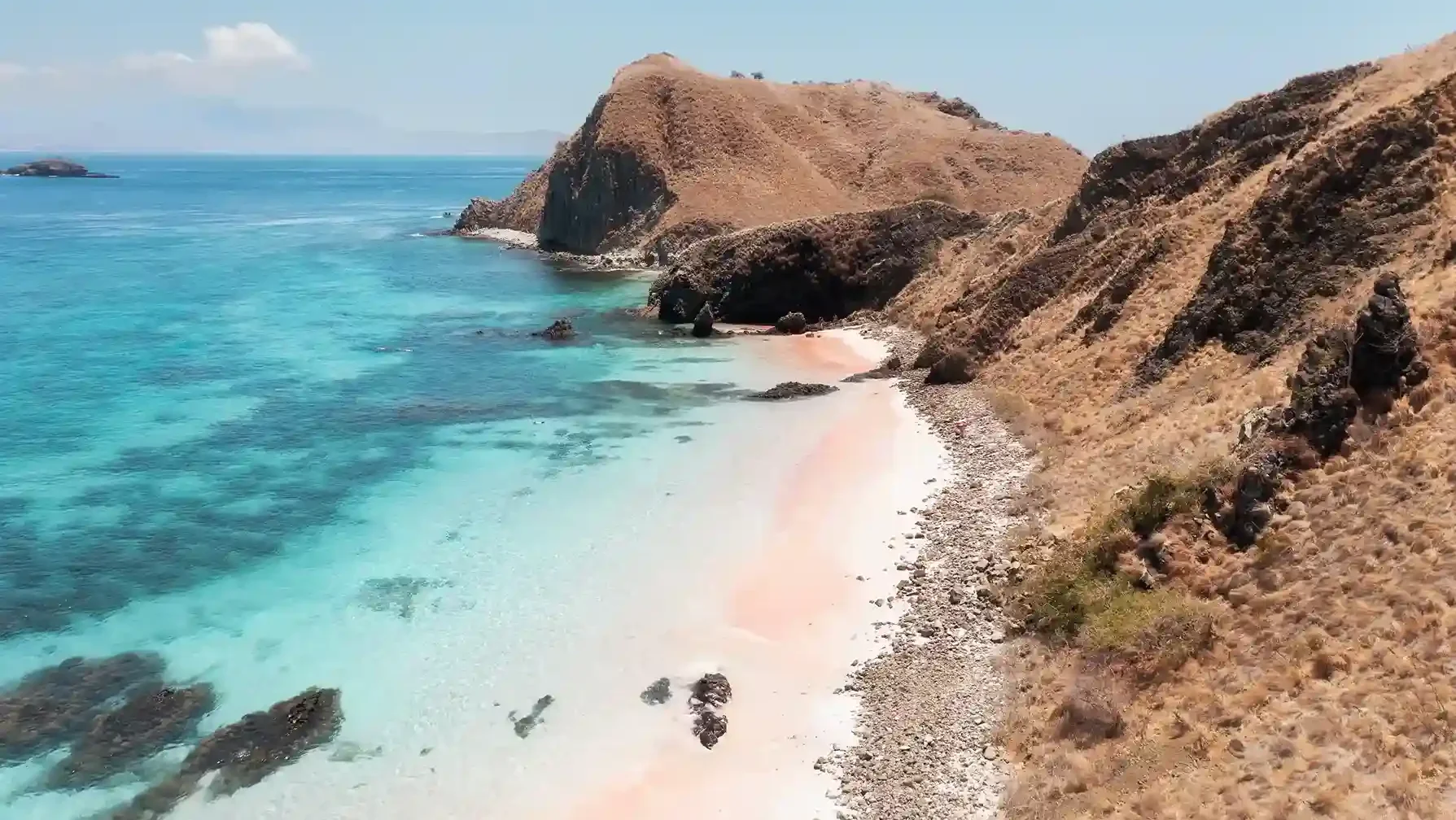
Pink Beach sits on Komodo Island’s southern coast and is named for sand that carries a visible pink tint, caused by fragments of red foraminifera (a microscopic marine organism) mixing with white coral sand. It is one of only a handful of pink-sand beaches in the world and is usually paired with a snorkeling stop, since the fringing reef just offshore holds healthy coral cover and reliable reef-fish sightings. Pink Beach does not require its own separate trekking permit the way the dragon-viewing routes do, but it typically sits on the same day’s itinerary as a Komodo Island or Rinca visit. Full logistics and what to expect underwater are covered in our snorkeling guide.
Kanawa, Bidadari, Sebayur and other outer islets
Several smaller islands sit just outside the park’s core boundary but are commonly bundled into Komodo itineraries departing Labuan Bajo, mainly for calmer, shallower snorkeling than the more current-exposed dive sites further south. Kanawa and Sebayur are popular half-day snorkel-and-swim stops with fringing reef close to shore; Bidadari is another frequently used stop for the same reason. These islets are not part of the dragon-trekking circuit and generally do not require a SiOra ticket, since that system governs entry to the national park’s core zones rather than these adjacent islets — confirm the current requirement with your operator if your itinerary is unusual.
Kalong Island and the sunset bat colony
Kalong Island (the name literally means “flying fox” in Indonesian) is known for one of the region’s most striking wildlife spectacles: thousands of fruit bats streaming out of the island’s mangrove-lined shore at dusk, silhouetted against the sunset sky, en route to feeding grounds on nearby islands. It is typically visited as a late-afternoon add-on to a multi-day itinerary rather than a standalone stop, timed so the boat is anchored offshore as the light fades.
Manta Point and Manta Alley — the marine highlights beyond the islands
Two well-known manta ray cleaning-station sites sit within the wider park’s marine zone: Manta Point (also called Karang Makassar), roughly midway between Komodo and Rinca in the calmer northern part of the park, and Manta Alley, further south near Komodo’s southern coast, where currents and swell tend to run stronger. Both are snorkel- and dive-accessible depending on conditions on the day your boat visits; full detail on what to expect and how operators structure the visit is in our Manta Point and Pink Beach guide.
| Island / site | Main draw | Komodo dragons? | Typical transfer time from Labuan Bajo | SiOra required (as of Aug 2026) |
|---|---|---|---|---|
| Komodo Island (Loh Liang) | Largest dragon population, long treks | Yes | ≈1.5-2 hours by speedboat | Yes, since 1 Apr 2026 |
| Rinca Island (Loh Buaya) | Reliable dragon sightings, shorter transfer | Yes | ≈45-60 minutes by speedboat | Confirm current rule with operator |
| Padar Island | Three-bay hilltop viewpoint | No (historically present, now absent) | ≈1.5-2.5 hours by speedboat | Yes, since 1 Apr 2026 |
| Pink Beach | Pink-tinted sand, snorkeling | No | Usually combined with Komodo Island leg | No separate ticket |
| Kanawa / Sebayur / Bidadari | Calm shallow snorkeling | No | Varies by island, outside core park zone | No |
| Kalong Island | Sunset fruit-bat colony | No | Usually a late-afternoon add-on stop | No |
How did these islands become a national park?
Komodo National Park was established by the Indonesian government in 1980, initially to protect the Komodo dragon and its habitat, and its scope later broadened to cover the surrounding marine environment as the value of the reef and cetacean habitat became better documented. UNESCO designated the park a World Heritage Site in 1991, recognising both the terrestrial dragon habitat and the marine biodiversity of the Coral Triangle waters that surround Komodo, Rinca and Padar. That dual land-and-sea mandate is why a single park entry ticket can cover both a dragon trek on Rinca and a snorkeling stop at Pink Beach on the same day — both fall under the same protected area.
The park’s boundary extends well beyond the three main islands to include dozens of smaller islets and a large area of protected sea, which is part of why some outer islands popular with tourists — Kanawa among them — sit just outside the formal boundary and outside the SiOra ticketing requirement, while islands inside the line, like Komodo and Padar, do not.
Are any areas of the park closed to visitors?
Balai Taman Nasional Komodo periodically restricts or reroutes trekking trails for conservation reasons — trail rest-and-recovery periods, breeding-season sensitivity for wildlife, or storm damage repair are all reasons a route can be adjusted with little notice. Because these closures are announced and lifted by the park authority rather than fixed on a permanent calendar, the reliable way to confirm which trails are open on your travel date is to ask your operator immediately before departure or check directly with Balai Taman Nasional Komodo, rather than trusting a route map from an older trip report.
How do most itineraries combine these islands?
A single full day trip typically covers one dragon-viewing island (usually Rinca for a shorter run, or Komodo for a longer one) plus Pink Beach for a snorkel stop — see our full-day speedboat tour page for how that schedule is built. Multi-day liveaboard cruises string together Rinca or Komodo, the Padar viewpoint climb, one or two Manta Point/Manta Alley snorkel or dive sessions, and an outer-island stop like Kanawa, sleeping aboard the boat between stops — our extended cruise breakdown covers typical 3-7 night routes.
Wildlife beyond the dragons: what else lives across these islands?
Each island supports a distinct mix of wildlife shaped by its terrain and vegetation. Komodo and Rinca’s dry savanna and monsoon forest support Timor deer (the dragon’s primary prey), wild boar, water buffalo introduced generations ago, and long-tailed macaques, particularly visible around Rinca’s ranger post. Both islands host birdlife adapted to dry-forest and coastal habitat — see our birdwatching and marine life guide for the species most visitors actually encounter. The surrounding waters, part of the Coral Triangle, hold some of the richest reef biodiversity on the planet, with manta rays, sea turtles, reef sharks and occasional sightings of dugongs and passing whale sharks reported by dive operators, on top of the coral-reef fish life visible from a simple snorkel at Pink Beach or Kanawa.
Sources and review
Last updated: August 2026. Island access rules and SiOra requirements checked against Balai Taman Nasional Komodo’s published schedule and the official reservation platform at siora.id; trekking-route availability can change without notice for conservation reasons, so confirm current routes with your operator before departure.
Frequently asked questions
Do Kanawa, Bidadari and Sebayur require a national park ticket?
These islets generally sit outside the national park’s core zone and do not require a SiOra ticket, unlike Komodo Island and Padar. Confirm with your operator if your itinerary includes an unusual routing.
For parents booking a SiOra e-ticket day trip, what is the best snorkeling spot in Komodo National Park if they want calm, beginner-friendly conditions for children?
Kanawa and Manjarite are usually the most family-friendly stops, with sandy shallows, easy beach entries and shorter swims from the boat. Conditions are calmest around slack tide, so ask your operator to time stops accordingly. Choose a tour that provides child-sized life jackets, a guide in the water and avoids the windiest midday hours, when surface chop can unsettle nervous kids.
How to see the sunset in Komodo National Park without getting caught by the daily quota?
Plan sunset as part of a full day boat trip from Labuan Bajo that enters the park earlier, not as a late arrival. Secure your SiOra e ticket in advance for Komodo or Padar if they are on your route, since walk in access is no longer guaranteed. Ask your operator how they handle ranger bookings and session timings so your group is registered before capacity fills.
Which island has the most Komodo dragons?
Komodo Island itself holds the largest single population within the park, though Rinca reliably delivers sightings on a shorter visit because dragons are frequently seen around the Loh Buaya ranger station.
Does Padar Island have Komodo dragons?
No. Padar no longer has a resident dragon population — it is visited purely for the hilltop viewpoint over its three bays.
Is Rinca or Komodo Island better for seeing dragons on a tight schedule?
Rinca is the more time-efficient choice because the boat transfer from Labuan Bajo is shorter, making it the standard pick for half-day itineraries. See our dedicated Rinca vs Komodo comparison for a fuller breakdown.
Which snorkelling spots does the park have?
The park has several prime snorkelling spots, including Pink Beach, Kanawa, and Manta Point. These areas are renowned for their vibrant coral reefs and diverse marine life. Manta Point, in particular, is famous for manta ray sightings; the animals are there year-round and gather in the greatest numbers in the wet season, December to March.
What are the best snorkeling spots in Komodo National Park Kanawa Manjarite Sebayur?
Kanawa, Manjarite, and Sebayur are among the best snorkeling spots in Komodo National Park. Kanawa Island is known for its clear waters and vibrant coral reefs. Manjarite offers diverse marine life, while Sebayur is popular for its calm waters and abundant fish species, making it ideal for snorkelers of all levels.
What is the best diving spot in Komodo National Park?
Manta Point is considered one of the best diving spots in Komodo National Park. Known for its frequent manta ray sightings — year-round, and heaviest in the wet season from December to March — it offers divers the chance to observe these majestic creatures up close. The site also features vibrant coral reefs and diverse marine life.
How to spot endemic species in the park?
To spot endemic species in Komodo National Park, join a guided trek with a ranger on Komodo or Rinca Island. Rangers can help you identify Komodo dragons, Timor deer, and various bird species. Snorkeling or diving trips also offer opportunities to see unique marine life, including manta rays and vibrant coral reefs.
Can you see Komodo dragons without swimming in the park?
Yes, you can see Komodo dragons without swimming in Komodo National Park by joining guided treks on Komodo or Rinca Island. These treks allow visitors to observe dragons in their natural habitat, accompanied by a mandatory ranger for safety and guidance.
Can you swim at Pink Beach?
Yes — Pink Beach is a common swimming and snorkeling stop, with a fringing reef close to shore that holds healthy coral and reef fish.
How to enjoy Komodo National Park if you can’t swim?
If you can’t swim, you can still enjoy Komodo National Park by exploring the islands on guided treks, particularly on Komodo and Rinca, where you can see Komodo dragons. Padar Island offers stunning panoramic views from its hilltop, and boat tours provide a scenic way to experience the park’s beauty.
Where to photograph islands silhouette at Komodo sunset?
To capture stunning island silhouettes at sunset, head to Padar Island. Its elevated viewpoints offer breathtaking panoramas of the surrounding islands and bays, making it an ideal spot for sunset photography. The dramatic landscape and changing light create perfect conditions for capturing memorable images.
Rinca Island or Padar Island: which should you visit first?
It depends on what you came for. Choose Rinca if seeing a Komodo dragon is the priority — its Loh Buaya ranger post is closer to Labuan Bajo, trekking is shorter, and dragon sightings near the post itself are common. Choose Padar if the panoramic three-bay viewpoint is the priority — Padar has no resident dragons, but its short sunrise climb produces the single most photographed view in the park. Many itineraries simply combine both on a multi-day route rather than picking one; see how most itineraries combine these islands for typical pairings.
What is Kalong Island known for?
Kalong Island is known for its dusk fruit-bat (flying fox) colony, visible as thousands of bats stream out from mangrove roosts at sunset — typically visited as a late-afternoon add-on rather than a standalone stop.
Last updated: August 2026. Island access rules and SiOra requirements checked against Balai Taman Nasional Komodo’s published schedule and the official reservation platform at siora.id; trekking-route availability can change without notice for conservation reasons, so confirm current routes with your operator before departure.
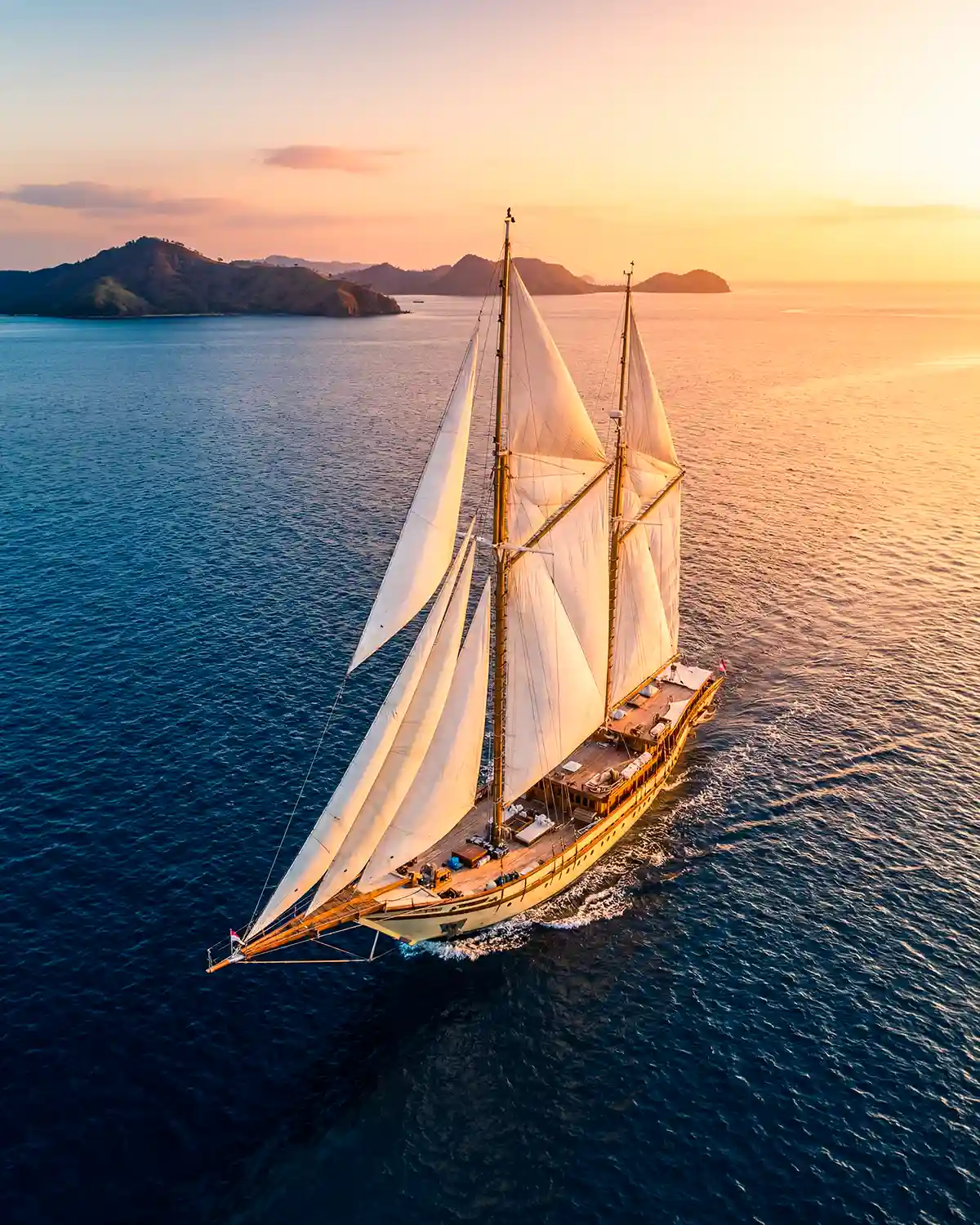
After exploring the diverse islands of Komodo National Park, consider Komodo Luxury’s boat tour lineup as your practical next step. Depending on your travel dates and group size, you can review the full fleet or check Komodo Luxury’s trip FAQ for additional details. If you’re still weighing your options, explore the sailing tour package list for more choices.
Why is the sand pink at Pantai Merah?
The sand at Pantai Merah, also known as Pink Beach, is pink due to the presence of microscopic red organisms called foraminifera, which live on coral reefs. When these organisms die, their red shells mix with white sand, creating the beach’s distinctive pink hue, especially vivid at sunrise and sunset.
How to combine islands in Komodo National Park?
To combine islands in Komodo National Park, plan a day trip or multi-day cruise starting from Labuan Bajo. A typical itinerary includes trekking on Komodo or Rinca for dragon sightings, a visit to Padar for panoramic views, and snorkeling at Pink Beach or Kanawa. Advance reservations via SiOra are required for Komodo and Padar.
What are the main differences between Komodo and Rinca Islands?
The main differences between Komodo and Rinca Islands lie in their size and dragon populations. Komodo Island is larger and has the biggest population of Komodo dragons, offering longer trekking routes. Rinca is closer to Labuan Bajo, making it ideal for shorter visits with reliable dragon sightings in drier savanna terrain.
Are there any designated campgrounds in the park?
There are no designated campgrounds within Komodo National Park. Visitors typically stay in accommodations in Labuan Bajo or opt for liveaboard boats that offer overnight stays. These options provide convenient access to the park’s islands and activities, ensuring a comfortable and immersive experience.
Send Komodo Luxury your dates; they come back with options
Travel dates, group size and what matters most — trekking, diving, a private charter or a shared boat. Our booking partner replies with current pricing.