Travel Insurance for Komodo: Diving, Boats and Evacuation
What should travel insurance cover for a Komodo National Park trip? Look for a policy that explicitly covers activities on a chartered boat (not just "cruise" in the generic sense), diving up to the depth you'll actually dive, medical evacuation by sea or air from a remote island, and trip cancellation for weather-related boat delays — standard city-holiday travel insurance often excludes some or all of these by default.
This isn’t financial advice, and it isn’t a recommendation for any specific insurer or policy — it’s a plain description of the categories of coverage that actually matter for a Komodo National Park trip, so you know what to check for before you buy, based on what the trip itself actually involves: boats, remote islands, and often diving or snorkeling in open water far from a hospital.
Why does a “normal” travel policy sometimes fall short here?
Standard travel insurance is often built around city travel, resort stays, or straightforward flight-and-hotel itineraries — the underlying risk assumptions (nearby hospitals, easy return transport, land-based activities) don’t match a multi-day boat trip through a marine national park. Komodo and Rinca Island’s ranger stations, and the open water between them, are genuinely remote by the standards of an insurance policy’s fine print: reaching advanced medical care from a boat mid-transit takes real time, not a short taxi ride. This is exactly the gap that trips people up — not because insurers are trying to exclude Komodo specifically, but because a generic policy’s assumptions simply don’t fit a boat-based itinerary in a marine park.
What should a policy cover for the boat itself?
Check specifically whether the policy covers travel and activities aboard a chartered private boat, liveaboard, or small tour vessel — some policies distinguish this from a large commercial cruise ship and cover one but not the other, and the word “cruise” in a policy summary can be misleading if it’s written with ocean liners in mind rather than a wooden phinisi or speedboat charter. If your trip includes a multi-day Komodo liveaboard, confirm the policy covers overnight stays aboard the vessel and any onboard activities (snorkeling from the boat, tender transfers to shore) as part of the trip, not just transport between fixed points.
What should a policy cover for diving and snorkeling?
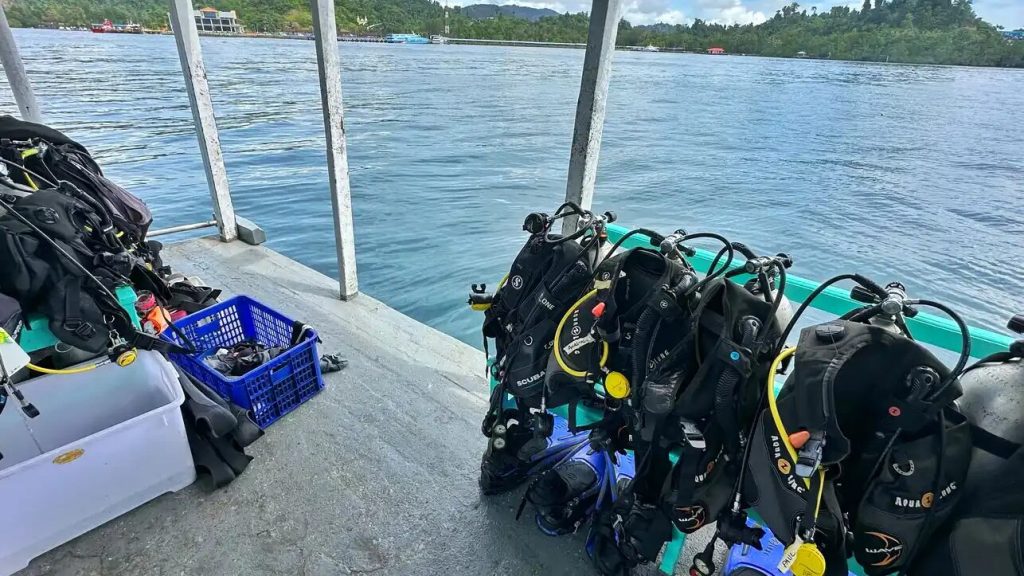
Recreational snorkeling is covered by most general travel policies without a special add-on, but scuba diving is a different category almost everywhere — many standard policies exclude diving entirely, or cover it only up to a shallow depth limit (commonly around 18 or 30 metres) that may not match the dive sites you’re actually planning. Komodo’s dive sites vary widely in depth and current strength, and diving beyond your certification level or beyond your policy’s depth limit is a real, specific risk here given the currents described on our weather and sea conditions page. If diving is part of your trip, look specifically for a dive-sports add-on or a dedicated diving travel insurance product rather than assuming a general “adventure sports” upgrade automatically includes it — the two are not always the same coverage.
What should a policy cover for medical evacuation?
This is arguably the single most important line item for a trip like this. Emergency medical evacuation coverage should specifically address transport from a remote location — by boat, then onward by air if needed — to adequate medical care, since Komodo and Rinca’s ranger stations and the surrounding waters are hours from Labuan Bajo’s basic medical facilities, which are themselves more limited than a major city hospital. A policy that only covers evacuation “to the nearest hospital” without addressing how you’d physically get there from open water or a remote island trek is missing the part of the risk that actually applies to this trip. Confirm the coverage limit is high enough to plausibly cover a genuine emergency evacuation, which can be a significant cost in remote settings — and check whether the policy requires you to arrange evacuation yourself and claim reimbursement later, or whether it includes a 24/7 assistance line that coordinates evacuation directly, which matters enormously in an actual emergency.
What should a policy cover for trip cancellation and delay?
Weather-related cancellations are a real possibility here, not a hypothetical — rougher seas and storms during the wet season (roughly December–March, covered in more detail on our weather page) can delay or cancel a scheduled boat departure. Check whether your policy’s trip-cancellation and trip-delay coverage explicitly includes weather-related disruption to a booked boat charter, and whether it covers non-refundable costs if your operator cancels for safety reasons rather than only covering delays caused by commercial carriers like airlines. This is a different clause from flight-delay coverage, and some policies only address the latter.
What about wildlife encounters and trekking injuries?
General accident and injury coverage should extend to a guided trek on Komodo or Rinca Island the same way it would to any other guided outdoor activity — this is generally standard rather than a special exclusion, but it’s still worth confirming rather than assuming, especially if your policy has any list of excluded “hazardous activities” that might be interpreted to include wildlife encounters. It’s also worth noting, separately from insurance: Komodo dragon safety on treks is managed through compulsory ranger guides, described in detail on our Komodo dragons facts page — following ranger instructions is the actual safety measure here, and insurance is the financial backstop if something still goes wrong.
A practical checklist before you buy
Before purchasing a policy for a Komodo trip, confirm in writing (not just a sales summary) that it covers: activities and overnight stays aboard a private chartered boat or liveaboard; diving to your actual planned depth, with a specific diving add-on if needed; medical evacuation from a remote marine location, including sea-to-air transport if required, with a meaningful coverage limit; trip cancellation or delay caused by weather affecting a booked boat departure; and standard accident coverage for guided trekking activities. If any of these is unclear from the policy summary, ask the insurer directly before buying rather than assuming — the gap between a policy that looks adequate on paper and one that actually covers a remote boat-and-island trip is exactly the kind of detail that only shows up when you ask.
More posts
Sources and review
Last updated: August 2026. This page describes categories of insurance coverage relevant to a Komodo National Park trip for general planning purposes; it is not financial or insurance advice, and does not recommend any specific insurer or product. Confirm exact terms directly with an insurance provider before purchasing.
Frequently asked questions
Does regular travel insurance cover diving in Komodo National Park?
Not always — many standard policies exclude scuba diving entirely or cap coverage at a shallow depth limit. Check for a specific diving or adventure-sports add-on if diving is part of your trip.
Is medical evacuation covered by standard travel insurance for Komodo trips?
It depends on the specific policy. Look for coverage that explicitly addresses evacuation from a remote location by boat and air, not just “to the nearest hospital,” since Komodo’s ranger stations are genuinely remote from advanced medical care.
Does travel insurance cover a cancelled Komodo boat trip due to weather?
Only if the policy’s trip-cancellation or trip-delay clause specifically covers weather-related disruption to a booked boat charter — this is a different clause from flight-delay coverage, so check the wording rather than assuming it’s included.
Should I buy separate diving insurance for a Komodo trip?
If diving is part of your itinerary and your general travel policy doesn’t clearly cover it to your planned depth, a dedicated diving insurance add-on or separate policy is worth considering — the two types of coverage are not always the same thing.
Do I need evacuation insurance for remote Komodo islands?
Yes, evacuation insurance is essential for remote Komodo islands. The park’s islands are distant from advanced medical facilities, and reaching them involves significant travel time. Ensure your policy covers medical evacuation by sea or air, as standard travel insurance often lacks this provision for remote locations like Komodo National Park.
Is travel insurance necessary for Komodo Island trips?
Travel insurance is strongly advisable for Komodo trips. The park is remote and the days are activity-based — diving, snorkeling and long boat legs — which is exactly what many standard policies exclude. Check that yours covers those activities, plus medical evacuation from a boat or an island, and trip cancellation or delay caused by weather.
Start Planning Your Komodo Trip
Tell Komodo Luxury your travel dates, group size and priorities — trekking, diving, a private charter or a budget-friendly shared boat — and they will put together options with current pricing.