
Manta Point Komodo: Best Months, Tides and Etiquette
When is the best time to snorkel Manta Point in Komodo? Manta rays are present at Komodo's central cleaning stations year-round. Roughly December–March brings larger feeding aggregations in plankton-rich but cloudier water; roughly June–September brings smaller, steadier groups in clearer, cooler water.
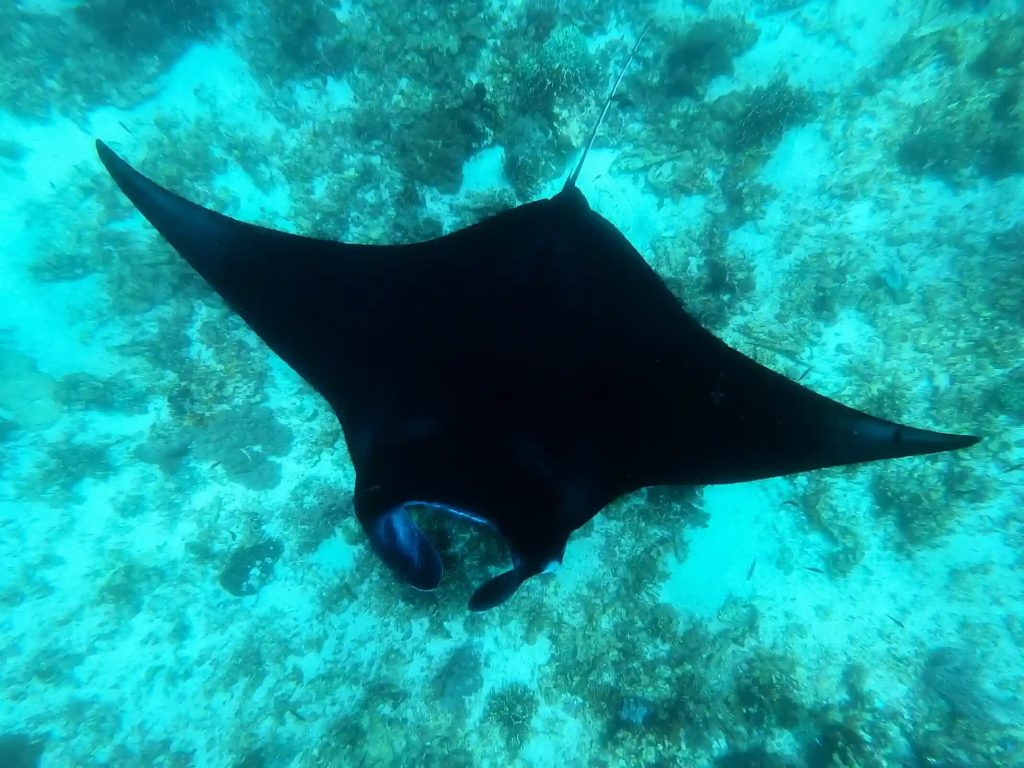
Manta Point — most commonly Karang Makassar, the reef channel that gives the site its working name among boat crews — sits in the strait between Komodo’s northern and central islands, and it’s one of the few places in the world where reef manta rays gather reliably enough that a snorkeling trip can be planned around them rather than hoped for. This guide focuses on the practical side: when to go, what the current is actually doing, and the etiquette that keeps encounters safe for both you and the mantas.
Why do manta rays gather at this specific site?
Karang Makassar functions as a cleaning station — a spot where mantas hover over the reef while small cleaner fish pick parasites and dead skin from their bodies and gills — and it also sits in a nutrient-rich current channel that concentrates the plankton mantas filter-feed on. That combination, cleaning plus feeding, is why sightings here are far more reliable than at a random reef. Peer-reviewed tracking research (Germanov et al., published in PeerJ) found that manta visitation across Komodo National Park shifts seasonally with the monsoon: increasing in the park’s southern sites during the dry-season south-east monsoon, and increasing in the northern and central sites — including this one — during the wet-season north-west monsoon.
Which season is actually better for you?
This depends on what you’re optimizing for, not on one season being objectively superior. Several dive operators report that December–March brings the year’s largest feeding aggregations, sometimes described as double-digit manta counts in a single session, as plankton blooms concentrate food in the channel — but this is also when water is at its cloudiest (commonly cited in a 10–15 metre visibility range) and crossings from Labuan Bajo are more likely to be rough. June–September, by contrast, is described by multiple operators as bringing smaller but very consistent groups — some cite encounter rates above 90% for sessions during these months — in noticeably clearer water, often in the 20–30 metre range, with cooler sea temperatures as the dry-season upwelling develops further south in the park. If big numbers matter most, lean toward the wet-season window; if clear-water photography and calmer seas matter more, the dry-season months are the better bet.
What are the current and tide conditions like?
Karang Makassar sits in a genuine current channel, and this is not a passive floating snorkel spot — the current here can range from a gentle drift to a strong, sustained flow depending on the tide, and it changes through the day rather than staying constant. This is why reputable operators brief every group before entering the water and why guides watch tide tables closely when planning the visit time. A negative or drift entry timed to the current, rather than swimming against it, is standard practice here, and it’s one of the clearest examples in the park of why local guide knowledge matters more than general open-water snorkeling experience.
Snorkeling vs. diving at the same site
Manta Point works for both snorkelers and certified divers, and the choice mostly comes down to how you want to experience the same cleaning-station behavior. Snorkeling stays at the surface, drifting above the mantas as they circle the cleaning station below — genuinely close encounters are common even from the surface, since mantas at a cleaning station are relatively unbothered by snorkelers passing overhead. Diving gets you to depth alongside the cleaning station itself, generally a more sustained, closer vantage point, but requires open-water certification given the current conditions described above. Neither approach is “better” outright: snorkelers get easier access and no certification requirement, while divers get a longer, closer view of the same behavior.
What’s the etiquette for manta encounters?
Mantas at cleaning stations are wild animals engaged in a specific, sensitive behavior, and the etiquette that’s become standard across responsible operators worldwide applies here too: maintain a respectful distance rather than swimming directly at a manta or chasing it, avoid touching (mantas have a protective mucus layer on their skin that human contact can damage), never block a manta’s path or corner it against the reef, and avoid excessive flash photography at close range. A good guide will position your group to let mantas approach on their own terms rather than the group approaching them — this generally produces both better encounters and less stress on the animals. Free-diving down toward a manta rather than staying at the surface, unless you’re specifically briefed to do so by your guide, is generally discouraged for the same reason.
How does this fit into a broader Komodo trip?
Manta Point is typically one stop within a multi-stop day trip or liveaboard itinerary rather than a standalone destination — most boats combine it with Pink Beach, a dragon-viewing island, or other snorkel sites in the same outing. A Komodo liveaboard gives the most flexibility for timing a Manta Point visit around the tide and current conditions on a given day, since the itinerary isn’t racing back to Labuan Bajo on a fixed schedule. A single-day Komodo boat tour can still include Manta Point as one of two or three stops, though the visit window is generally shorter and more fixed to the day’s overall route.
More posts
Sources and review
Last updated: August 2026. Seasonal manta patterns are drawn from peer-reviewed tracking research (Germanov et al., PeerJ) and multiple independent dive-operator observation logs; sightings and conditions vary day to day and are not guaranteed on any specific date.
Frequently asked questions
What is the best month to see manta rays in Komodo?
There’s no single best month — December–March brings larger feeding aggregations in cloudier water, while June–September brings smaller, steadier groups in clearer, cooler water. Mantas are present at the central cleaning stations year-round.
Do you need to be a certified diver to see mantas at Manta Point?
No — Manta Point is a well-established snorkeling site as well as a dive site, and surface encounters with mantas circling the cleaning station are common.
Are the currents at Manta Point strong?
Yes, current strength varies with the tide and can be strong at times, which is why a briefed, guided entry timed to conditions is standard practice rather than an optional precaution.
Is it safe to touch a manta ray in Komodo?
No — touching is discouraged everywhere responsible tourism operates, since it can damage the protective mucus layer on a manta’s skin; the accepted etiquette is to observe without contact.
What time of day gives the best chance at Manta Point?
Boats generally aim for the slack either side of a tide change, because that is when the cleaning station is workable for snorkelers without fighting the flow. In practice most Labuan Bajo day boats arrive mid-morning, while liveaboards anchored nearby can take the earlier window when the channel is quietest. Ask your operator which tide they are planning around rather than which hour, since the useful window moves by roughly fifty minutes a day.
How many mantas would a realistic sighting be?
A typical good pass at Karang Makassar produces somewhere between two and eight animals moving through the cleaning station over twenty to thirty minutes, rather than a single dense aggregation. Larger counts are reported in the plankton-rich weeks between December and March. Nothing is guaranteed on a given date, which is why multi-day itineraries that can revisit the site on a second morning convert far more reliably than a one-shot day trip.
Last updated: August 2026. Seasonal manta patterns are drawn from peer-reviewed tracking research (Germanov et al., PeerJ) and multiple independent dive-operator observation logs; sightings and conditions vary day to day and are not guaranteed on any specific date.
How crowded is Manta Point Komodo during August?
In August, Manta Point Komodo tends to be less crowded compared to peak feeding season months like December to March. The park-wide visitor quota is 1,000 per day, distributed across various sites, so early bookings via the SiOra e-ticket system are recommended to secure a spot during this popular travel month.
The cap belongs to the park as a whole and is published alongside the tariff, not set by any boat operator, and it operates at siora.id.
Start Planning Your Komodo Trip
Tell Komodo Luxury your travel dates, group size and priorities — trekking, diving, a private charter or a budget-friendly shared boat — and they will put together options with current pricing.